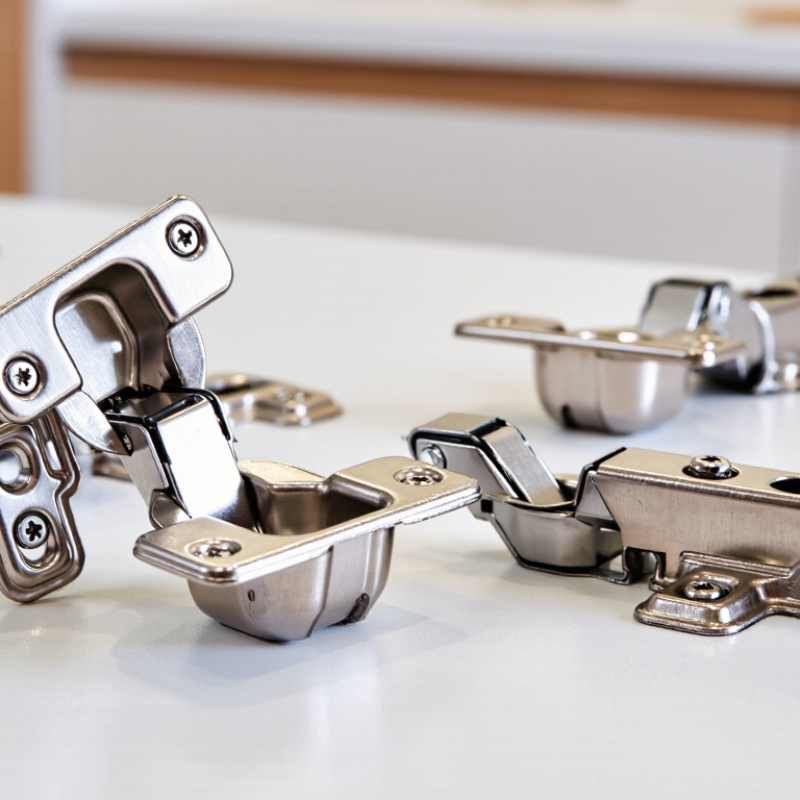
A 180 Degree Concealed Hinge can let a cabinet door open wide while keeping the hardware out of sight when closed. That clean look is useful in kitchens, wardrobes, office furniture, and custom cabinetry. But the opening angle alone does not tell you whether a hinge will suit a project. Door thickness, material, weight, mounting space, and the desired closing action all matter.
China has a broad range of hinge manufacturers, from established hardware suppliers to factories focused on custom production. This guide introduces manufacturers to consider and explains what buyers can compare: published product specifications, material and finish options, adjustment range, sample availability, and quality-control practices. Ask for drawings and installation guidance, then check that the stated opening angle works with your door and cabinet layout. Small details count.
A polished catalog is not proof of consistent performance. Request samples where practical, inspect the movement, and confirm how the hinge is tested and packed for shipment. It is also worth asking about production capacity and lead times before placing a larger order. These checks cannot remove every uncertainty. Even a careful comparison can miss a detail that only appears during installation, so treat claims as a starting point and verify the fit.
A 180° concealed hinge is designed to let a door swing widely while keeping the hinge hidden when closed. The stated angle is a target, not a guarantee for every cabinet. Actual travel depends on hinge-arm geometry, mounting-plate position, door thickness, and nearby walls. A thick door or deep frame may stop movement early. Measure the clearance with handles and adjacent panels in place. Small gaps matter.
Fit starts with the door overlay, cup-bore dimensions, and cabinet-side mounting space. Check these against the hinge’s installation specifications before drilling. Adjustments can help align the door, but they cannot correct an incompatible frame or obstructed swing path. For cabinets needing broad access, such as storage units with pull-out trays, a wide-opening hinge can make contents easier to reach. Confirm that the door clears neighboring doors and walls throughout its movement. I would still test one hinge on a sample door first; measurements alone can miss a small collision. Also verify the rated door weight and recommended number of hinges for the panel size.
What the chart shows: Common nominal opening-angle options for concealed hinges, from 90° to 180°. A 180° hinge is designed to let a door open close to a straight line with the cabinet or panel. The actual opening angle and fit depend on the hinge design, mounting geometry, door thickness, and surrounding clearance; check the product specifications for the intended application.
China’s hinge supply chain brings material sourcing, forming, finishing, and assembly within practical reach of many manufacturers. For a 180-degree concealed hinge, this coordination matters: the arm must swing freely while the closed hardware stays largely out of sight. Steel thickness, alloy consistency, and surface condition influence stiffness and wear. Small details matter.
Production often begins with stamped or cut components, followed by drilling, bending, and deburring. Controlled heat treatment can improve strength, but uneven processing may cause distortion. That can show up as a stiff pivot or a door that will not sit flush. Factories may use jigs to keep holes aligned and gauges to check dimensions between operations. These checks help, though they do not replace testing a completed hinge under repeated opening and closing.
Finishing choices depend on the intended environment and appearance. Plating or coating can help protect exposed surfaces, while the concealed joints still need smooth contact and reliable lubrication. Suppliers across the chain affect consistency: a change in steel batch or coating thickness can alter fit. It is worth asking how measurements are recorded, how samples are tested, and whether production uses the same process as the sample. I have seen specifications look complete on paper, yet leave practical questions unanswered. That gap deserves attention.
How to Compare Load Ratings, Door Weight, and Mounting Requirements
A hinge’s advertised load rating is useful only when its test conditions match your door. Check whether the figure applies per hinge or per pair, and note the tested door size, opening angle, and cycle count. ANSI/BHMA A156.9 evaluates cabinet hardware performance, including repeated operation; a grade is not a direct kilogram capacity. Ask suppliers for the test method and configuration behind each rating. Numbers without context can mislead.
Estimate the complete door weight, including glass, mirrors, handles, and attached panels. For example, a 12-kilogram door on two hinges does not automatically put six kilograms on each hinge. Door width and opening force create leverage, while sagging can increase stress over time.
The USDA Forest Products Laboratory’s Wood Handbook explains that moisture changes cause wood to move. That matters when mounting into a wooden door or frame. Small gap. Big consequence.
Compare mounting drawings as closely as load figures. Confirm cup diameter and depth, screw positions, overlay, door thickness, and required clearance at a full 180-degree opening. A hinge may meet the weight target yet fail to fit a narrow stile or obstruct nearby hardware. Request a sample and test it on the actual door material. I would also check adjustment range after installation; specifications sometimes look perfect on paper, but real cabinet tolerances are less tidy.
For buyers comparing 180-degree concealed hinge manufacturers in China, EN 1935 Grade 7 offers a useful durability reference. Its 200,000-cycle benchmark represents repeated opening and closing under defined test conditions. It is not a promise that every installed hinge will last equally long.
Ask for test records tied to the hinge’s exact model and configuration. Check the tested door mass, mounting method, and cycle results, not just a grade printed on a product sheet. A hinge can move smoothly on a sample door yet behave differently when screws loosen or the door is misaligned. Small details matter.
A practical check starts with a representative door and a repeatable opening angle. Inspect the hinge during testing for play, noise, uneven movement, and changes in closing alignment. Record findings at intervals, such as every 10,000 cycles. Also examine the finish and mounting points; cycle endurance alone does not measure corrosion resistance or installation quality. The benchmark is helpful. It is not the whole story. I would still want to see how the hinge performs after real handling, because laboratory results can leave some questions unanswered.
Best 180 Degree Concealed Hinge Manufacturers in China
How to Evaluate Chinese Manufacturers by Testing, Customization, and Quality Control
A 180-degree concealed hinge must open smoothly while supporting the door without sagging. Ask manufacturers how they test opening cycles, load capacity, and corrosion resistance. Request test conditions and recorded results, not just a “passed” label. If possible, inspect a sample on a door similar in thickness and weight to your own. A hinge can feel solid by hand and still shift after repeated use.
Tips: Check the opening angle. Test the finish. Ask for a written tolerance range. Small details matter.
Customization should cover more than dimensions. Discuss mounting patterns, materials, finish, and adjustment range, then confirm each detail on a drawing before production. Good quality control includes incoming material checks, in-process measurements, and final inspection. Ask how defects are recorded and handled. A clear answer is useful; a perfect-sounding answer may not be. I would also compare samples from different production batches, because one sample cannot show consistency. Keep test notes and agreed specifications together, especially when orders are customized.
| Best 180 Degree Concealed Hinge Manufacturers in China — How to Evaluate Chinese Manufacturers by Testing, Customization, and Quality Control | ||||
|---|---|---|---|---|
| Evaluation Dimension | What to Verify | Practical Evaluation Method | Evidence to Request | Buyer Record / Score |
| Opening Angle and Clearance | Confirm the hinge achieves the required opening angle in the intended cabinet or door geometry. “180 degree” performance can depend on the hinge design, mounting plate, door thickness, and surrounding panels. | Install samples on a representative cabinet or test fixture. Measure the usable opening angle and check for interference throughout the opening path. | Dimensioned installation drawing, technical data sheet, and sample-test record showing the mounting conditions. | Result: __________ Score: ____ / 5 |
| Load and Door Compatibility | Assess suitability for the specified door material, dimensions, weight, hinge quantity, and mounting arrangement. Do not rely on a load figure without its test conditions. | Ask the supplier to state the supported door configuration and test setup. Validate the intended configuration using a representative door and the proposed number of hinges. | Load-test report or documented test setup, recommended hinge quantity, and installation limits for the application. | Result: __________ Score: ____ / 5 |
| Durability and Cycle Testing | Check whether opening-and-closing durability has been tested and whether the test reflects the intended use. Cycle life should be compared only when test conditions are comparable. | Request the cycle count, test load, opening angle, speed, sample quantity, and failure criteria. Agree on a project-specific acceptance target before testing. | Test report identifying the sample, test conditions, number of cycles, observations, and final inspection results. | Target: __________ Result: __________ Score: ____ / 5 |
| Corrosion Resistance and Finish | Evaluate the finish for the expected environment, including indoor humidity or other exposure conditions. Salt-spray hours are not a universal measure of service life. | Specify the test method and acceptance criteria in advance. Where appropriate, request testing under ISO 9227 or ASTM B117 and review the reported test conditions and coating defects. | Coating specification, test report, surface-finish samples, and agreed acceptance criteria for corrosion or appearance. | Method / target: __________ Score: ____ / 5 |
| Materials and Component Consistency | Confirm the declared materials for hinge arms, cups, pins, springs, and other critical components, as applicable to the design. | Compare the bill of materials and drawings with production samples. Use suitable material verification, such as certificate review or independent testing, when required by the project. | Material specifications, supplier certificates where applicable, component drawings, and sample inspection records. | Verified items: __________ Score: ____ / 5 |
| Dimensional Accuracy | Check critical dimensions, hole positions, mounting interfaces, and adjustment range against the approved drawing. | Measure samples using calibrated instruments or suitable gauges. Confirm the drawing revision and tolerance requirements used for inspection. | Approved dimensional drawing, inspection report, measurement records, and gauge-calibration records. | Critical dimensions checked: __________ Score: ____ / 5 |
| Customization Capability | Assess the supplier’s ability to adapt dimensions, mounting plates, finishes, damping features, packaging, or other requirements, where the design permits. | Submit a written specification and request a feasibility review, prototype schedule, tooling details, minimum order quantity, and quotation for each requested change. | Written feasibility confirmation, prototype samples, revised drawings, quotation, and agreed tooling ownership or charges. | Requirements met: __________ Score: ____ / 5 |
| Production Quality Control | Review controls for incoming materials, production processes, final inspection, nonconforming products, and batch traceability. | Audit the documented inspection flow. Agree on sampling and acceptance criteria, such as an AQL plan where appropriate, in the purchase specification or quality agreement. | Inspection plan, sample inspection records, nonconformance procedure, traceability example, and relevant quality-system documentation. | Audit findings: __________ Score: ____ / 5 |
| Sample-to-Mass-Production Consistency | Confirm that approved samples, drawings, materials, and finish are controlled and matched during production. | Retain an approved “golden sample.” Compare pre-shipment samples or inspection samples with the approved sample and current drawing revision. | Signed sample approval, revision-controlled drawings, change-notification procedure, and pre-shipment inspection report. | Consistency check: __________ Score: ____ / 5 |
| Commercial and Delivery Readiness | Evaluate quoted lead time, minimum order quantity, packaging, spare-parts availability, and the supplier’s process for communicating delays or changes. | Request a written quotation and production schedule for the specified product, quantity, finish, packaging, and inspection requirements. | Quotation, confirmed lead-time schedule, packaging specification, and written order-change or delay communication process. | Assessment: __________ Score: ____ / 5 |
| Overall Supplier Evaluation | Compare shortlisted suppliers using the same specification, sample conditions, test methods, and scoring rules. | Score each dimension from 1 (insufficient evidence or poor fit) to 5 (requirements met with verifiable evidence). Apply project-specific weightings if needed. | Completed evaluation records, test reports, approved samples, and agreed purchase specifications. | Total: ____ / 50 Decision: __________ |
| Interpretation Note | Use this table as a supplier-evaluation framework, not as a ranking of named manufacturers. Durability targets, corrosion acceptance limits, sampling plans, and load requirements should be defined for the actual application; there is no single universal pass value for every 180-degree concealed hinge. | |||