Automated Dispensing Robot Videos

A World of Robotic Dispensing and Assembly Solutions

2026 Best Wireless Energy Meter for Global Buyers?

Electricity costs are becoming harder to predict for factories, offices, retailers, and homes. The International Energy Agency’s Electricity 2024 report projects global electricity demand will grow by about 3.4% annually through 2026. This growth increases pressure to measure consumption more precisely, especially during peak hours. A reliable Wireless Energy Meter can provide near-real-time readings without extensive cabling or disruptive installation.

The market is also moving beyond basic kWh displays. The U.S. Energy Information Administration reported approximately 128 million advanced meters in operation across the United States in 2022. That figure shows how digital measurement has entered mainstream energy management. However, wireless connectivity does not automatically guarantee useful data. Buyers must examine measurement accuracy, current-transformer quality, phase compatibility, battery life, network range, and data security. A device may look impressive on a product page. Its performance can weaken inside concrete plant walls.

International buyers should compare products against recognized requirements, including relevant IEC 62052 and IEC 62053 accuracy standards. They should also check whether software supports local voltage systems, cloud access, exportable data, and integration with building-management platforms. The U.S. Department of Energy continues to emphasize advanced metering and data visibility as practical tools for improving energy efficiency. Yet a cheaper meter may create higher costs through inaccurate readings or vendor lock-in.

There is no universally best model. The right choice depends on the site, tariff structure, and communication environment. This guide evaluates the 2026 best Wireless Energy Meter options through technical evidence, field practicality, ownership cost, and long-term reliability. Some recommendations may remain uncertain. That is worth admitting.

2026 Best Wireless Energy Meter for Global Buyers?

What Is a Wireless Energy Meter and How Does It Work?

2026 Best Wireless Energy Meter for Global Buyers?

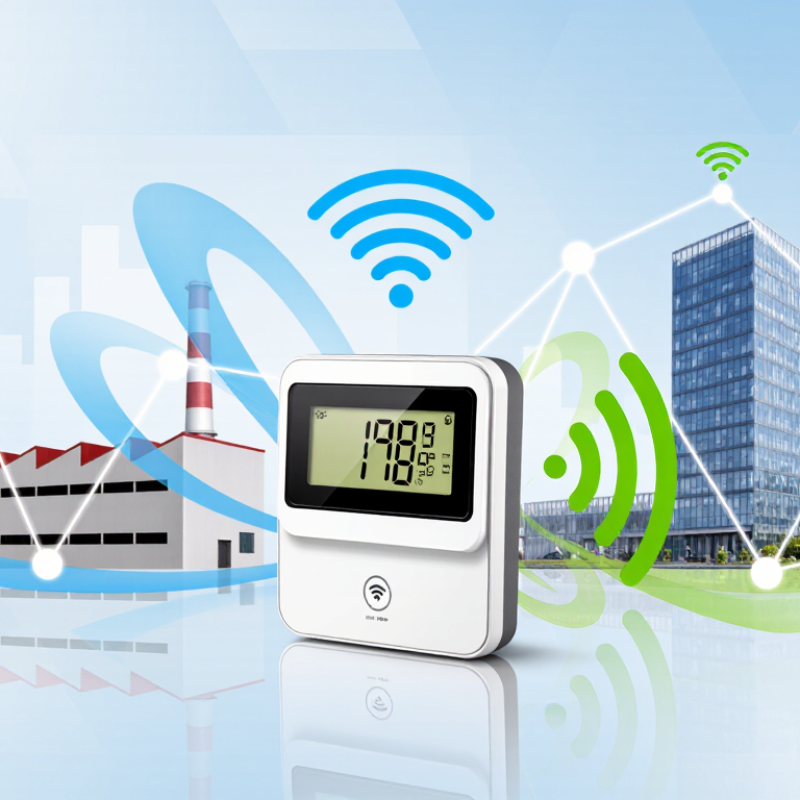
A wireless energy meter measures electricity without relying on a permanent data cable. It records voltage, current, power, and accumulated energy in kilowatt-hours. Many models use clamp sensors around live conductors. The sensor detects magnetic changes without cutting the wire. A built-in processor then converts those readings into usable data.

The meter usually sends information through Wi-Fi, Bluetooth, cellular networks, or a low-power radio connection. A home gateway may forward readings to a dashboard or mobile application. Users can view hourly consumption, compare circuits, and receive alerts when usage rises unexpectedly. For example, a workshop meter might show a motor drawing 2.4 kW during startup. That detail can reveal inefficient equipment or an overloaded circuit.

Accuracy depends on sensor placement, phase configuration, signal quality, and calibration. Installation should follow local electrical rules and use a qualified professional when live panels are involved. A wireless signal does not remove electrical risk. It only changes how data travels.

In practical evaluations, stable readings matter more than attractive software. Look for true-RMS measurement, clear sampling intervals, local data storage, and secure transmission. Wireless meters can also lose data through interference or weak coverage. That assumption can be wrong. Checking the meter against a trusted reference load is a sensible step, although small differences may remain.

Key Features to Compare in Wireless Energy Meters

2026 Best Wireless Energy Meter for Global Buyers?

When comparing wireless energy meters in 2026, measurement accuracy should lead the decision. Look for stated accuracy under real load conditions, not only laboratory results. A meter tracking voltage, current, power factor, and accumulated kilowatt-hours gives a clearer operating picture. Check whether it supports single-phase or three-phase systems. Some models appear flexible but require separate sensors for different installations.

Wireless performance needs practical testing. Compare communication options, such as Wi-Fi, Bluetooth, or low-power mesh networks, based on building size and interference. A basement meter may struggle through concrete walls. Data encryption, user authentication, and secure firmware updates also matter for professional installations. I once saw a reliable reading become useless after a weak gateway connection caused missing hourly data. Range claims can be optimistic.

Installation details often decide long-term value. Confirm compatibility with split-core current transformers, conductor sizes, and local voltage systems. Non-invasive sensors can reduce downtime, but incorrect orientation may reverse the measured flow. Look for time-stamped data, exportable reports, overload protection, and local memory during network outages. Independent calibration records and recognized safety testing improve confidence across different markets. I would still verify local certification requirements before purchase. Environmental ratings deserve attention too, especially in dusty workshops or humid utility rooms. A bright dashboard is helpful, but dependable data matters more.

2026 Best Wireless Energy Meter for Global Buyers? - Key Features to Compare in Wireless Energy Meters
Comparison Dimension Plug-In Single-Phase Meter DIN-Rail Direct-Connected Meter Split-Core CT Meter LoRaWAN Submeter Cellular Remote Meter
Best Application Portable appliance monitoring, small offices and temporary measurements Residential distribution boards, small commercial circuits and fixed submetering Retrofit monitoring of feeders, motors, solar circuits and three-phase loads Large buildings, campuses, utilities and locations with limited local network access Remote sites, construction areas, agricultural facilities and geographically distributed assets
Electrical System Single-phase, two-wire or three-wire systems depending on the design Usually single-phase; three-phase versions are also available Single-phase or three-phase, depending on the number of current transformers Single-phase or three-phase; measurement capability depends on the connected sensor system Single-phase or three-phase; verify the supported wiring configuration before purchase
Typical Voltage Range Approximately 100–240 V AC, with regional variants Approximately 100–480 V AC, depending on the meter configuration Voltage input commonly covers 100–480 V AC; CTs measure current separately Commonly 100–480 V AC for low-voltage installations Commonly 100–480 V AC for low-voltage installations
Typical Current Measurement Direct measurement, commonly up to 10–16 A for plug-in designs Direct measurement commonly up to 40–100 A; higher loads require CTs CT-based measurement, commonly from 5 A to 600 A per channel Direct input or CT input; ranges vary from low-current circuits to several hundred amperes Direct input or CT input; suitable ranges depend on the meter and sensor package
Measurement Accuracy Typically around Class 1 for energy measurement; suitable for monitoring rather than billing unless certified Commonly Class 1 or better in certified configurations Often Class 1; total accuracy depends on both the meter and CT accuracy class Typically Class 1 or better in revenue-grade configurations; confirm the complete system certificate Typically Class 1 or better in certified configurations; confirm local metering requirements
Measured Parameters Voltage, current, active power, power factor, frequency and accumulated energy Voltage, current, active power, reactive power, power factor, frequency and energy Current, voltage, active power, reactive power, power factor and energy by phase Energy, demand, voltage, current and power quality values when supported by the hardware Energy, demand, voltage, current and alarm data; advanced power-quality data depends on the model
Wireless Communication Wi-Fi, Bluetooth Low Energy or a short-range local protocol Wi-Fi, Zigbee, Bluetooth Low Energy, RS-485 gateway or another local wireless option Wi-Fi, Zigbee, cellular gateway, LoRaWAN or a wired gateway connection LoRaWAN, designed for low-power long-range communication 4G LTE, LTE-M or NB-IoT, subject to network availability and regional support
Typical Communication Range Wi-Fi: building-dependent; Bluetooth: generally about 10–30 m indoors Wi-Fi: dependent on access-point coverage; mesh protocols can extend coverage Depends on the selected gateway; wired CT leads normally remain within the panel area Typically several hundred metres to several kilometres, depending on buildings, antenna height and network design Broad geographic coverage wherever a compatible cellular network is available
Data Update Interval Near real-time local readings; cloud updates often occur every few seconds to several minutes Typically 1 second to 15 minutes, depending on configuration and network traffic Typically 1 second to 15 minutes; high-frequency sampling may be local rather than cloud-based Usually configured from several minutes to several hours to conserve battery and network capacity Usually configurable from several minutes to several hours, depending on data plan and power source
Installation Method Plug-and-play; no panel wiring is normally required Mounted on a standard DIN rail and wired inside a distribution board by a qualified electrician Clamp-on CT installation with minimal conductor interruption; voltage leads may still require panel wiring Panel-mounted or enclosure-mounted with CTs, voltage leads and a wireless antenna Panel-mounted or enclosure-mounted with an external antenna and electrical connections
Installation Difficulty Low Medium to high because work is performed inside an electrical panel Medium; CT orientation, phase identification and polarity must be correct Medium to high because gateway placement and radio coverage must be planned Medium to high because cellular signal, antenna location and commissioning are important
Power Supply Powered directly from the monitored outlet Powered from the monitored circuit or a dedicated auxiliary supply Usually powered from the measured circuit or an auxiliary low-voltage supply Mains-powered or battery-assisted; battery life depends on reporting interval and temperature Usually mains-powered; battery operation is possible for selected low-duty-cycle applications
Ingress Protection Typically intended for indoor use; enclosure ratings vary Typically installed inside a protected distribution board; external enclosure rating varies CTs and enclosures may be rated from indoor use to IP65 or higher, depending on construction Outdoor versions commonly use IP65 or higher enclosures; verify the complete installation Outdoor versions commonly use IP65 or higher enclosures; antenna and cable glands also require protection
Data Platform Requirements Mobile app, local dashboard or optional cloud platform Building-management system, local gateway, mobile app or cloud dashboard Gateway or energy-management platform is normally required for centralized monitoring LoRaWAN network server and application platform are required for remote data access Cellular subscription, device-management service and application platform are normally required
Cybersecurity Considerations Use unique passwords, encrypted connections and current firmware Use secure commissioning, network segmentation and access controls for panel-connected devices Protect the gateway, disable unused services and use encrypted communication where available Use device authentication, encrypted payloads, secure join procedures and controlled application access Use private APN or VPN options where appropriate, encrypted transport and managed firmware updates
Compatibility to Check Plug type, socket standard, maximum load, voltage, frequency and local electrical approvals DIN-rail dimensions, phase arrangement, terminal size, breaker layout and local installation rules CT aperture, CT ratio, conductor size, phase count, polarity and maximum primary current Regional frequency bands, gateway coverage, antenna requirements and LoRaWAN regional parameters Supported cellular bands, SIM or eSIM requirements, network shutdown plans and subscription costs
Billing Suitability Generally not suitable for regulated billing without the required certification Suitable for billing only when the complete meter is approved for the intended jurisdiction Suitable for billing only when the meter and CT combination meets the applicable accuracy and sealing requirements Can support billing applications when the complete metering chain is legally certified Can support remote billing applications when the complete metering chain is legally certified
Primary Advantages Low installation effort, portable design and convenient appliance-level visibility Clean permanent installation, direct measurement and good integration with building panels Flexible retrofit installation, wide current range and support for large feeders Long range, low power consumption and efficient multi-site deployment Wide-area connectivity and reduced dependence on local Wi-Fi or site networks
Primary Limitations Limited current capacity, indoor focus and dependence on local wireless coverage Requires electrical-panel access and professional installation CT accuracy, phase alignment and installation quality strongly affect the result Requires LoRaWAN coverage and an application backend; data intervals may be slower Ongoing connectivity fees, variable signal quality and higher power consumption than low-power radio options
Best Choice for Global Buyers Choose when portability and simple appliance monitoring are the priority Choose for permanent residential or commercial panel monitoring with local professional installation Recommended for flexible retrofit measurement and high-current circuits Choose for scalable, low-power monitoring across large properties or multiple buildings Choose when the installation is remote and dependable wide-area connectivity is essential
Selection note: Electrical ratings, accuracy class, radio frequency bands, enclosure protection, cybersecurity functions and regulatory approvals vary by configuration. Always verify the complete meter, sensor, gateway and communication system against the electrical standards and wireless regulations of the destination country.

Best Wireless Energy Meter Types for Different Global Markets

For 2026, the best wireless energy meter depends on the market, not simply the fastest connection. The IEA’s Electricity 2024 report projects global electricity demand to grow by an average 3.3% annually from 2024 to 2026. That pressure makes reliable, frequent measurement more valuable.

Wi-Fi meters suit apartments, small offices, and retail sites with stable broadband. They offer quick installation and app-based readings, but concrete walls can weaken signals.

Cellular meters using LTE-M or NB-IoT fit remote facilities, farms, and distributed assets. They need stronger power planning, especially where battery replacement is expensive.

LoRaWAN meters work well across campuses, factories, and utility estates with local gateways. They provide long range and low energy use, but gateway placement requires a site survey.

Different regions require different safeguards. In Europe, buyers should check metering accuracy, radio compliance, cybersecurity, and data protection requirements before deployment.

In North America, split-phase residential systems may require compatible current transformers and certified installation practices.

In emerging markets, cellular coverage, backup power, and offline data storage can matter more than dashboard features.

The World Bank reports that around 675 million people lacked electricity access in 2021, showing why rugged, low-maintenance designs remain important in some markets.

From field experience, installation errors often distort results more than sensor specifications. A reversed current clamp can create misleading consumption data.

Small details matter. Wireless is not automatically maintenance-free.

Some buyers may overestimate cloud reliability; local buffering and clear calibration records deserve equal attention.

Installation, Connectivity, Accuracy, and Data Security Considerations

2026 Best Wireless Energy Meter for Global Buyers?

Installation should begin with the circuit map, not the mobile application. A qualified installer must confirm phase layout, enclosure space, isolation procedures, and local electrical requirements. Clamp sensors need firm contact and correct orientation. Small errors matter. A loose clamp can distort readings before commissioning begins. The International Energy Agency’s Electricity 2024 report projects global electricity demand to grow by an average of 3.4% annually from 2024 to 2026. That growth increases the value of dependable, accessible measurement.

Connectivity deserves practical testing. Wi-Fi is convenient, but thick concrete walls and crowded channels can interrupt uploads. Cellular links may work better at remote sites, although subscription costs and signal coverage require checking. Wireless meters should support encrypted communication, automatic reconnection, and local data storage during outages. I would not assume every dashboard is equally reliable. Export intervals, time synchronization, and firmware update records should be visible to operators.

Accuracy claims need context. Buyers should examine the stated measurement class, operating temperature, sampling method, and calibration procedure. IEC 61557-12 and OIML R 46 provide useful technical reference points, but certification alone does not guarantee perfect field performance. Security starts early. The 2024 Data Breach Investigations Report attributed 68% of breaches to human involvement, showing why strong passwords, multi-factor authentication, role-based access, and audit logs matter. A forgotten default password can undermine excellent hardware. Data retention and cross-border transfer rules also need review before installation.

How to Choose the Right Wireless Energy Meter in 2026

Choosing the right wireless energy meter in 2026 starts with measurement conditions, not a fashionable connection type. The IEA’s Electricity 2024 report forecasts global electricity demand will rise 3.4% yearly from 2024 through 2026. That growth makes dependable submetering more valuable in factories, buildings, and distributed energy projects. Check rated current, voltage range, phase configuration, accuracy class, and sampling behavior before comparing wireless features. A meter that loses readings during interference is not truly smart.

For global buyers, communication compatibility deserves careful testing. Short-range networks suit connected buildings, while cellular or low-power wide-area networks may serve remote sites better. Ask about regional frequency bands, roaming support, encryption, firmware updates, and data export formats. The IEA’s Energy Efficiency 2024 report records a 2.2% global energy-intensity improvement in 2023. It says annual progress must reach 4% by 2030. Good measurement supports that difficult target. Accuracy claims should be verified under actual loads, including motors, variable-speed drives, and weak signals. Do not rely only on laboratory brochures.

Tips: Request a sample report and test it for seven days. Compare readings with a certified reference instrument. Confirm local installation rules and cybersecurity responsibilities. Installation quality can ruin an excellent meter. That part is often underestimated. I would not promise one universal choice. Site conditions change. Leave room for human error.