
Automated Dispensing Robot Videos

A World of Robotic Dispensing and Assembly Solutions

2026 Best Stainless Steel Wire Mesh Filter Buying Guide

A Stainless Steel Wire Mesh Filter can look simple on a product page, yet small specification changes can affect flow, service life, and cleaning. In 2026, buyers should compare more than mesh count. Check the opening size, wire diameter, weave, alloy grade, and filter shape against the actual fluid and operating conditions. The right choice depends on the job.

A finer opening may capture smaller particles, but it can also restrict flow or clog sooner. Details matter. Wire diameter affects strength, while alloy selection influences resistance to heat, moisture, and process chemicals. Do not assume that two products with the same mesh count perform alike; manufacturing tolerances and weave patterns matter too. This guide explains how to read specifications, assess supplier information, and narrow options for industrial, commercial, or laboratory use. No filter suits every application.

Before ordering, compare stated filtration ratings with test methods and operating limits. Ask suppliers for material documentation, dimensional tolerances, and cleaning guidance. For demanding applications, confirm compatibility with the actual fluid and conditions rather than relying on a broad product description. A sample can help reveal fit and handling issues. Expect trade-offs. A low price may not reflect the full cost of replacement, downtime, or maintenance. Specifications can also be incomplete, so verify important claims in writing. The goal is a filter that meets measurable requirements and remains practical to inspect and maintain. A careful comparison makes that decision clearer.
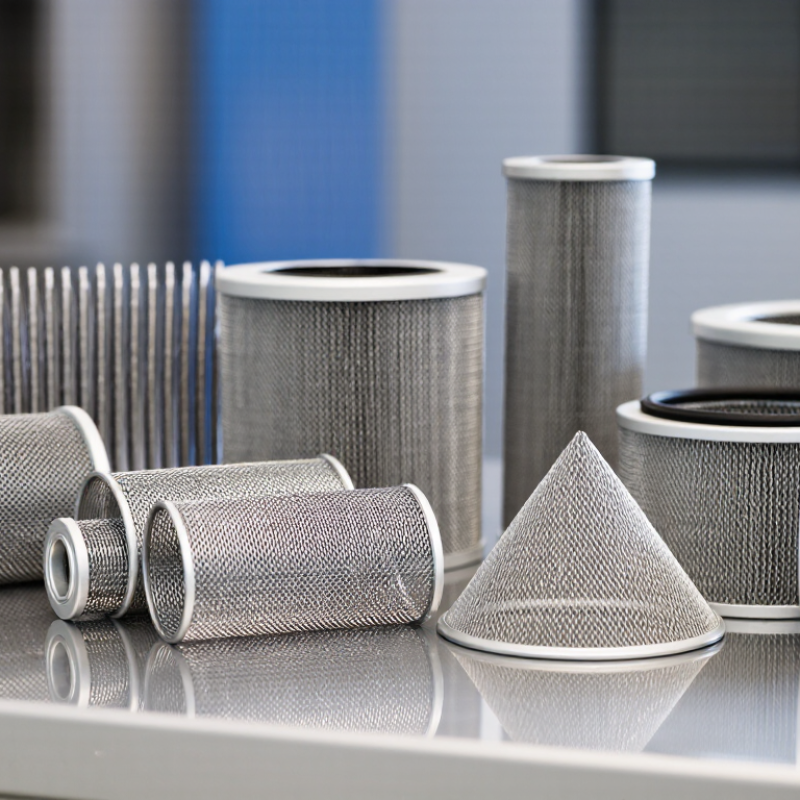
2026 Best Stainless Steel Wire Mesh Filter Buying Guide

What Stainless Steel Wire Mesh Filters Are and How They Work

Stainless steel wire mesh filters use intersecting metal wires to create a screen with consistent openings. The mesh may be woven, with wires crossing over and under, or welded at each intersection. Liquid or air passes through the openings, while larger particles are held back. That sounds simple. In practice, particle shape, flow speed, and pressure can affect what the screen captures.

Mesh size describes the number of openings across a set distance, but it does not tell the whole story. Wire thickness and opening dimensions also matter. A finer mesh can capture smaller particles, yet it may restrict flow sooner, especially when the fluid is thick or carries a heavy contaminant load. Not quite a simple trade-off. As particles collect, they form a layer on the surface, which can improve capture but reduce flow. A pressure gauge can help operators notice this change.

Stainless steel is valued for strength, heat tolerance, and resistance to many corrosive conditions. Its performance still depends on the specific alloy and the fluid it contacts. A mesh that works well with clean water may not suit a hot, salty, or chemically active process. Check the opening size, wire construction, operating temperature, and cleaning method against actual conditions. It is easy to overlook cleaning access. That matters, because trapped residue can remain between wires and affect later filtration.

Key Materials, Weave Types, and Filter Specifications

Stainless steel grade should match the fluid, temperature, and cleaning routine. Type 304 suits many general-purpose applications; Type 316’s molybdenum improves resistance to chloride exposure. Neither grade is immune to corrosion in every process. Plain weave gives a regular, stable grid, while twill weave can support finer openings with relatively robust wire. The trade-off is greater flow resistance as openings shrink.

Specify aperture size, wire diameter, mesh count, and allowable tolerance—not mesh count alone. ASTM E11 lists a nominal 75 μm opening for a No. 200 test sieve; this is a useful reference, not a guarantee of equivalent filter performance. ISO 9044:2016 covers technical requirements for industrial woven wire cloth, including aperture tolerances. Ask suppliers for measured opening data and a material certificate. A nominal rating can hide real variation.

Tips: Match the opening to the particles you need to retain, then check pressure drop and cleaning frequency. Inspect a sample against a light: uneven openings or damaged wires matter. It is easy to over-specify a finer mesh, then regret the slower flow. Cite ASTM E11 and ISO 9044:2016 when comparing quotes.

How to Choose Mesh Size, Micron Rating, and Filter Shape

A stainless steel wire mesh filter should be selected around the particles you need to capture, not just a number on a product sheet. Mesh count means openings per inch, while the actual opening also depends on wire diameter and weave. A higher count often means smaller openings, but not always in a simple one-to-one way. Check the stated aperture in microns, too.

Micron ratings can be nominal or absolute, and suppliers may define them differently. Ask how the rating was measured and whether it describes particle retention or opening size. If the liquid contains fine sediment, test a sample when possible; a very fine mesh can clog quickly and reduce flow. That trade-off is easy to underestimate. Viscosity, pressure, and debris load matter.

Filter shape must fit both the housing and the job. A flat disc suits a compact inline assembly, while a cylindrical basket offers more surface area for heavier debris. Measure the seating diameter, length, and sealing edge before ordering. A small mismatch can let fluid bypass the mesh. For a replacement filter, compare the weave and dimensions rather than relying on appearance alone; two meshes can look nearly identical and perform quite differently.

Matching Filter Design to Your Application and Operating Conditions

A stainless steel wire mesh filter should be selected around the fluid, particles, and operating cycle—not mesh count alone. A 100-mesh screen can behave differently when wire diameter, weave, and open area change. For a viscous oil line, a tightly woven mesh may raise pressure drop and clog quickly. For a coarse water strainer, a more open weave may protect downstream equipment without unnecessary resistance. Check the actual aperture, wire diameter, and open area on the supplier’s specification sheet.

Measure the conditions that matter. Record operating temperature, flow rate, pressure, fluid viscosity, and the size of particles you need to retain. ISO 9044:2016 sets technical requirements and test methods for industrial woven wire cloth, including aperture-related checks. For hydraulic filter performance, ISO 16889:2022 uses a multipass test with upstream and downstream particle counts, beta ratio, and contaminant-holding capacity. It is a useful comparison method, not a universal conversion from mesh count to filtration efficiency. Ask for test results that match your fluid and flow conditions. Small detail, big difference.

Also consider how the filter will be cleaned. Backwashing may suit some installations; frequent manual cleaning may not. A practical trial can reveal pressure rise and particle release that a specification misses. One caution: a finer mesh is not automatically better. It may capture more debris, but also increase maintenance and restrict flow. Sometimes the first choice needs revisiting.

How to Compare Suppliers, Inspect Quality, and Maintain Filters

A reliable purchase starts with the process, not the catalog photo. Tell each supplier the fluid, operating temperature, pressure, and expected particle size. Ask for the mesh opening, wire diameter, alloy grade, and a drawing that shows seams and support layers. A shiny surface proves little. Request a material certificate and, when practical, a sample from the production lot. Compare service limits, lead time, replacement availability, and how defects are handled. Vague answers about pore size deserve a second question.

Even good paperwork cannot replace checking the actual part. Inspect edges for burrs, welds for gaps, and mesh openings under magnification. Measure several areas, not just the center; variation may appear near the rim. Confirm dimensions against your housing before installation, since a small mismatch can bypass filtration. This step gets skipped. Follow the supplier’s stated maintenance limits rather than guessing at a cleaning schedule. Record pressure drop and flow rate at startup, then compare them during service. Rinse or backflush only if the mesh and trapped material can tolerate it; aggressive brushing may distort fine wire. Use a compatible cleaning fluid, dry the screen fully, and inspect it under a bright light before reuse. If openings remain blocked or the mesh deforms, replace it rather than forcing more flow. I would still recheck the first cleaned unit; cleaning methods are easy to overestimate.

2026 Best Stainless Steel Wire Mesh Filter Buying Guide - How to Compare Suppliers, Inspect Quality, and Maintain Filters

Evaluation Area What to Compare Practical Checks and Guidance Record or Confirm
Application fit Fluid or gas, operating temperature, pressure, flow rate, and contaminant type. Share the operating conditions and target particle size before selecting mesh. A finer opening can increase pressure drop and clogging risk. Process conditions and filtration objective
Mesh and opening Mesh count, wire diameter, nominal aperture, and permitted tolerances. Mesh count is the number of openings per linear inch. It does not uniquely define aperture: wire diameter also affects opening size. Request the aperture specification and its tolerance. Mesh count, wire diameter, aperture, tolerance
Weave and construction Plain weave or twill weave, edge finish, support layers, and filter shape. Confirm the construction matches the required strength, cleanability, and flow. Specify dimensions, seams, frames, and any support mesh on the drawing. Approved drawing and construction details
Stainless steel grade Grade selection, chemical compatibility, and traceability of the supplied material. 304 is commonly used for general corrosion resistance; 316/316L is often considered where greater resistance to chlorides or certain chemicals is needed. Compatibility depends on the exact medium, concentration, temperature, and exposure. Specified grade and material certificate
Supplier documentation Inspection records, material certificates, dimensional reports, and change-control practices. Ask for documents tied to the order or production lot. ASTM E2016 covers industrial woven wire cloth terminology and classifications; confirm the applicable specification and acceptance criteria for your purchase. Document list and lot identification
Incoming visual inspection Surface condition, weave consistency, edges, joints, and signs of damage or contamination. Inspect under adequate lighting. Look for broken or loose wires, blocked openings, burrs, creases, corrosion, and damaged welds or seams. Compare the part with the approved drawing. Inspection result and defect photos, if any
Dimensional and mesh checks Overall dimensions, mesh count, wire diameter, aperture, and fit in the housing. Measure using suitable calibrated tools and the agreed inspection method. Check representative areas and confirm results against the drawing and specified tolerances. Measured values and calibration status
Pressure-drop monitoring Clean baseline differential pressure and the operating limit set for the system. Record differential pressure across a clean filter under known flow conditions. Clean or replace the element when the process reaches its established limit; do not use a universal pressure threshold. Baseline and site-defined service limit
Cleaning and reuse Debris type, cleaning method, compatibility, and inspection after cleaning. Use a method compatible with the filter grade and process residue. Avoid tools or procedures that deform the mesh. Rinse away cleaning residues, dry as required, and inspect for damaged wires or persistent blockage. Approved cleaning procedure and inspection log
Replacement and storage Replacement criteria, handling, packaging, and storage conditions. Replace an element if it is torn, permanently deformed, corroded, or cannot be cleaned to the required condition. Store clean, dry filters protected from dust, chemicals, and mechanical damage. Replacement criteria and storage instructions

Note: Final material selection, inspection limits, and cleaning procedures should be verified against the process conditions, applicable specifications, and the filter assembly design.