Top 10 Benefits of Chlortetracycline Premix for Livestock?
In modern livestock farming, the health and productivity of animals are crucial. One effective solution is the use of chlortetracycline premix. This formulation provides antibiotics that combat various bacterial infections in animals. By incorporating chlortetracycline premix into feed, farmers can enhance overall herd health.
The benefits extend beyond just disease prevention. Livestock may experience improved growth rates and feed efficiency. However, reliance on antibiotics raises ethical concerns. Overuse can lead to antibiotic resistance, a growing issue in both agriculture and human health. Thus, careful implementation is necessary.
Farmers should monitor the health of their livestock closely. Regular assessments help identify the need for intervention. Balancing the benefits of chlortetracycline premix with potential risks is vital. Thoughtful management ensures that livestock remain healthy while minimizing negative impacts on the environment and public health.
Benefits of Chlortetracycline Premix in Livestock Nutrition
Chlortetracycline premix is gaining attention in livestock nutrition. This antibiotic plays a role in promoting animal health and growth. Studies suggest that incorporating chlortetracycline can improve feed efficiency by up to 5%. This means livestock convert feed into meat or milk more effectively, benefiting farmers economically.
Moreover, chlortetracycline can help prevent certain bacterial infections. A study indicated that its usage reduces the prevalence of diseases like pneumonia in cattle. This is crucial since disease outbreaks can lead to significant economic losses. However, reliance on antibiotics raises concerns about resistance. Farmers need to balance effective treatment with responsible usage.
While the benefits are clear, more research is needed on long-term effects. Some argue that excessive use could harm gut health in animals. Monitoring and adjusting dosage is vital. Overall, understanding the implications is key for sustainable livestock management.
Top 10 Benefits of Chlortetracycline Premix for Livestock
| Benefit | Description |
| Improved Growth Rates | Enhances the weight gain in livestock, leading to more efficient production. |
| Disease Control | Effective in preventing and controlling bacterial infections. |
| Improved Feed Efficiency | Increases the conversion of feed to body weight, reducing costs. |
| Enhanced Immune Response | Boosts the immune system of livestock, aiding overall health. |
| Flexibility in Use | Can be used in various livestock species, making it versatile. |
| Cost-Effective | Reduces overall production costs through enhanced performance. |
| Reduction of Veterinary Costs | Lower incidence of disease leads to decreased veterinary expenses. |
| Quality of Animal Products | Improves the quality of meat and milk produced by livestock. |
| Reduced Mortality Rate | Contributes to lower mortality rates in livestock populations. |
| Support for Weaning | Provides necessary nutrients and antibiotics during the weaning process. |
Role of Chlortetracycline in Disease Prevention for Livestock
Chlortetracycline plays a crucial role in disease prevention for livestock. It acts as a broad-spectrum antibiotic. This means it can combat various bacterial infections. Farmers often use it in premix forms to ensure animals receive adequate doses. The correct dosage can protect livestock from common ailments, enhancing their overall health.
Preventive measures are essential in livestock farming. Without proper health management, diseases can spread rapidly. Chlortetracycline helps reduce the incidence of illnesses. Healthy animals yield better products, which benefits everyone. However, it's essential to use it wisely. Overuse may lead to microbial resistance, which poses long-term challenges.
Observing livestock closely is vital. Early detection of sickness is key. Sometimes, even with treatment, infections persist. This can be frustrating for farmers. They must weigh the benefits against the possible consequences. Responsible use of Chlortetracycline means finding the right balance.
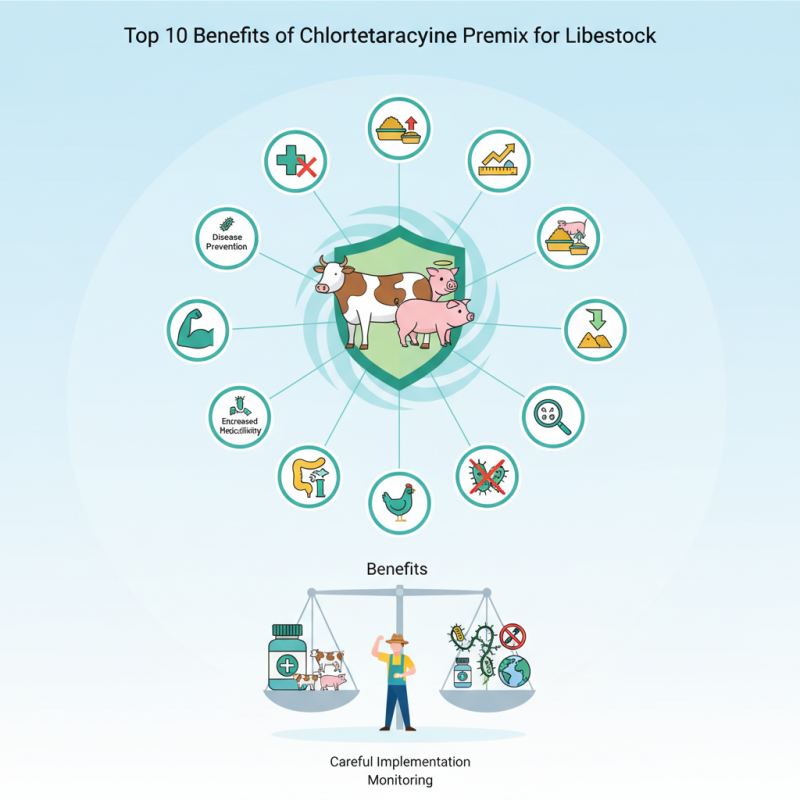
Top 10 Benefits of Chlortetracycline Premix for Livestock
This chart illustrates the key benefits of Chlortetracycline premix for livestock, highlighting its role in disease prevention and overall livestock health.
Enhancing Growth Rates and Feed Efficiency with Chlortetracycline
Chlortetracycline premix plays a significant role in livestock production. Its primary benefit lies in enhancing growth rates. Studies show that livestock treated with chlortetracycline can exhibit growth improvements of 10-20%. This growth acceleration results from better feed utilization. Animals convert feed into muscle more efficiently.
Additionally, chlortetracycline enhances feed efficiency by reducing the energy wasted during digestion. Research indicates that feed conversion ratios can improve by up to 15% with the use of this premix. As a result, farmers face lower feed costs. However, reliance on such premixes raises ethical questions. Overuse might contribute to antibiotic resistance in livestock and humans.
Considering these benefits and risks is crucial for responsible livestock management. Farmers must weigh the short-term growth advantages against potential long-term consequences. In light of evolving regulations, exploring alternatives is necessary. Balancing productivity and animal health should guide future practices.
Impact of Chlortetracycline on Livestock Reproductive Health
Chlortetracycline (CTC) premix plays a significant role in livestock reproductive health. It can enhance overall fertility. Livestock might experience better conception rates after using CTC. Research shows that healthy animals have more successful pregnancies. This can lead to increased offspring production.
However, there are aspects to consider. Overuse of CTC could lead to antibiotic resistance. This poses a threat to livestock health. Farmers must balance between benefits and risks. Monitoring dosage is essential for maintaining animal health. Some may question the long-term impact of CTC on breeding efficiency.
On the positive side, CTC can support the immune system. Healthy immune responses help livestock during stress. This, in turn, can result in improved reproductive performance. When animals feel good, they breed better. Yet, judicious use is crucial for sustainable practices. Farmer education on CTC can foster optimal livestock management.
Safety and Regulations Surrounding Chlortetracycline Use in Agriculture
Chlortetracycline has long been a staple in livestock management. However, its use raises important safety concerns that demand attention. Studies by the Food and Drug Administration (FDA) report that when used improperly, chlortetracycline can lead to antibiotic resistance in various microbial communities. This could limit treatment options for both animals and humans. The Centers for Disease Control and Prevention indicates a direct link between agricultural antibiotic use and human health threats.
Farmers must adhere to regulations when using chlortetracycline. The FDA enforces strict withdrawal times for meat and milk to ensure no residues remain. These guidelines can be challenging to follow but are essential for consumer safety. According to a report by the National Academy of Sciences, failing to comply with these regulations could lead to significant economic losses and compromise public health. Livestock producers must balance the benefits of improved health against the potential risks of resistance and regulatory failures.
Consumer awareness is growing, and the demand for antibiotic-free meat is rising. Producers face pressure to adjust their use of chlortetracycline. This includes exploring alternative treatments and ensuring responsible use. The path forward may require reflection on current practices and a commitment to safety. Adopting proactive measures could help mitigate risks while maintaining livestock health.