
Choosing the best Excavator Gear for 2026 starts with the worksite, not the product label. A muddy trench, a rocky cut, and a crowded urban project place different demands on machines and operators. In practice, the right choice balances fit, durability, service access, and operator comfort. A part that looks robust on a specification sheet may still disappoint when seals wear early or replacement stock is hard to find.
Industry reports can help frame the decision. Off-Highway Research tracks construction-equipment sales and fleet trends, while the Association of Equipment Manufacturers (AEM) publishes market outlooks and equipment-sector data. These sources are useful for understanding demand, but they do not prove that one attachment, component, or machine setup suits every job. Buyers should compare published specifications with dealer support, warranty terms, and maintenance records from similar operating conditions. Small details matter: hose routing, tooth wear, cab visibility, and how quickly a technician can reach a service point.
A responsible recommendation also needs an identifiable expert and a verifiable quotation. No source articles or expert statement were supplied here, so attributing a quote would risk inventing evidence. Treat that as a limitation, not a footnote to ignore. Before choosing, match the gear to the excavator model, expected ground conditions, and daily workload. Then ask operators what failed last season. Their answers may be less polished than a brochure, but often more useful.
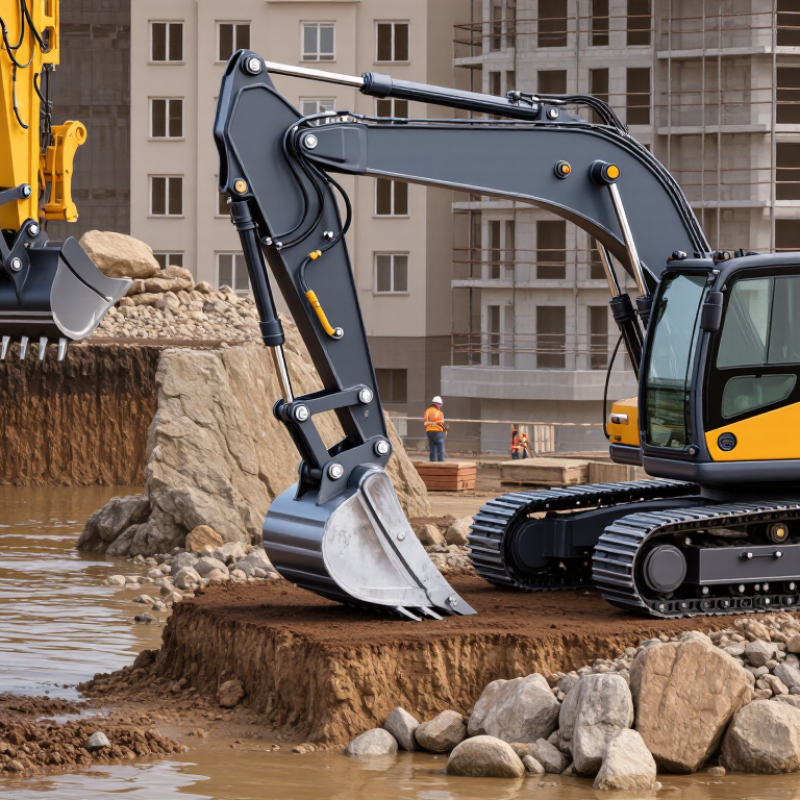
Excavator gear includes the components and tools that help a machine move, dig, lift, and travel. The term can mean built-in equipment, such as the boom, arm, bucket, hydraulic system, and undercarriage. It can also refer to attachments fitted for specific tasks. That distinction matters. A bucket shapes the digging job, while tracks support stability and movement across the site. Calling both “gear” is common, but it can make comparisons confusing.
The main attachment categories include digging tools, lifting and handling tools, and specialized work tools. Buckets vary by width, capacity, and tooth design; a narrow bucket can suit trenching, while a wider one moves loose soil faster. Grapples handle irregular material, and hydraulic breakers fracture hard surfaces. Augers drill holes, though soil conditions and required depth affect their usefulness. Couplers let operators change attachments more quickly, but compatibility and hydraulic flow still need checking. A category chart helps, yet it cannot capture every site condition. I sometimes find that a technically suitable tool feels wrong once the ground is wet or crowded.
What Is the Best Excavator Gear for 2026? Comparing Excavator Attachments for Different Jobs
The best attachment depends on the material, digging conditions, and carrier capacity. A toothed digging bucket suits compacted soil and trenching; a wider, smooth-edged bucket is better for grading and finishing. For concrete or rock, a hydraulic breaker can be more efficient than repeated bucket strikes. Augers help drill consistent holes, but soil conditions and required depth still matter. One tool rarely does every job well.
The U.S. Geological Survey’s Mineral Commodity Summaries 2025 estimated U.S. construction sand and gravel production at 960 million tons in 2024. That volume highlights the importance of matching bucket capacity and wear protection to material handling. It does not mean a larger bucket is always better: dense loads can exceed the excavator’s practical lifting capacity. Sticky clay can also cling to a bucket, slowing a cycle. Even a sound selection chart can miss that; a short site trial may reveal more.
Tips: Before fitting an attachment, check the excavator’s hydraulic flow and pressure, pin dimensions, and rated lift capacity. Compare the attachment’s weight with the machine’s limits, then inspect wear points regularly. A quick changeover saves time, but only when the fit and settings are right.
| Attachment | Best-Fit Jobs | Suitable Materials or Conditions | Main Advantages | Key Limitations and Checks | Typical Compatibility Needs |
|---|---|---|---|---|---|
| General-purpose bucket | Digging, loading, and general site work | Common soil, gravel, and mixed ground without extensive rock | Versatile choice for everyday excavation and material handling | May be less efficient than a job-specific bucket in narrow trenches, hard rock, or fine grading | Check bucket width, pin or coupler fit, machine size, and intended material |
| Narrow trenching bucket | Utility trenches, drainage runs, and narrow excavations | Soil and other ground that can be excavated with the machine’s available force | Creates a narrower cut and can reduce excess spoil and backfilling | Not suited to wide bulk excavation; trench dimensions must match the project and safety plan | Confirm width, attachment interface, and that the bucket is appropriate for the excavator’s operating range |
| Grading or ditching bucket | Trimming slopes, shaping ditches, spreading material, and cleanup | Loose or moderately compacted soil and finish-grading materials | Wide profile helps cover more ground when shaping or leveling | Less effective for deep, narrow digging or breaking hard material | Verify width, machine stability, and whether a tilt function is required for the planned work |
| Hydraulic breaker | Breaking concrete, masonry, and suitable rock | Hard materials that require impact breaking rather than bucket excavation | Provides focused impact for demolition and hard-ground work | Produces noise, vibration, and flying debris; follow site controls and avoid prolonged impacts in one spot | Match carrier weight, hydraulic flow and pressure, return-line requirements, and tool size to the breaker specification |
| Hydraulic auger | Drilling holes for posts, poles, and some foundation applications | Ground conditions suitable for drilling with the selected bit; obstructions can prevent progress | Produces repeatable holes without excavating a wide area | Rock, buried services, and very hard or unstable ground may require a different method or tooling | Check hydraulic flow and pressure, mounting arrangement, bit diameter, and required drilling depth |
| Grapple | Handling brush, logs, demolition debris, and irregular loads | Loose materials that can be securely gripped between the jaws | Improves control when picking, sorting, and moving bulky material | Not designed for precise soil excavation; loads must remain within the machine’s rated lifting capacity | Check jaw opening, hydraulic circuit requirements, attachment fit, and lift capacity at the working reach |
| Hydraulic shear | Cutting selected metal, scrap, or structural materials in demolition work | Materials within the shear’s rated cutting capacity | Can cut material on site and support controlled dismantling | Capacity varies by material and profile; demolition requires a suitable work plan and exclusion zone | Match carrier size, hydraulic flow and pressure, mounting interface, and cutting capacity to the material |
| Ripper | Loosening compacted ground and preparing hard soil for excavation | Dense soil, frozen ground, or other material the tooth is rated to penetrate | Concentrates machine force at a tooth to help loosen material before bucket work | Does not replace a breaker for every rock or demolition task; buried utilities must be located before ripping | Confirm tooth design, attachment fit, and that the carrier has suitable force and stability |
Selection note: The best attachment depends on the task, ground conditions, excavator capacity, and attachment interface. Always verify the attachment’s operating specifications against the machine manual, including weight, hydraulic flow and pressure, and any required auxiliary lines.
What Is the Best Excavator Gear for 2026?
Evaluating Performance, Compatibility, and Operating Costs
The best excavator gear is the equipment that suits the machine and the work, not simply the largest or most powerful option. Match attachments to the excavator’s rated lift capacity, hydraulic flow, pressure, coupler, and operating weight. A heavy breaker may look productive, yet overload the carrier or reduce stability. Fit matters. Check the machine manual and attachment specifications before purchase, and confirm hose connections and control requirements.
Performance also depends on the ground. A bucket that handles damp clay may struggle in fractured rock; tooth shape and bucket width affect both digging effort and cycle time. Consider how often an attachment will be used, how quickly wear parts can be replaced, and whether routine maintenance is practical at the job site. Costs add up. Purchase price is only one part of the calculation: fuel use, transport, downtime, and repairs can outweigh an apparent bargain. Compare expected operating hours and service needs across realistic jobs, rather than relying on a single ideal task. Even careful estimates can miss changing soil conditions, so leave room for uncertainty. A gear choice is rarely perfect; the useful one is safe, compatible, and economical over its actual working life.
Choosing excavator gear for 2026 should begin with the work, not the feature list. A bucket, breaker, or grapple must match the machine’s hydraulic flow, pressure, and pin dimensions. Poor compatibility can cause unstable handling or unnecessary strain. Check that couplers lock fully and safety retainers are present before operating. Inspect hoses for abrasion, guards for damage, and attachment edges for cracks. Small signs matter. A clean latch is easier to inspect, but dirt can hide wear around its contact points. Never treat a new-looking attachment as proof that it is safe.
Durability depends on materials and on how easily wear parts can be checked or replaced. Look for accessible grease points, sturdy pins, and replaceable cutting edges suited to the ground conditions. After a shift, remove packed clay from joints and check for loose fasteners or oil seepage. Follow the equipment’s service schedule, and record repairs and operating hours. That takes time. In practice, site logs are not always complete, and that gap deserves attention. A short inspection note can still reveal a pattern, such as one pin wearing faster after work in abrasive soil. Store gear where it will stay clean and dry, and keep damaged attachments out of service until properly assessed.
The right excavator setup starts with the material, reach, and ground—not the biggest machine. For mixed utility work, match bucket width to trench requirements, then check breakout force against compacted soil. A narrow bucket can reduce spoil, but it may slow work in heavy clay. Small detail. Check coupler compatibility, hydraulic flow, and attachment weight together. A mismatch can strain components or reduce cycle speed. Measure tight access points, including counterweight swing. Paper specifications can miss that.
Workforce availability matters, too. The Associated General Contractors of America’s 2025 Construction Hiring and Business Outlook reports that:
92% of firms with openings struggled to find qualified workers; 45% reported project delays linked to labor shortages.
That makes intuitive controls, quick attachment changes, and accessible service points practical selection criteria. Use a consistent inspection sheet: pin wear, hose routing, leaks, visibility, and service access. Compare fuel use and operating hours against your own job records; published averages rarely reflect your soil or operators. I would not choose by purchase price alone. Still, the best checklist cannot replace a field test. Ask operators to try the actual bucket or breaker on representative ground, then record cycle time and fuel use per task.
