What Is the Best Laser Tube Cutter in China?
Choosing the best Laser Tube Cutter in China is not a brand-name contest. It is a fit test. A machine that handles thin stainless-steel tubes may struggle with thick carbon steel, long profiles, or frequent material changes. Buyers should compare cutting capacity, chuck design, loading options, control software, service response, and the availability of replacement parts. Ask for a cutting demonstration using your own tube dimensions and material. Watch the cut edge, the loading cycle, and how the machine handles short remnants. Small details matter.
Laser-processing author John Powell has written extensively about laser cutting. The following is a paraphrase of a practical principle reflected in that work, not a verbatim quotation: “Good cutting depends on matching the process to the material and the job.” A useful reminder. It applies to tube cutting, too, where diameter, wall thickness, and geometry can change the result. A glossy brochure cannot show every production condition.
China offers a broad range of manufacturers, from established equipment groups to smaller specialists. That variety helps buyers compare, but it makes verification essential. Request clear specifications, sample cuts, installation details, and a written service plan. Check how the supplier explains tolerances and operating limits. If answers stay vague, pause. Even a capable machine can disappoint when training, maintenance, or workflow planning is overlooked. The best choice is the one that performs reliably on your real parts, not just in a showroom. Some uncertainty remains until you test it.
What Is a Laser Tube Cutter and What Materials Can It Process?
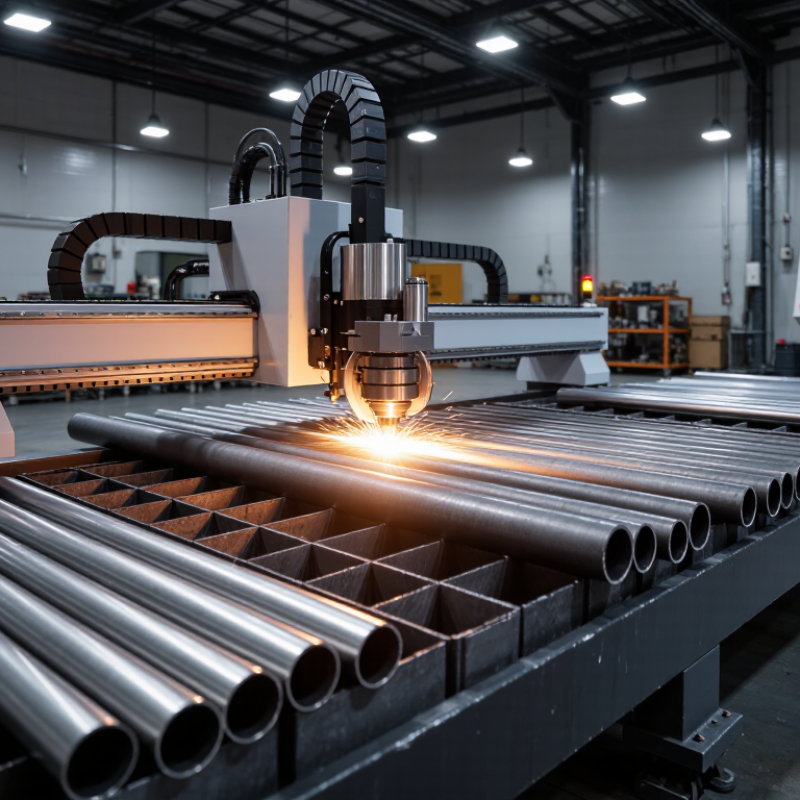
A laser tube cutter directs a focused beam onto hollow metal stock while a chuck rotates and feeds the tube. The beam melts or vaporizes a narrow path, producing cuts, slots, and shaped openings. It can handle round, square, and rectangular profiles, depending on the machine’s chuck and software. Not just straight cuts. A shop might use it to cut bolt holes into a square steel frame, then trim the ends without changing machines.
Common materials include carbon steel, stainless steel, and aluminum. Copper and brass may also be cut, but their reflectivity and heat transfer require suitable equipment and carefully tuned settings. Wall thickness, tube diameter, assist gas, and cut quality all affect results. “Can cut” is not the same as “cuts well.” Grand View Research estimated the global laser cutting machine market at US$5.2 billion in 2023 and projected 6.3% annual growth from 2024 to 2030. That report covers laser cutting machines broadly, not tube cutters alone. When comparing systems, check the stated material range and test cuts against your actual tube dimensions; catalog claims can leave out the awkward details.
How Does a Laser Tube Cutting System Work?
What Is the Best Laser Tube Cutter in China?
A laser tube cutting system turns a digital drawing into controlled cuts on metal tubing. The operator loads a round, square, or rectangular tube into the machine’s chuck. Clamps hold it steady while the chuck rotates it into position. A controller coordinates this rotation with the cutting head’s movement along the tube.
The cutting head focuses a laser beam on a small area, melting or vaporizing the material. Assist gas clears molten metal from the cut and helps keep the edge clean. The machine repeats this process to create holes, slots, notches, or separated parts. It sounds simple. Accuracy depends on setup. Tube dimensions, wall thickness, material, and focus all affect the result. Sensors may check the tube’s position, but they cannot fix every loading error.
Before production, a technician should confirm the drawing, clamp pressure, and cutting settings with a test piece. Watch for burrs, heat marks, or a cut that drifts near the tube’s end. These details can reveal a mismatch between the program and the actual material. I would not assume every tube is perfectly straight, either. Even a small bend can change how the beam meets the surface, so careful inspection remains part of the process.
Which Types of Laser Tube Cutters Are Made in China?
Chinese manufacturers produce several types of laser tube cutters, designed for different materials, tube sizes, and production volumes. Standard two-chuck machines suit many routine jobs, such as cutting round or square steel tubes for furniture frames. Operators load the tube, set its length, and let the chucks rotate it beneath the cutting head. That matters.
Three-chuck models add support for longer or thinner tubes. This can reduce wobble during cutting, especially when processing lightweight profiles. Some machines also support bevel cutting, which prepares angled edges for welding. The extra functions can be useful, but they may increase setup time and require more operator experience. Not always a simple upgrade.
Chinese suppliers also make heavy-duty cutters for large-diameter pipes, compact models for smaller workshops, and combination machines that process both sheet metal and tubes. Enclosed designs contain sparks and fumes more effectively; open-frame designs can be easier to access. Still, catalog specifications do not tell the whole story. A shop should check actual cutting samples, tube-loading limits, chuck clamping range, and software compatibility before choosing. Results can vary with material quality and setup, too.
What Features Distinguish High-Quality Chinese Tube Cutters?
A high-quality Chinese tube cutter is distinguished less by a polished control screen than by consistent results on real workpieces. Look for a rigid frame, accurately aligned chucks, and stable clamping. These features help prevent tube movement and reduce taper or burrs during cutting. Small details matter.
The machine should handle the profiles and dimensions your shop actually uses, including round, square, or rectangular tubes. Check the stated limits against your material’s wall thickness and length. A responsive chuck and well-calibrated cutting head can improve accuracy, while practical nesting software helps reduce scrap. Ask how quickly operators can change settings between jobs. A complicated interface can slow production.
Pay attention to dust extraction, guarding, and access for routine maintenance. Request a demonstration using your own tube specifications, then inspect cut edges and repeatability across several pieces. Ask for written accuracy tolerances, training details, and the expected availability of replacement parts. Do not rely on a single sample cut. One promising test is not enough. Even a strong machine may need careful setup for thin-walled or reflective materials, and that trade-off deserves honest discussion before purchase.
What Distinguishes a High-Quality Laser Tube Cutter?
Editorial assessment of practical feature importance on a 1–5 scale. This is a qualitative guide, not a product test or market survey.
How Can Buyers Compare and Select a Tube Cutter in China?
The best laser tube cutter in China depends on the parts you make, not just the advertised laser power. Start with your actual tube range: round, square, or rectangular profiles, plus the smallest and largest diameters. Check maximum wall thickness for each material, because a machine’s headline capacity may not apply equally to stainless steel and carbon steel. Details matter.
Ask suppliers to cut samples using your own drawings and material. Measure edge quality, hole position, and repeatability across several parts. A clean first cut is encouraging, but production consistency matters more. Request a demonstration with your intended tube length and profile. Watch how the chuck holds thin walls, and whether loading causes scratches or movement. I would not rely on a brochure alone.
Compare the full working setup, too. Review loading and unloading options, software compatibility, extraction, guarding, and the space needed around the machine. Ask what routine maintenance involves and how quickly common replacement parts can be supplied. Get written details on installation, operator training, warranty coverage, and remote support. Then compare total operating costs, including assist gas, consumables, and labor. One weakness in my own buying checklist: I used to focus too much on cutting speed. A fast machine can still waste time if setup is awkward or support is slow. Request references from users with similar production needs, and verify the details before choosing.