
Automated Dispensing Robot Videos

A World of Robotic Dispensing and Assembly Solutions

What Is the Best Smart Door Lock Solution for Global Buyers?

Choosing the best Smart door lock solution is not simply a technology decision. It is a fit, security, and service decision. Global buyers face different door materials, cylinder sizes, network conditions, and privacy requirements. A lock that works perfectly in a Singapore apartment may fail on a European multipoint door. That detail matters.

Market demand is expanding rapidly. Grand View Research estimates that the global smart locks market reached approximately USD 2.8 billion in 2023. Its report also projects strong growth through 2030, driven by connected homes, hotels, and rental properties. Fortune Business Insights reports a similar upward trend, although its market boundaries and figures differ. This difference deserves attention. Market reports are useful, but they are not identical. Buyers should compare definitions before trusting any forecast.

A practical Smart door lock solution should support reliable authentication, mechanical override, low-battery warnings, and secure remote management. It should also match recognized cybersecurity guidance. NISTIR 8259A recommends capabilities such as device identification, configuration control, data protection, and software updates for connected devices. Matter and other interoperability standards may simplify integration, but compatibility still depends on the lock, hub, application, and regional ecosystem. Small installation details often decide success. An experienced supplier should provide door templates, cylinder specifications, testing records, warranty terms, and responsive local support. No universal winner exists. I may be placing too much emphasis on interoperability, while installers often value simple maintenance more. The strongest choice balances security, usability, total ownership cost, and dependable support over years—not merely an impressive product demonstration.
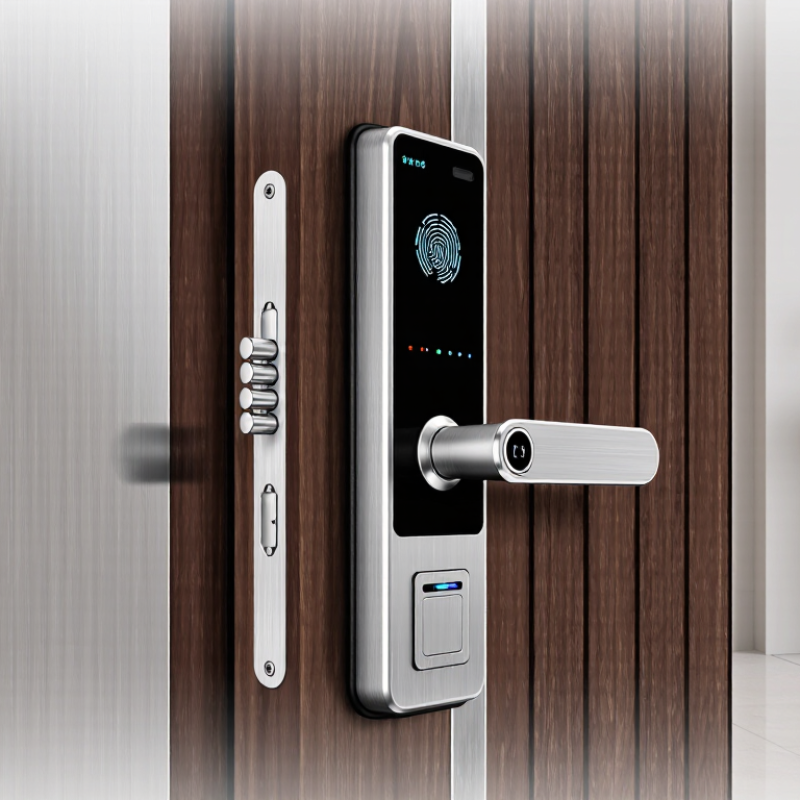
What Is the Best Smart Door Lock Solution for Global Buyers?

Smart Door Lock Basics and Core Technologies

Smart door locks replace a traditional key with electronic access control. Common options include PIN codes, fingerprint readers, mobile credentials, and temporary digital keys. Each method has practical limits. Fingerprint sensors may struggle with wet or dusty fingers. Keypads can reveal frequently used numbers. A reliable lock should also include a protected mechanical override and clear low-battery warnings.

Core technologies determine daily performance. Bluetooth supports nearby unlocking with low power use. Wi-Fi enables remote monitoring, but it usually consumes more battery. Some systems use a hub or another low-power wireless protocol for better efficiency. Encryption protects communication between the lock, phone, and cloud service. Secure boot and signed firmware can reduce tampering risks. Buyers should check operating temperature, IP rating, door thickness, and cylinder compatibility before ordering.

Tips: Test the door alignment manually. A motor cannot fix a warped frame. Keep one access method available during network outages. Ask whether guest codes expire automatically. Confirm data storage practices and regional connectivity support. In installation projects, I have seen attractive features fail because the battery compartment was difficult to reach. That detail is easy to miss. No system is perfect. A balanced choice combines physical strength, simple recovery, privacy controls, and dependable support for the buyer’s market.

What Is the Best Smart Door Lock Solution for Global Buyers?

Smart Door Lock Basics and Core Technologies

Communication range is a practical factor when selecting a smart door lock. The values below represent commonly reported indoor or single-hop ranges for major wireless technologies; actual performance depends on walls, interference, antenna design, power settings, and local installation conditions. Battery-powered locks commonly use Bluetooth Low Energy, Zigbee, or Z-Wave, while Wi-Fi models provide direct network access but typically require more power.

How to Evaluate Security, Access Methods, and Reliability

Choosing a smart door lock starts with security, not appearance.

Look for encrypted communication, signed firmware updates, and clear privacy controls. A strong system should record access events without exposing unnecessary personal data. Independent test reports are valuable, but read their scope carefully. A lock tested indoors may perform differently beside a cold, humid entrance.

Access methods should match real users. PIN codes suit family members and service staff, while temporary codes reduce key sharing. Bluetooth or app access adds convenience, but it depends on phones, permissions, and network coverage. Keep a physical override available. No lock is perfect. I would not rely on one digital method during a flat battery or weak signal.

Tips:

Test the lock on your actual door before buying in volume. Check battery warnings, offline operation, and installation tolerance. Ask about security updates, replacement parts, warranty coverage, and support response times. Confirm that the product fits local door dimensions and electrical requirements. Reliability is more than a successful first installation. A practical trial should include repeated locking, wet weather, dusty conditions, and several user profiles. Results may reveal small failures that product pages hide. That reflection matters for global buyers, especially when installers and support teams are far away.

Regional Standards, Connectivity, and Compatibility Requirements

For global buyers, the best smart door lock is not simply the most connected model. Regional standards shape safety, installation, and long-term reliability. European buyers should check Radio Equipment Directive requirements and EN 14846 compatibility. North American projects often reference ANSI/BHMA grading and local fire-door rules. Australia and New Zealand may require AS 4145.2 alignment. These details affect cylinder dimensions, emergency access, and testing procedures.

Connectivity creates another compatibility risk. Wi-Fi offers direct cloud access, but thick concrete walls can weaken signals. Bluetooth supports local unlocking and usually consumes less power. Thread can improve mesh performance, yet it requires a compatible border router. Frequency rules also differ between regions, especially for sub-GHz technologies. The Connectivity Standards Alliance reported that Matter had more than 1,300 certified products by late 2023. However, certification does not guarantee smooth operation across every phone, hub, or regional platform. That gap is easy to underestimate.

Tips: Ask suppliers for regional certificates, radio-frequency details, firmware support periods, and mechanical dimensions. Test the lock on the actual door, not only in a showroom. IoT Analytics estimated 18.8 billion connected IoT devices in 2024, showing the scale of ecosystem growth. Still, more devices can mean more integration points and more failure opportunities. A lock may pass laboratory testing yet disappoint in a humid apartment or behind a reinforced door. Compatibility should be verified in real conditions. This is where many buying decisions remain imperfect.

Installation, Management, and After-Sales Support for Global Buyers

For global buyers, the best smart door lock solution begins with installation, not a feature list. A lock should fit local door thickness, mortise dimensions, and power conditions. Before shipping, suppliers should request door photos, measurements, and opening direction. This simple check prevents costly rework. Still, no remote survey is perfect. A small mismatch can delay an entire property project.

After installation, management must remain simple across time zones. A web dashboard or mobile system should support user permissions, temporary codes, audit records, and battery alerts. Property teams need clear roles, not shared passwords. Remote troubleshooting also matters. A technician may need to check lock status while standing in another country. Connection failures happen. Offline access and local administrator controls can keep doors usable during network interruptions. Test this before handover.

Reliable after-sales support should include installation guides, spare components, firmware guidance, and defined response times. Support staff should understand both hardware and local operating conditions. A buyer should know who handles a jammed latch, drained battery, or failed keypad. Keep records. Serial numbers, installation dates, and fault photos speed up diagnosis. Good support is measured during inconvenient moments. Some projects discover unclear responsibilities only after the first failure. That warning deserves attention in the contract.

What Is the Best Smart Door Lock Solution for Global Buyers? - Installation, Management, and After-Sales Support for Global Buyers

Smart Lock Solution Typical Door Compatibility Installation Requirement Typical Installation Time Primary Unlock Methods Remote Management Best-Fit Use Case Key Advantages Common Limitations Global Buyer Suitability
Retrofit Smart Lock Most inward-opening doors with a compatible existing thumb-turn or cylinder; door geometry must be checked before purchase. Usually installed over the interior side of the existing lock. No major exterior door modification is normally required. Approximately 15–30 minutes for a compatible door. Mobile app, Bluetooth, optional keypad, physical key, and selected voice-assistant integrations. Remote control is usually available through a Bluetooth gateway or Wi-Fi bridge; access schedules and temporary permissions may be supported. Residential users, rental properties, apartments, and buyers seeking low-disruption installation. Fast installation, preserves the exterior appearance, and can often be removed without replacing the complete lockset. Compatibility varies significantly by cylinder, thumb-turn shape, door thickness, and lock orientation. Recommended for retrofit projects
Keypad Deadbolt Doors using a standard single-cylinder deadbolt preparation, subject to local door bore and backset dimensions. Requires removal and replacement of the existing deadbolt; drilling may be needed when door preparation differs. Approximately 30–60 minutes for a standard compatible door. PIN code, mobile app, physical key, and sometimes fingerprint or one-time code. Local Bluetooth management is common; Wi-Fi remote access normally requires an integrated radio or separate hub. Single-family homes, small offices, serviced apartments, and short-term rental units. Convenient code-based entry, no physical key required for everyday use, and simple user administration. Usually unsuitable for multipoint locks, narrow stile doors, glass doors, or doors with non-standard deadbolt preparation. Recommended for standard doors
Mortise Smart Lock Doors prepared for mortise lock cases; common in many residential, apartment, and hospitality markets. Requires precise mortise case, spindle, cylinder, handle, and door-thickness matching. Professional installation is often preferred. Approximately 60–120 minutes, depending on existing door preparation. Fingerprint, PIN code, RFID card, mobile app, mechanical key, and sometimes facial or QR-based credentials. Can support user groups, access schedules, audit records, and remote administration through Wi-Fi, gateway, or cloud-connected systems. Hotels, apartments, premium residences, offices, and multi-user properties. Supports integrated handles and multiple credential types; suitable for structured access management. More complex installation, higher dependence on exact door dimensions, and greater spare-parts planning requirements. Recommended for multi-user properties
Multipoint-Compatible Smart Lock Doors fitted with multipoint locking systems, commonly used on uPVC, aluminum, and some composite doors. Must match the existing gearbox, spindle height, cylinder profile, door handing, and multipoint mechanism. Approximately 60–180 minutes; specialist fitting may be required. Mobile app, PIN code, fingerprint, physical key, and selected access cards. Remote management may include status monitoring, temporary credentials, activity logs, and integration with gateways. European residential doors, premium villas, apartment developments, and retrofit projects requiring full locking-point operation. Maintains the security function of multiple locking points while adding electronic access features. The most important risk is mechanical incompatibility; a lock may not operate correctly if the gearbox or door alignment is unsuitable. Recommended after technical verification
Commercial Access-Control Smart Lock Commercial doors using electric strikes, electromagnetic locks, panic hardware, or compatible access-control door hardware. Usually requires electrical wiring, controller configuration, exit devices, and compliance checks for emergency egress. Approximately 2–6 hours per door, excluding network and access-control commissioning. RFID card, mobile credential, PIN code, biometric credential, remote release, and physical override where required. Centralized cloud or on-premises management can support roles, schedules, audit trails, multiple sites, and identity-system integration. Offices, schools, warehouses, healthcare facilities, and multi-site organizations. Scalable administration, detailed event records, and stronger integration with broader security systems. Higher installation cost, electrical dependency, network requirements, and greater responsibility for code-compliant emergency egress. Best for commercial deployments
Hospitality RFID or Mobile-Key System Hotel guestroom doors and compatible entrance hardware; door lock case and fire-safety requirements must be verified. Typically requires compatible mortise hardware, encoder or credential infrastructure, and property-management-system configuration. Approximately 60–180 minutes per door, plus system commissioning. RFID card, mobile key, PIN code, mechanical emergency key, and staff credentials. Centralized room assignment, check-in/check-out control, staff permissions, audit records, and integration with hotel-management software may be available. Hotels, serviced apartments, student housing, and managed accommodation. Supports large numbers of guests and staff with time-limited credentials and centralized administration. Requires careful system integration, battery planning, emergency-opening procedures, and local hospitality compliance review. Best for hospitality operations
Cloud-Managed Property Portfolio Solution Multiple compatible residential or commercial lock types managed through one software platform or application programming interface. Each door requires a compatible lock and reliable connectivity through Wi-Fi, Bluetooth gateways, cellular gateways, or another supported network. Approximately 30–180 minutes per door, depending on hardware and network design. Mobile credential, PIN code, RFID card, fingerprint, remote unlock, and temporary access links. Centralized portfolio management, user roles, access schedules, audit logs, battery alerts, device health monitoring, and bulk configuration. Property managers, rental operators, real-estate developers, and organizations managing multiple locations. Reduces manual key handling and enables standardized administration across regions and properties. Requires dependable software support, data-protection review, connectivity planning, and a clear subscription or service-continuity policy. Recommended for multi-site buyers
Buyer evaluation notes: Installation times are typical planning ranges for compatible doors and may increase when door modification, wiring, network setup, or local compliance work is required. Before international procurement, verify door dimensions, lock type, handing, backset, cylinder profile, operating temperature range, ingress protection, battery availability, wireless regulations, data-hosting requirements, emergency egress rules, warranty terms, replacement-part availability, firmware-update policy, and local technical support coverage.

Choosing the Best Smart Door Lock for Different Use Cases

What Is the Best Smart Door Lock Solution for Global Buyers?

Choosing the best smart door lock depends on the property, users, and local conditions. For apartments, keyless entry and temporary access codes reduce key sharing. Property managers should also check audit logs, battery warnings, and remote user control. For family homes, fingerprint access feels convenient during rushed mornings. However, a mechanical backup remains important when batteries fail or networks become unstable.

Offices need stronger administration. Look for role-based permissions, entry records, and integration with existing access systems. Hotels and serviced apartments may prioritize fast code changes between guests. Outdoor gates require weather resistance, stable wireless performance, and a strong motor. These details matter more than a long feature list.

Market data supports this expanding demand. MarketsandMarkets estimated the smart lock market at about USD 2.2 billion in 2023, projecting roughly USD 4.4 billion by 2028. Its report identifies residential and commercial security as major growth areas. Definitions differ between reports, so these figures are directional, not absolute.

Installation experience also deserves attention. A lock can be secure yet frustrating if the door is misaligned by three millimeters. Buyers should confirm door thickness, cylinder type, emergency access, and regional privacy requirements. Independent testing for durability and cybersecurity adds credibility. Still, no connected lock is risk-free. I would rather choose fewer features with dependable updates than chase every new function. Availability of local support can decide whether a smart lock remains useful after the first rainy season.

Article Source: