
Choosing the best Wafer Screws in 2026 starts with the material, not the product label. Their broad, low-profile heads spread pressure across a larger area than many standard screw heads. That can help secure thin sheet metal, brackets, and lightweight panels. But head shape alone does not determine performance.
Self-drilling wafer-head screws can cut through suitable sheet metal without a separate pilot hole. Self-tapping versions form threads in a prepared or compatible material, while machine-thread options suit assemblies with matching nuts or threaded holes. Each type has limits. Check the screw’s diameter, length, point style, thread pattern, and stated material compatibility before choosing. A drill-point screw may save a step, but it is not automatically right for every panel thickness.
The worksite matters, too. Stainless steel may suit some damp environments, while coated carbon steel can be a practical choice for other applications. Confirm that the coating and base material fit the exposure conditions; appearance alone is not enough. Match the drive style to available tools, and avoid overtightening, which can deform thin panels or damage threads. Small details count.
This guide compares common wafer-head screw types by application, material, and installation needs. It also considers where specifications deserve a closer look, including load expectations and corrosion resistance. There is no universal winner. I would be cautious about any recommendation that ignores the substrate or working conditions. A quick check of the manufacturer’s technical data can prevent an avoidable mismatch. Sometimes, the simplest-looking fastener needs the most careful selection.
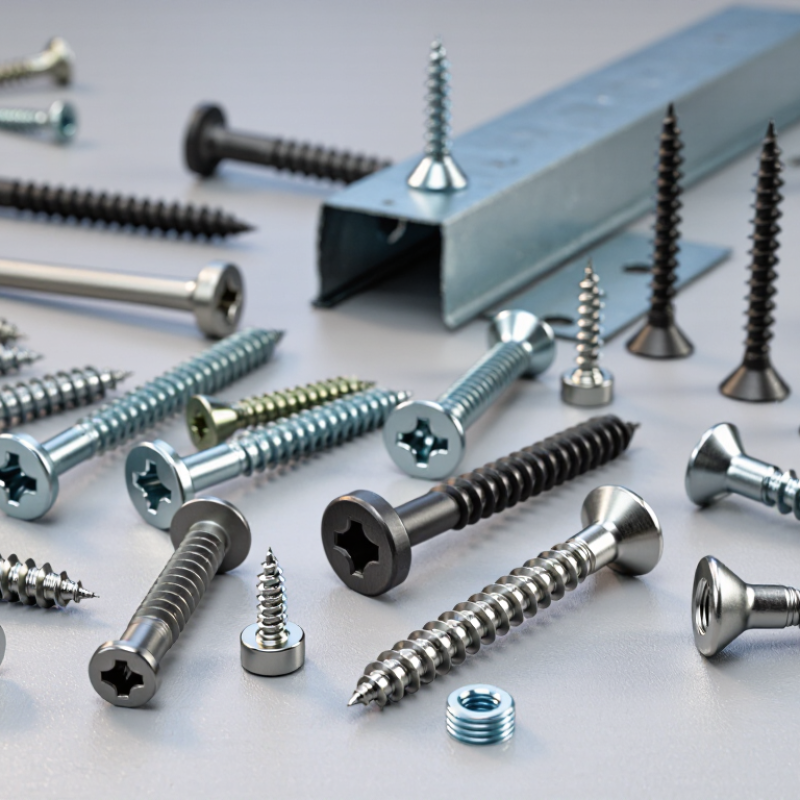
A wafer screw is a fastener with a broad, shallow head and a relatively low profile. Its head spreads contact over a wider area than a narrow pan-style head, though exact geometry varies by design. That footprint can help hold thin sheet material without an oversized separate washer. Not magic.
When tightened, the underside of the head bears against the material and transfers clamp force across its seating surface. This may reduce local pressure and help limit pull-through in suitable applications, provided the screw and substrate are a good match. The broad head can sit neatly against a panel, while its shallow shape leaves less projection. Check fit first.
Head shape alone does not determine performance. Thread form, point style, drive recess, material, and coating all affect installation and holding strength. Seat the screw squarely, then stop when the head is snug; overdriving can distort thin metal. One detail is easy to miss: a large head cannot compensate for weak material or poor edge distance. Compare the screw drawing and a sample with the actual panel thickness and available tool access.
Wafer screws are recognized by their wide, low-profile heads, which spread pressure across a larger surface than many narrower heads. That makes them useful for fastening thin panels, brackets, and light-gauge metal where a raised head could snag or look out of place. The head shape is only one part of the choice. Point style, thread, material, and drive also matter.
Self-drilling wafer screws have a small drill-shaped point that can pass through thin metal without a separate pilot hole, provided the screw suits the material thickness. Self-tapping versions form or cut their own threads, but often need a pilot hole in harder substrates. For softer materials, a sharp-point screw may be more suitable. Check the substrate. Phillips and square drives are common options; the right one depends on tool access and how much torque the job requires. Stainless steel can suit damp settings, while coated carbon steel may be adequate indoors. Fit matters. A screw that is too long can damage hidden components, and one that is too short may not hold securely. It is easy to focus on the head and overlook the thread; that choice deserves a second look.
| Type | Typical Drive and Point | Common Materials and Finishes | Best Suited For | Main Advantages | Things to Consider |
|---|---|---|---|---|---|
| Phillips-drive wafer-head machine screw | Phillips recess; machine thread; usually a blunt point | Carbon steel with zinc plating; stainless steel options | Joining metal parts with a tapped hole or a nut, such as enclosures, brackets, and light assemblies | Broad, low-profile head spreads bearing pressure over a wider area than a narrow-head screw; widely available | Requires a prepared threaded hole or nut. Use the correct driver size to reduce cam-out and recess wear. |
| Combination-drive wafer-head machine screw | Typically a Phillips and slotted combination recess; machine thread | Steel with common protective coatings; stainless steel options | General assembly and maintenance where either a compatible Phillips or flat-blade driver may be used | Offers more than one driver option and retains the low-profile, wide-bearing head shape | The recess is not a substitute for choosing a properly fitting driver. Confirm the thread size and pitch match the mating hole. |
| Torx-drive wafer-head screw | Six-lobe star recess; available in machine-thread and sheet-metal configurations | Carbon steel with plated finishes; stainless steel options | Production or service work where controlled installation and a matching driver are available | The matching six-lobe driver provides good engagement and can help reduce cam-out compared with many conventional cross-recess drives | Requires the correct Torx bit size. Check whether the screw is a machine screw or a self-tapping type before ordering. |
| Self-tapping wafer-head screw | Often Phillips or Torx; sharp or blunt point depending on the design; forms or cuts mating threads | Hardened carbon steel, often with a corrosion-resistant coating; stainless steel variants are available | Attaching thin sheet metal or suitable plastics when a pre-tapped hole is not provided | Can create a mating thread during installation, reducing the need for pre-tapping in compatible materials | “Self-tapping” covers different thread designs. Select a point and thread suited to the material, and use a pilot hole when specified. |
| Self-drilling wafer-head screw | Usually Phillips or Torx; drill-point tip cuts its own pilot hole and threads | Hardened steel with protective coatings; stainless options depend on the design and application | Sheet-metal fastening where the screw’s drilling capacity is suitable for the combined material thickness | Can combine drilling and fastening in one operation, avoiding a separate pilot-drilling step within its rated capacity | Check the manufacturer’s material-thickness and drilling-capacity specifications. It is not suitable for every metal thickness or substrate. |
| Stainless-steel wafer-head screw | Drive and thread vary; commonly available as machine or self-tapping styles | Common grades include 304 for general corrosion resistance and 316 for improved resistance in many chloride-bearing environments | Outdoor, damp, or washdown settings when the selected grade is appropriate for the exposure | Provides corrosion resistance without relying solely on a surface coating | Grade selection depends on the environment. Stainless fasteners can gall during installation; suitable speed, lubrication, and driver fit may help. |
| Security-drive wafer-head screw | May use a pin-in-Torx or another tamper-resistant recess; thread and point vary | Steel with protective finishes; stainless steel versions may be available | Panels, equipment covers, and fixtures where casual removal should be discouraged | Requires a matching security bit, making removal less convenient with ordinary tools | It is a deterrent rather than a high-security barrier. Confirm tool availability and ensure the selected thread suits the substrate. |
Selection tip: Choose the screw by matching its thread, point, material, drive, and length to the joint and substrate. A wafer head provides a broad, low-profile bearing surface, but the appropriate size and installation method depend on the application.
For wafer screws used around wafer-handling equipment, material choice affects corrosion resistance, particle risk, and maintenance. ASTM A240/A240M specifies 304 stainless steel with 18–20% chromium and 8–10.5% nickel; 316 adds 2–3% molybdenum. That addition can improve resistance to chloride exposure, such as residue from cleaning.
It does not make a screw immune to corrosion. In practice, check the process chemicals, temperature, and cleaning cycle before choosing a grade.
Coatings can protect carbon-steel screws, but they also change dimensions and surface behavior. A zinc-flake coating, for example, may suit exposed assemblies, yet its thickness and wear need checking where wafer clearances are tight. In clean or vacuum-adjacent equipment, loose particles and outgassing deserve attention; a coating that performs well outdoors may be a poor fit there.
A small caveat. ISO 9227:2022 describes salt-spray testing, but test hours should not be treated as a direct prediction of service life. Ask for coating and corrosion-test records, and inspect screws after representative cleaning cycles.
The right choice is not always the most corrosion-resistant one. Sometimes the simplest uncoated stainless screw is easier to maintain. It is worth testing that assumption on the actual assembly.
What Are the Best Types of Wafer Screws in 2026?
How to Choose the Right Wafer Screw for Your Project
The right wafer screw depends on the materials, load, and working conditions—not simply the head style. Its broad, low-profile head can spread pressure across thin sheet material while sitting close to the surface. For light-duty sheet-metal assembly, a fine-thread screw may suit thin metal; coarser threads generally provide better engagement in wood or other softer materials. Match the screw length to the combined material thickness, with enough thread entering the base layer without protruding unnecessarily.
Check the substrate and installation method before selecting a point style. Self-drilling points can create a hole in suitable metal, while self-tapping screws typically need a prepared hole or a material that allows them to form threads. Choose a corrosion-resistant finish for damp or outdoor settings, and consider whether dissimilar metals could cause compatibility problems. Do not overtighten. A wide head still cannot prevent damage if excessive torque crushes a thin panel. I’d test a sample joint first; real materials can behave differently than expected.
Tips: Confirm the head diameter fits your clearance and cover requirements. Use the correct driver bit, keep the tool square, and check for a snug fit without stripping the drive. For critical joints, verify the manufacturer’s load guidance and test the actual material stack. Small detail, big difference.
Compare common nominal diameters for metric self-drilling screws. The right wafer screw depends on the materials, combined thickness, required load, and drilling-point specification.
The sizes shown are common nominal diameters, not a recommendation for every project. Confirm the screw specification and substrate requirements before selecting a size.
Wafer screws have a wide, low-profile head that spreads pressure across thin materials. They are commonly used in light-gauge steel framing, HVAC ductwork, metal enclosures, and some cabinet fittings. The broad head can help hold sheet material securely without a separate washer. Small details matter. Match the screw point and thread to the materials; self-drilling designs suit some metal-to-metal joints, while other assemblies need a pilot hole.
During installation, keep the driver straight and use a bit that fits the screw recess snugly. Set the tool to a moderate speed, then stop when the head sits firmly against the surface. Excess torque can strip thin metal or damage the fastener. For damp or corrosive locations, check that the screw’s coating is suitable and compatible with the joined materials. A frequent oversight is choosing by head size alone. Substrate thickness and joint movement matter, too.
Tips: Test one screw on scrap material first. Check that the joint stays tight without crushing or distorting the sheet. If the screw spins freely, reassess the hole size, thread engagement, and material thickness before continuing.
