How to Choose Aesthetic Washi Tape for Your Business?
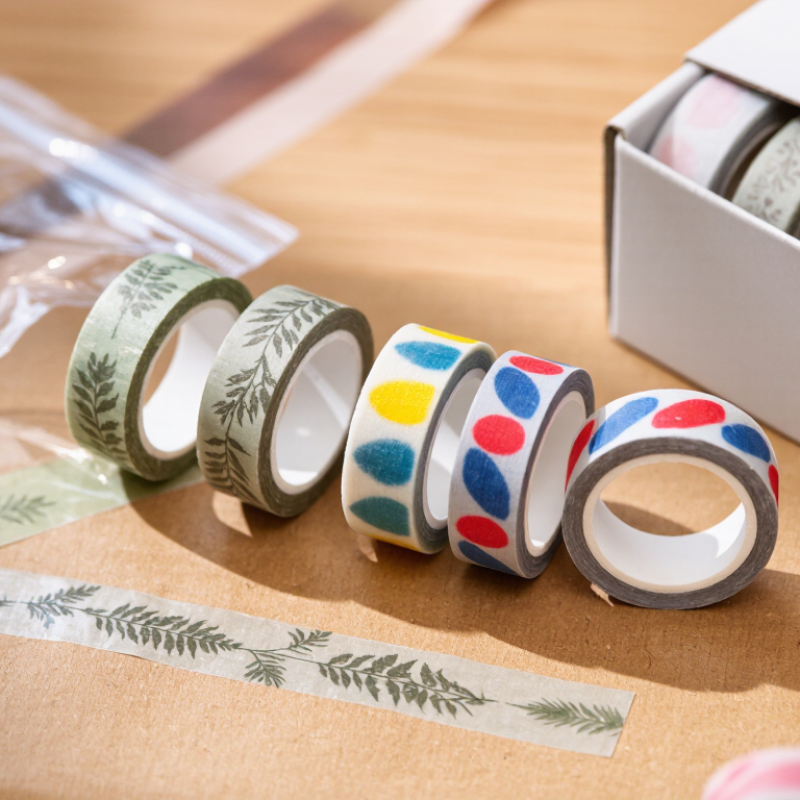
Choosing Aesthetic Washi Tape for your business is not just a color decision. It affects how products look, feel, and photograph when customers open an order. A muted botanical print can soften a kraft-paper parcel; a bright geometric pattern can make a planner kit feel more playful. Small details matter.
The market context is worth noting, but it should be read carefully. Grand View Research estimated the global paper packaging market at about US$362.8 billion in 2023 and forecast continued growth through 2030. That figure covers paper packaging broadly, not washi tape specifically. It signals a wider commercial interest in paper-based presentation, not proof that every decorative tape will sell. A useful distinction.
For business buyers, selection should start with practical checks: paper quality, adhesive strength, print consistency, roll length, and reliable supply. Request samples and test them on the actual surfaces you package, such as coated mailers, glassine bags, or cardboard boxes. Check whether ink rubs off, edges lift, or colors shift under warm lighting. These details can prevent costly surprises. I would not choose by a screen image alone; monitor colors can mislead, and that is an easy mistake to make.
This guide explores how to match design, performance, and budget with your brand and customer needs. It also considers minimum order quantities and supplier communication, because an attractive sample is only part of the decision. The goal is not the prettiest roll. It is tape your team can use consistently.
Define Business Use Cases and Required Washi Tape Performance
Choosing aesthetic washi tape for a business starts with its actual use, not its appearance. A decorative pattern may look attractive online but fail during packing. Define where the tape will work: product wrapping, gift boxes, journaling kits, retail displays, or event materials. Each use requires different performance.
For lightweight paper wrapping, test clean adhesion and easy removal. The tape should hold folded edges without tearing thin paper. For labels or display cards, check whether ink stays sharp on the surface. Some finishes reflect light and reduce readability. Moisture also matters. Tape used near drinks, bathrooms, or refrigerated products may curl or lose grip. Small samples reveal these problems early.
Measure the tape’s width, thickness, roll length, and color consistency across several rolls. Ask for material details and storage guidance from the supplier. A reliable supplier should provide samples, test information, and clear production standards. Keep a simple record of results, including surface type, application time, and removal condition. I once underestimated textured paper; the tape looked secure, but one corner lifted overnight. That mistake changed our testing process. Appearance still matters. Performance decides whether customers trust the package.
How to Choose Aesthetic Washi Tape for Your Business?
Define Business Use Cases and Required Washi Tape Performance
This planning chart rates the relative performance priority for common business use cases on a 1–5 scale. A higher score means the washi tape should place greater emphasis on that performance attribute when selecting materials, finishes, and decoration styles.
Compare Paper Weight, Width, and Roll Length in Supplier Specifications
How to Choose Aesthetic Washi Tape for Your Business?
Supplier specifications can look simple, but small differences affect production and customer experience. Paper weight, measured in gsm, influences texture, opacity, and writing performance. Lightweight paper feels delicate and works well for planners or gift wrapping. Heavier paper often feels more premium. It may also resist tearing during application. Request samples before ordering. A specification sheet alone cannot show surface feel.
Width changes both design impact and material usage. Narrow 5 mm tape suits borders, labels, and fine accents. Wider 15 mm or 20 mm tape creates stronger visual blocks on packaging. Check the stated width against a ruler. I once assumed a small difference was harmless, but it affected label alignment across several products. Tolerance matters when your artwork includes repeated patterns. Ask suppliers how consistently they control width between batches.
Roll length deserves careful checking. A roll marked 10 meters may include a short unwinding section or slight measurement tolerance. Confirm whether the length is nominal or guaranteed. Compare length with paper weight to estimate your real material cost. A heavier roll may appear expensive, yet provide better coverage and fewer replacements. Ask for core size, winding tightness, and packing details. Loose winding can create wrinkles before the tape reaches your customer. I would also test adhesion on paper, glass, and recycled cartons, because attractive specifications do not always predict practical performance.
How to Choose Aesthetic Washi Tape for Your Business? - Compare Paper Weight, Width, and Roll Length in Supplier Specifications
The specifications below are illustrative examples of common washi tape formats, not quotations from particular suppliers. Confirm paper weight, dimensions, adhesive properties, and tolerances with your supplier before ordering.
| Example Format | Paper Weight | Tape Width | Roll Length | Typical Use | What to Check in Supplier Specifications |
| Fine Detail | Approximately 28–35 g/m² | 5 mm | 5 m | Thin borders, planners, and small labels | Confirm the narrow width is cut consistently and the printed design remains legible at small scale. |
| Slim Accent | Approximately 28–35 g/m² | 10 mm | 10 m | Light packaging accents and journaling | Check that the roll length is measured per roll and ask whether the stated length has a production tolerance. |
| Everyday Standard | Approximately 28–35 g/m² | 15 mm | 10 m | General craft use, gift wrapping, and product packaging | Request a physical sample to assess color, print alignment, paper feel, and how cleanly the tape tears by hand. |
| Wide Decorative | Approximately 28–35 g/m² | 20 mm | 10 m | Larger motifs, parcel decoration, and scrapbook layouts | Check artwork repeat length and usable printed area, especially when the design includes a repeating pattern. |
| Extra-Wide Feature | Approximately 28–35 g/m² | 25 mm | 10 m | Statement borders, journaling headers, and broad package accents | Verify that the adhesive holds on your intended surface while still allowing the tape to be repositioned or removed as needed. |
| Bulk-Use Roll | Approximately 28–35 g/m² | 15 mm | 20 m | Frequent packing, workshop, or retail use | Compare cost per metre, roll dimensions, and core size; a longer roll may be larger in diameter and need different storage. |
Buying tip: Paper weight alone does not determine tape performance. Compare samples for print quality, tearability, adhesion, and removal on the surfaces your customers are likely to use.
Evaluate Peel Adhesion with ASTM D3330 Test Data
Aesthetic washi tape must look good on a package and release cleanly from its backing. ASTM D3330 peel testing offers measurable data on pressure-sensitive tape adhesion. The result is usually reported as force per unit width, such as ounces per inch or newtons per 10 millimeters. Higher is not automatically better.
Ask suppliers for the test method, substrate, peel angle, pull rate, and dwell time. These conditions affect the reading. A stainless-steel result can help compare samples, but it may not predict performance on kraft paper, coated cartons, or glassine. Test the tape on your actual packaging, too. Keep the surface clean and apply consistent pressure. Then check adhesion after a set dwell period and note any edge lifting or paper damage.
Look closely at the spread in results, not just the average. A roll that varies can frustrate packers. For a small trial, mark each sample, use the same carton stock, and record whether the tape peels away smoothly. That detail matters. ASTM data is useful, but it is not the whole story: color, print coverage, paper texture, and storage conditions can change handling. I would not choose on one test sheet alone.
Check Print Quality, Colorfastness, and Ink Compatibility Before Ordering
When choosing aesthetic washi tape for your business, attractive artwork is only the beginning. Print quality must survive close inspection. Request a physical sample, not only digital images. Check whether fine lettering stays sharp along the tape edges. Use a magnifying glass if necessary. Look for uneven ink, fuzzy lines, pinholes, and visible color gaps. A clean first impression matters on packaging, stationery, and product labels.
Colorfastness deserves a practical test. Place a taped sample near a sunny window for seven days. Keep another piece in a drawer for comparison. Rub both samples with a dry white cloth, then a slightly damp cloth. Fading or color transfer can damage your presentation. Test darker shades carefully. They often reveal weakness sooner. My team once approved a beautiful sample too quickly. The red dulled after several days. That mistake changed our checking process.
Ink compatibility also affects production. Ask which ink system was used and whether it suits your intended surface. Test the tape on coated paper, kraft paper, glass, and plastic if needed. Watch for bleeding, smearing, curling, or poor adhesion. If you print over the tape, allow enough drying time before stacking items. Small trials prevent expensive rework. Still, no test predicts every storage condition. Record your results, question optimistic claims, and order a modest batch before scaling.
Verify FSC Chain-of-Custody Claims and Minimum Order Quantities
Choosing aesthetic washi tape for business starts beyond attractive colors. A soft sage pattern may photograph beautifully, yet paper quality and adhesive shape customer experience. Request physical samples before approving production. Examine edge cutting, print registration, surface texture, and residue after removal. Test the tape on kraft boxes, glass, and coated cards. Some designs look elegant under studio lighting but appear dull in daylight. Small details matter. Ask for material composition, roll length, width tolerance, and storage guidance. These records show whether a supplier understands performance, not only appearance.
For FSC claims, request the supplier’s current chain-of-custody certificate and certificate code. Verify it through the official FSC certificate database, rather than trusting a cropped PDF. Check the certificate holder, validity dates, product scope, and coverage of decorative paper products. Ask for transaction documents identifying FSC-certified materials and the relevant claim. An FSC logo on packaging is not proof by itself. Keep quotations, approvals, invoices, and batch details together. This creates a practical audit trail. Paperwork can contain errors. Question mismatched company names or vague product descriptions immediately.
Minimum order quantities deserve equal attention. Confirm whether the MOQ applies per artwork, color, size, or total order. A quoted 5,000 rolls may mean 5,000 rolls for each design. Ask about sampling fees, setup charges, packaging, lead time, and reordering flexibility. Calculate storage space before selecting several patterns. A small test order may cost more per roll, but it can reveal weak adhesion or color inconsistency early. Do not assume the lowest MOQ is safest. Suppliers may reduce quantities by simplifying materials or finishing. Approve a pre-production sample before committing. My first estimates have sometimes overlooked packaging volume.