How to Choose High Silicon Steel for Your Needs?
Choosing High Silicon Steel is not just a question of maximizing silicon content. The right grade depends on the magnetic performance, operating frequency, manufacturing process, and cost your application can support. Silicon can increase electrical resistivity and help reduce core losses, but higher silicon levels may also make the material more brittle and harder to stamp or form. A grade that looks excellent on a datasheet may disappoint on the production line.
The demand context is changing. The International Energy Agency’s Electricity 2024 report projects global electricity demand growth averaging about 3.4% annually from 2024 to 2026. In its 2023 report on electricity grids, the IEA says annual grid investment needs to rise above $600 billion by 2030. These trends strengthen the case for efficient transformers and electrical equipment, where core material choices matter. Still, broad demand forecasts cannot tell you which grade fits a specific design. That part requires careful comparison.
Start with the actual operating conditions: frequency, flux density, core geometry, temperature, and acceptable losses. Then check grade-specific test data, thickness, coating, and forming limits against your manufacturing method. Ask suppliers how their figures were measured; test conditions are not always directly comparable. Small details count. A thin strip that reduces losses may also raise handling costs or scrap. This guide explains how to balance magnetic efficiency, manufacturability, and budget when selecting High Silicon Steel. There is no universal best grade, and a pilot run may reveal what the specification misses.
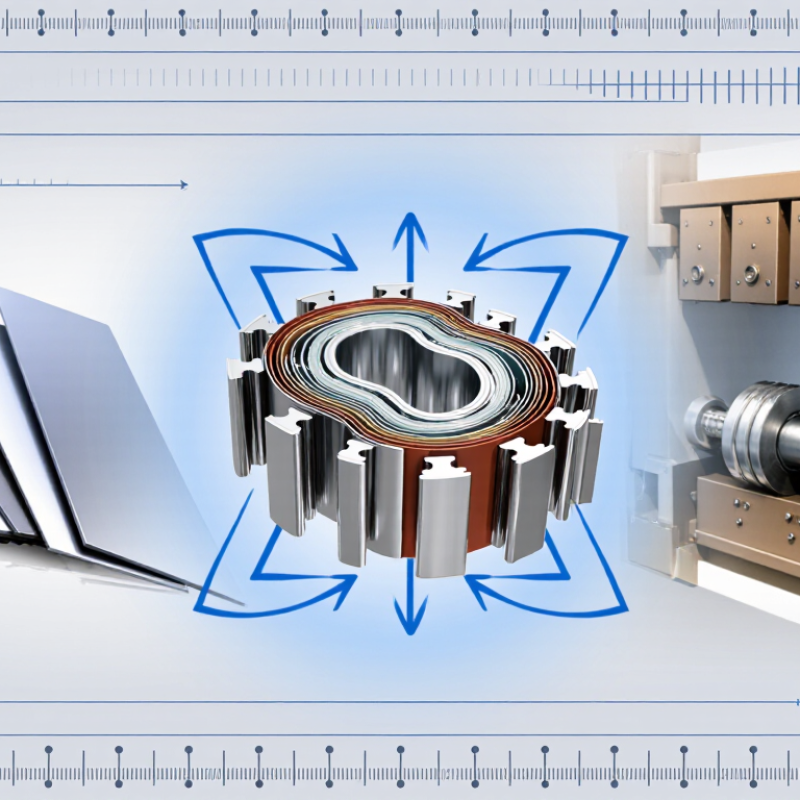
Define the Operating Requirements for High Silicon Steel
Before choosing high silicon steel, define the conditions it will face in service. Record the operating frequency, peak magnetic flux density, waveform, and temperature range. A transformer running at 50 or 60 Hz may need different magnetic properties from a component exposed to faster switching. Note whether operation is continuous, intermittent, or subject to brief overloads. Small details matter.
Set measurable targets for core loss and magnetic performance at the actual frequency and flux density. Avoid comparing values measured under different test conditions. Also describe how the steel will be processed: sheet thickness, cutting method, stacking approach, and any forming steps. Higher silicon content can improve electrical resistance, but may make the material more brittle. That trade-off is easy to underestimate.
Check whether handling and fabrication fit the design, not just whether a data sheet looks suitable. Ask for test conditions and relevant material data, then validate the choice in a representative prototype. A prototype may reveal a gap between laboratory figures and real operating behavior. Temperature, joints, and manufacturing variation can all affect results.
Compare Silicon Content and Magnetic Performance
When comparing high-silicon steel, start with the silicon percentage, but do not treat it as a performance score. More silicon raises electrical resistivity, which can limit eddy-current losses in alternating magnetic fields. At suitable frequencies, this may improve core efficiency. Yet added silicon generally lowers saturation flux density and can make the sheet harder and more brittle to roll, cut, or stamp. Trade-offs matter.
Compare data measured at the same frequency, peak flux density, thickness, and temperature. Otherwise, two loss figures may not be comparable. Check core loss in W/kg, magnetic permeability, and the B-H curve, noting each test condition. For a compact transformer, low loss at its operating point may matter most. For a motor exposed to changing loads, saturation margin and mechanical durability also deserve attention. Small differences count.
Request a datasheet and verify it against your design’s frequency and flux density. A grade with higher silicon is not automatically better. Processing can alter final magnetic behavior, and cut edges may perform differently from laboratory specimens. This is easy to miss. If operating conditions remain uncertain, compare candidate grades in a representative core before committing; chemistry alone may not reveal the best fit.
How to Choose High Silicon Steel: Silicon Content vs. Magnetic Performance
Compare the trade-off: increasing silicon content raises electrical resistivity, helping reduce eddy-current losses, while saturation flux density generally decreases.
Values are representative approximate material-property trends for iron-silicon alloys, not guaranteed specifications for a finished electrical-steel grade. Actual performance varies with composition, processing, thickness, and test conditions.
Assess Sheet Thickness, Coatings, and Processing Needs
When choosing high-silicon electrical steel, match sheet thickness to the operating frequency and loss target. Thinner sheets generally limit eddy-current losses, but can raise material and handling costs. The IEA’s Energy Efficiency 2023 report estimates that electric motor systems use about 45% of global electricity, making material selection a practical efficiency decision. For a compact, high-frequency core, compare thin gauges; for a larger, slower machine, check whether the added cost brings enough benefit.
Coating and fabrication choices matter just as much. Insulation coatings help limit current flow between sheets, but confirm that the coating suits your stacking, bonding, and heat-treatment process. IEC 60404-8-7 provides specifications for cold-rolled, non-oriented electrical steel sheets and strips; use the applicable grade requirements when comparing supplier data. Check the actual thickness tolerance and magnetic-loss figures, not just the grade label. A coating that performs well in a test may not survive your process unchanged.
Processing can expose the trade-offs. High-silicon sheet can be brittle, so tight bends or aggressive punching may cause edge cracking. Ask for trial laminations and inspect cut edges under magnification. I still recheck this. A small burr can bridge insulation between sheets, while stress from cutting may affect magnetic performance. Include your cutting method, annealing plan, and coating limits in the specification.
Match Steel Grades to Applications and Fabrication Methods
Choosing high silicon steel starts with the magnetic job. Transformer cores often use grain-oriented grades, which guide magnetic flux along a preferred direction. Motors and generators usually need non-oriented steel because flux changes direction during rotation. Check the grade’s core loss, magnetic induction, thickness, and coating data against your design. A lower core loss can reduce operating heat, but it may come with higher material or processing costs. Fit matters.
Fabrication can narrow your choices. Thin, high-silicon sheets may be brittle, especially during tight bending or punching. Ask the supplier for forming limits and test the actual sheet thickness, not just a sample with different processing. If your parts require sharp corners, complex shapes, or frequent stamping, prioritize grades that your shop can cut and handle reliably. The best magnetic figures are not useful if parts crack on the production line.
Tips: Match grain orientation to the direction of magnetic flux. Confirm insulation coating compatibility with your assembly process. Run a small trial batch before committing to a full order; even careful planning can miss a real-world handling issue.
Check Standards, Supply Availability, and Total Cost
Choosing high silicon steel starts with the required magnetic performance, not a grade name alone. Check the applicable specification, such as IEC 60404-8-4, and confirm silicon range, thickness, coating, and tolerances. Compare core-loss figures only when frequency and magnetic flux density match your operating conditions. Ask for mill test certificates and verify how samples are tested. Small details matter.
Supply availability deserves equal attention. Request current lead times, minimum order quantities, available sheet widths, and evidence that the quoted grade is regularly produced. The International Energy Agency’s 2023 report, Electricity Grids and Secure Energy Transitions, says annual grid investment must rise to more than $600 billion by 2030. That broader demand outlook is not a forecast for electrical steel, but it signals why capacity and delivery dates need checking. A promised date is not always a secured slot.
Compare total cost per usable part, not just price per tonne. Include slitting, transport, storage, stamping yield, scrap, and any processing needed to meet magnetic targets. One easy-to-miss point: a cheaper sheet can create more edge waste if its width poorly fits your cutting plan. Ask suppliers for trial quantities and record actual yield. This takes time. It can still reveal a weak assumption before a large order.