
Automated Dispensing Robot Videos
A World of Robotic Dispensing and Assembly SolutionsWhy Choose Sodium Batteries for Energy Storage?
As electricity systems add more wind and solar power, storing energy becomes as important as generating it. A Sodium Battery offers one possible way to store electricity for homes, businesses, and grid-scale projects. Sodium is widely available, and some sodium-ion designs can use materials that reduce dependence on scarcer battery ingredients. That potential is appealing. But material availability alone does not determine a storage system’s cost, safety, or useful life.
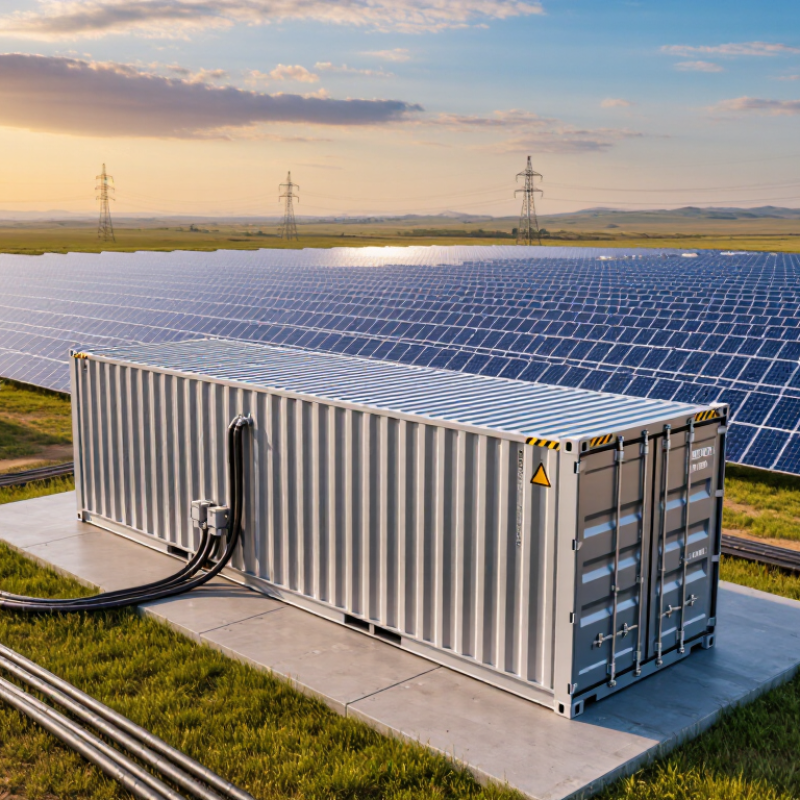
Picture a container beside a solar farm, holding surplus afternoon power for evening demand. In this setting, weight and compactness may matter less than cost, operating conditions, and dependable cycling. Sodium-ion batteries may suit some stationary applications, though results vary by cell chemistry and system design. They generally store less energy per unit of weight than many lithium-ion batteries, which can affect space and transport needs. A lower purchase price is not guaranteed, either.
A careful comparison should look beyond headlines. Check usable capacity, round-trip efficiency, cycle-life testing, thermal management, warranties, and performance across expected temperatures. Ask whether published figures come from independent tests or manufacturer specifications. Details matter. Sodium batteries are still developing, and long-term field data may be less extensive than for established alternatives. That uncertainty deserves attention, not dismissal. For some projects, sodium may offer a practical balance; for others, another technology may fit better. The right choice depends on the site, duty cycle, and total lifetime cost.
What Sodium-Ion Batteries Are and How They Work
A sodium-ion battery stores energy by moving sodium ions between two electrodes. Inside a sealed cell, the cathode may use a sodium-containing metal oxide, while the anode often uses hard carbon. An electrolyte carries ions; a thin separator keeps the electrodes apart. During charging, sodium ions travel from cathode to anode. Electrons take a separate route through the charger. When the battery powers a device, both flows reverse. That is the basic chemistry.
The operating idea resembles lithium-ion technology, but sodium is more abundant in Earth’s crust. The International Energy Agency’s Global Critical Minerals Outlook 2024 reports about 170 GWh per year of announced sodium-ion manufacturing capacity for 2030. That figure describes planned capacity, not guaranteed production. Sodium-ion cells can be useful where cost, material availability, or frequent cycling matters. However, they generally store less energy per kilogram than leading lithium-ion cells. A heavier pack may be needed. Not a small detail.
Tips: Check the cell’s temperature range, cycle-life test conditions, and usable capacity before comparing systems. A number without test conditions can mislead. Sodium chemistry is promising, but performance still depends on the exact electrodes, electrolyte, and battery design.
Why Choose Sodium Batteries for Energy Storage? — What Sodium-Ion Batteries Are and How They Work
| Dimension | Sodium-Ion Battery Details | Why It Matters for Energy Storage |
|---|---|---|
| What it is | A rechargeable battery that moves sodium ions between a positive electrode (cathode) and a negative electrode (anode) during charging and discharging. | It stores electrical energy through reversible electrochemical reactions and can be used in stationary storage systems. |
| How charging works | An external power source drives sodium ions from the cathode through the electrolyte to the anode. Electrons travel through the external circuit to the anode. | Energy is stored in the battery’s electrode materials and released later when the cell is connected to a load. |
| How discharging works | Sodium ions move back toward the cathode through the electrolyte, while electrons flow through the external circuit and provide electrical power. | The ion flow inside the cell and electron flow through the circuit together deliver usable electricity. |
| Typical electrode materials | Cathodes can include layered metal oxides, polyanionic compounds, or Prussian blue analogues. Hard carbon is commonly used as the anode. | Different material choices affect energy density, power, cost, cycle life, and operating-temperature performance. |
| Electrolyte and separator | The electrolyte carries sodium ions between the electrodes. A porous separator keeps the electrodes apart while allowing ions to pass through. | The separator helps prevent an internal short circuit; the electrolyte and electrode chemistry influence safety and performance. |
| Abundant active material | Sodium is widely available in natural sources, including seawater and mineral deposits. The exact materials used vary by cell chemistry. | Broad availability can support supply-chain diversification, although it does not by itself guarantee a lower finished-battery cost. |
| Energy density | Generally lower than that of many lithium-ion batteries on a weight basis, though actual values depend on the cell design and chemistry. | This can make sodium-ion systems less suited to applications where minimum weight and volume are critical, but less restrictive for stationary installations. |
| Power and response | Some sodium-ion designs can provide strong power output and respond quickly; capability depends on the particular cell and system. | Fast response can help with grid balancing, renewable-energy smoothing, and other short-duration power services. |
| Cold-temperature behavior | Some sodium-ion chemistries can retain useful performance at low temperatures, but results vary by cell design and operating conditions. | Cold-weather suitability should be assessed using the manufacturer’s operating limits and system-level testing. |
| Safety considerations | Safety depends on the complete cell chemistry, construction, controls, and installation. Sodium-ion batteries are not risk-free and can still experience thermal or electrical failures. | Appropriate battery-management systems, thermal controls, protection devices, and installation practices remain essential. |
| Potential applications | Stationary grid storage, renewable-energy shifting, backup power, and other uses where weight is less important than cost, availability, or system performance. | These applications can use stored energy to help balance electricity supply and demand or provide power when generation is unavailable. |
| Key trade-off | Potential supply-chain and material-availability advantages are balanced against generally lower gravimetric energy density and chemistry-dependent performance. | The best choice depends on the project’s requirements for cost, lifespan, energy capacity, power, temperature range, safety, and footprint. |
Note: Sodium-ion battery performance varies substantially by chemistry, cell design, and operating conditions. Compare tested system-level specifications when evaluating storage options.