
Choosing the right Carbon Steel grade starts with the job, not the price tag. A bracket in a dry workshop faces different demands from a pressure-carrying pipe or a truck frame exposed to road salt. Strength matters, but so do formability, weldability, hardness, impact performance, and the surrounding environment. Small differences can affect how a plate bends, how a weld performs, or how quickly corrosion becomes a concern. Details matter.
Grade names can look familiar while referring to different specifications. Check the applicable standard, product form, and mill test certificate before comparing options. A36, 1018, and 1045, for example, have different compositions and typical applications; they are not automatic substitutes. This guide looks at how to match grade properties to service conditions, fabrication methods, and purchasing requirements. It also explains why published values need context: thickness, heat treatment, and test methods can influence results. A datasheet is useful, but it cannot describe every detail of the finished part. Not always. When a component carries significant loads or operates in a demanding environment, confirm the selection with a qualified materials or design professional. The right choice is the one supported by verified specifications and the actual conditions the steel must withstand. Sometimes the overlooked detail is the one that changes the decision.
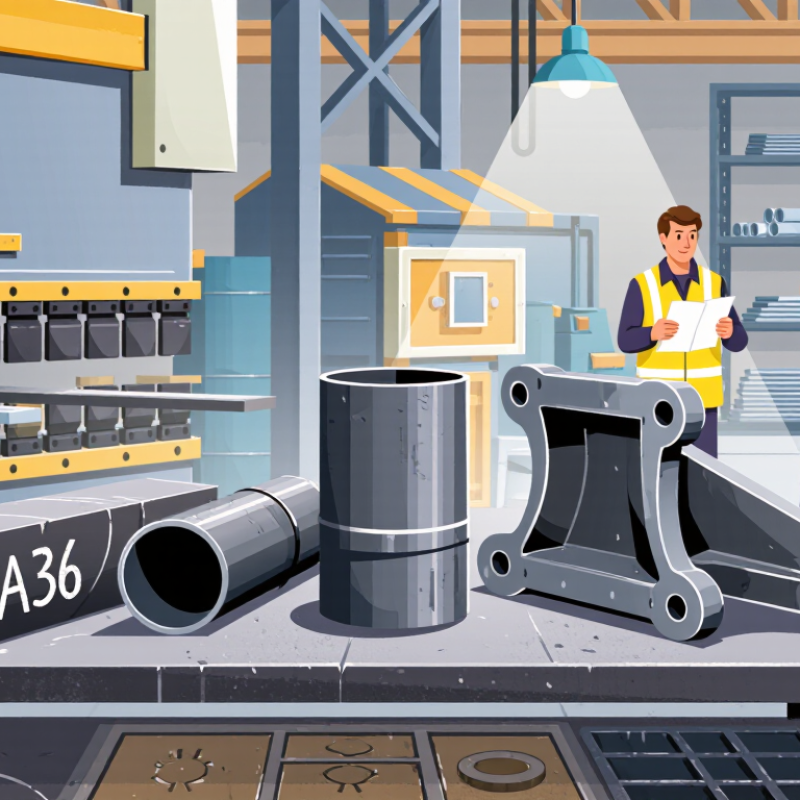
A carbon steel grade identifies a material’s chemistry and the properties required by a particular standard. Carbon content is important, but it is not the whole definition. Manganese levels, permitted impurities, manufacturing route, and heat treatment can also affect performance. SAE J403, for example, specifies 0.43–0.50% carbon for grade 1045. That range helps distinguish it from lower-carbon steels, but it does not alone guarantee a part’s strength or behavior after welding. Check the applicable standard and product specification.
Mechanical requirements matter, too. ASTM A36 specifies a minimum yield strength of 36 ksi for relevant product thicknesses, showing that grades can be defined by performance as well as chemistry. A common specification trap is treating a familiar grade name as a complete purchasing instruction. It may omit thickness, delivery condition, or testing requirements. World Steel Association’s World Steel in Figures 2024 reports 1.89 billion tonnes of crude steel production in 2023; at that scale, clear grade and test documentation matter. Still, a standard cannot predict every shop-floor result. Verify the material certificate, then consider forming, welding, and service conditions.
Choosing a carbon steel grade starts with the job’s actual demands, not its label. For a welded frame, prioritize strength, formability, and weldability. ASTM A36/A36M specifies a minimum yield strength of 250 MPa for common structural plate thicknesses. That figure helps compare design requirements, but it does not describe impact toughness or performance in cold service. A thicker section can also behave differently during fabrication.
Carbon content is another practical clue. SAE J403 lists 1045 steel at 0.43–0.50% carbon; this grade can offer greater hardness and strength than low-carbon options, but welding and forming may need more care. Check the full specification, thickness limits, heat treatment, and test requirements. Match the grade to load, temperature, wear, and joining method. A datasheet alone can feel reassuring—and still miss how a real part will be cut or welded.
Tips: Ask the supplier for a mill test report, then confirm chemistry and mechanical properties against the governing standard. For critical parts, test a representative sample. I would not choose a grade from tensile strength alone; impact behavior and fabrication details are easy to overlook.
Carbon content sets a useful starting point when comparing steel grades. ASM Handbook, Volume 1, groups many carbon steels as low-carbon below about 0.25% carbon, medium-carbon at roughly 0.25–0.60%, and high-carbon above that range. More carbon generally increases hardness and strength after heat treatment, but can reduce ductility and make welding more demanding. A harder edge may suit a wear-prone part; a welded bracket may need a more forgiving grade. The ranges are guides, not guarantees.
Composition changes the result. Manganese can improve hardenability and help offset sulfur’s harmful effects, while phosphorus may increase strength but reduce toughness. Small differences matter. A mill test report showing carbon, manganese, phosphorus, and sulfur is more useful than a grade name alone. ASTM International’s steel specifications define limits for particular grades, but processing and section thickness also affect final performance. One detail is easy to miss: two heats within the same specification can still behave differently in fabrication.
Tips: Match chemistry to the job, then check the relevant specification and mill test report. For welding, confirm the grade’s carbon equivalent with a qualified engineer; do not rely on carbon percentage alone. If parts will be bent, impact-loaded, or heat-treated, test a representative sample. That extra check can prevent a brittle surprise.
How to Match a Grade to Its Intended Use
Start with the part’s actual job. A lightly loaded sheet-metal cover needs different properties from a shaft carrying repeated torque. List the expected load, forming steps, wear, operating temperature, and finish before comparing grades. Small details matter: a tight bend radius can expose cracking risks that a general strength value will not show.
For a welded frame or support, low-carbon grades such as A36 or 1018 are often practical starting points. A36 is commonly used for structural shapes and plate, while 1018 suits many machined components. For greater hardness and strength, 1045 may be considered, but it is less forgiving during welding and forming. Fit matters more. The strongest option can be the wrong one if it makes fabrication difficult or costly.
Check the exact product specification, supplied condition, and dimensions. Properties can vary with thickness, processing, and heat treatment, even when the grade name stays the same. Ask the supplier for a material test report, then compare its stated properties with the design requirements. A quick hardness check can help, but it cannot confirm every property. Grade charts are useful, not definitive; I would treat an unverified substitution cautiously, especially where fatigue or impact loads matter.
A grade name alone is not enough to confirm that carbon steel suits a job. Check the governing standard and its edition, then confirm it covers the product form you need: plate, bar, tube, or another shape. ASTM A36, for example, applies to structural shapes, plates, and bars, while other standards cover different products. Similar grade labels do not guarantee identical chemistry or performance.
Check the required chemical limits, tensile and yield strength, elongation, and any impact-test conditions. Verify thickness, dimensions, tolerances, and delivery condition too. These details matter when a plate must fit a drawing or withstand low temperatures. Ask for a material test certificate linked to the heat or batch number; compare its reported values with the purchase specification. A certificate can look reassuring, but it may not cover every requirement. That shortcut can fail. Confirm whether welding, forming, or heat treatment changes the needed properties, and clarify any testing or traceability requirements before ordering. If two standards appear equivalent, get the equivalence confirmed in writing rather than relying on a familiar grade name. Specification details are easy to overlook.
Compare the specified carbon-content limits, then verify the applicable standard and product requirements.
Carbon limits are shown in weight percent and represent specification ranges, not measured values. When selecting a grade, confirm the current SAE J403 edition, product form, applicable material specification, required mechanical properties, and any additional chemistry or testing requirements.
