
Automated Dispensing Robot Videos

A World of Robotic Dispensing and Assembly Solutions

How to Choose the Right Filter Basket for Your Needs

Choosing the right Filter Basket is less about buying the most expensive model and more about matching its design to your coffee, grinder, and routine. The National Coffee Association’s 2024 National Coffee Data Trends report found that 67% of U.S. adults had coffee the previous day. That figure signals a broad, active coffee market, though it does not measure basket preferences. The Specialty Coffee Association’s brewing research offers a more practical lens: dose, grind, water, and extraction interact. A basket is one part of that system.

Details matter. A 58 mm basket may fit many commercial-style machines, but compatibility is never guaranteed. Check the machine manual, basket depth, and portafilter fit. Then consider capacity, hole pattern, and whether you prefer a forgiving daily setup or a basket that rewards careful puck preparation. Tiny differences can show up as uneven flow, a sharp-tasting shot, or coffee that runs too quickly. Not magic.

Coffee educator Scott Rao’s published espresso guidance emphasizes even extraction. As an editorial paraphrase, not a verbatim quotation: “Choose a basket to support even extraction, not to rescue every shot.” That distinction matters. A precision basket can expose inconsistencies in grind distribution; it cannot fix stale beans or poor technique. Even experienced home baristas sometimes blame the basket too soon. I have done that, too.

This guide compares common basket styles, capacities, and materials, then explains how to check fit before buying. You will learn what to prioritize for espresso, which trade-offs deserve attention, and when a standard basket is already the right choice. Start with your machine and workflow. Then choose.
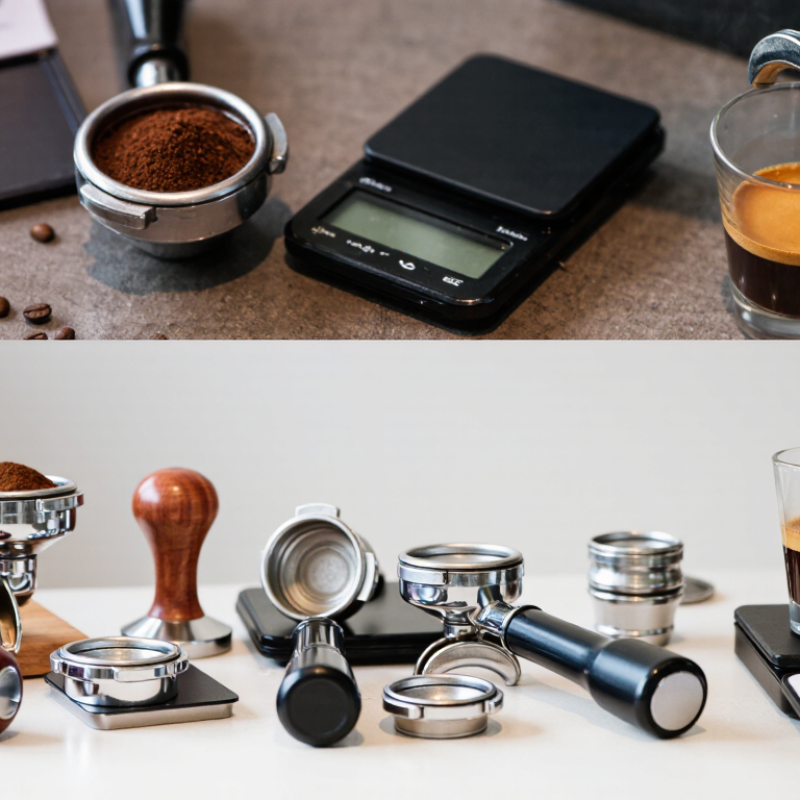
How to Choose the Right Filter Basket for Your Needs

Identify Your Brewing Needs and Preferred Coffee Style

Choose a basket around your daily routine, not a trend. A single cup needs a basket that holds a small, even bed of grounds; a larger batch needs enough depth to avoid crowding. Conical baskets often encourage a deeper coffee bed, while flat-bottom baskets spread grounds more evenly. Neither shape guarantees better flavor. Grind size and pouring technique matter, too.

Think about the cup you enjoy. Paper filters catch more oils and fine particles, often giving coffee a cleaner, lighter feel. Metal filters let more oils through, creating a fuller texture and a little sediment. For a bright, delicate cup, try paper. Prefer a heavier mouthfeel? Test metal. Small changes show up quickly.

Use a repeatable recipe to compare baskets. The Specialty Coffee Association’s Golden Cup guidance targets about 55 grams of coffee per litre of water, with a tolerance of 10%. Its Brewing Control Chart places brewed coffee near 1.15–1.35% total dissolved solids and 18–22% extraction. These are reference ranges, not rules for every palate. Still, they help separate basket effects from a changing recipe. Keep the dose and grind steady, then taste side by side. Your favorite may be the less “ideal” one. That is useful information.

Compare the Main Types of Filter Baskets

Espresso filter baskets mainly differ in how much control they give you. A pressurized, double-wall basket creates resistance through a small outlet, so it can produce crema with pre-ground coffee or a less precise grinder. It is forgiving, but the result may taste less clear, and grind adjustments have less effect. A single-wall basket has holes across its base and relies on the coffee puck for resistance. It rewards a consistent grind and careful distribution. Less forgiving.

Precision baskets use carefully formed holes to encourage more even flow. They can help experienced users explore finer adjustments, but they do not fix stale coffee, uneven tamping, or a poor grind. In practice, the right choice also depends on your machine’s portafilter and the basket’s capacity. A basket that is too full may leave marks on the puck; one that is too large can make dosing awkward. Check the manufacturer’s stated fit and dose range rather than relying on appearance alone.

For occasional use or pre-ground coffee, a pressurized basket can be a sensible starting point. If you have a grinder and want to tune flavor, a single-wall basket gives more useful feedback. Precision versions suit careful dialing-in, though the difference can be subtle. I would not expect a new basket to transform every shot. That expectation is easy to overdo.

How to Choose the Right Filter Basket: Compare the Main Types

Illustrative lower-end particle opening sizes for common industrial filter basket media. Smaller openings can capture finer particles; actual specifications vary by design and application.

Use perforated baskets for coarse debris, woven mesh or wedge wire for finer screening, and sintered metal where very fine filtration is needed. Confirm the required rating, flow rate, pressure, and material compatibility before selecting a basket.

Check Basket Size and Machine Compatibility

A filter basket must match the portafilter, not just the machine’s advertised size. Check the basket’s nominal diameter, depth, rim profile, and whether it is ridged or ridgeless. A small difference can stop the basket seating securely or leave too little space above the coffee bed. Measure an existing basket across its upper rim, then compare the dimensions with the machine’s manual or replacement-part specifications. Do not assume two baskets marked “58 mm” are interchangeable. Fit matters.

Dose capacity matters, too. A basket filled far below its intended range may leave excess headspace; an overfilled one can press against the shower screen. The Specialty Coffee Association’s Espresso Brewing Control Chart gives a useful brewing reference: roughly 8–12% total dissolved solids and 18–22% extraction yield. These are brewing targets, not basket-size rules, but they show why consistent dosing and fit matter. For example, choose a basket whose stated dose range suits your usual recipe, then check the puck after brewing for screen marks or uneven wetting. It is easy to overlook this check. Small variations in basket shape can still affect the result, so treat compatibility claims as a starting point, not a guarantee.

How to Choose the Right Filter Basket for Your Needs - Check Basket Size and Machine Compatibility

Basket Type or Size Typical Dose Best For Compatibility Checks Practical Tip
Single About 7–9 g Preparing one smaller espresso shot. Confirm the basket fits the portafilter and has enough depth for the intended dose. Single baskets often have a tapered or curved base, so dialing in may take more care than with a double basket.
Double About 14–18 g Everyday espresso preparation and two smaller servings. Match the basket’s nominal diameter and rim profile to the portafilter. Check depth and handle clearance. A double basket is a common starting point; use the basket’s stated capacity as a guide rather than a fixed rule.
High-capacity About 18–22 g, depending on basket design Higher-dose recipes or a larger coffee yield. Verify that the basket fits the portafilter and that the loaded puck does not contact the shower screen. Basket capacity varies by shape and manufacturer. Leave suitable headspace instead of filling by appearance alone.
Pressurized Varies by basket capacity Pre-ground coffee or setups where grind adjustment is limited. Check that the basket is designed for the portafilter; some pressurized baskets have a double wall or a restricted outlet. The restricted outlet helps create brewing pressure, but results may differ from a standard single-wall basket.
Standard single-wall Varies by basket capacity Freshly ground coffee and users able to adjust grind size and dose. Confirm the basket diameter, rim shape, and depth against the portafilter and machine clearance. Grind size, coffee dose, and distribution strongly affect flow through a single-wall basket.
Common nominal diameters Often listed around 51 mm, 54 mm, or 58 mm Identifying a starting point when checking portafilter fit. These are common size categories, not universal guarantees. Measure the existing basket or check the machine documentation. Do not rely on diameter alone: rim thickness, basket height, and portafilter shape can also affect fit.
Ridged or ridgeless Available in multiple capacities Choosing how the basket is retained in the portafilter. Check whether the portafilter’s retaining spring securely holds the basket style you select. Ridges can help retain a basket; ridgeless designs may be easier to remove. Fit depends on the portafilter and spring.

Compatibility checklist: Confirm nominal diameter, rim profile, basket depth, portafilter retention, and clearance beneath the shower screen. When in doubt, compare measurements with the machine’s documentation or the original basket.

Evaluate Materials, Hole Patterns, and Capacity

How to Choose the Right Filter Basket for Your Needs

Evaluate Materials, Hole Patterns, and Capacity

A filter basket affects how water moves through coffee, so match it to your brewing method and routine. Stainless steel is sturdy, resists corrosion, and cleans up easily. Check the finish for rough edges or dents; small flaws can make a basket harder to clean. Hole patterns matter, too. Evenly spaced openings help water pass through consistently, while blocked or irregular holes may encourage uneven flow. More holes do not automatically mean better coffee. Grind size and tamping still play a part.

Tips: Check the basket’s stated capacity in grams, then weigh your usual dose. Leave enough room for the coffee bed to expand without pressing against the shower screen. A basket that is too large or too small can make brewing less predictable.

Look for a capacity suited to your typical serving, not just the largest dose you might make. If you change doses often, a flexible size may be useful, though it can take some adjustment. After brewing, inspect the holes against a light and rinse away trapped grounds. The best choice is the one that fits your equipment, dose, and cleaning habits. Even then, results can vary; that is worth keeping in mind.

Choose a Basket Based on Cleaning and Maintenance Needs

When comparing coffee filter baskets, consider the cleanup you can reliably fit into your routine. A stainless-steel basket is usually straightforward to rinse and brush, but tiny openings can still hold coffee oils. Look closely at the underside and rim; residue often collects where water does not flow freely. Small details matter.

If you make espresso often, a basket with a simple shape and accessible holes can make daily cleaning less tedious. Rinse it promptly. Letting wet grounds dry can make them harder to remove. Use a soft brush, and follow the equipment maker’s care guidance before soaking the basket in cleaning solution. Avoid sharp tools that could scratch or distort the metal.

Some baskets have fine mesh or more intricate surfaces, which may need a closer inspection and more careful brushing. That extra effort is not automatically a drawback, but it can be frustrating when you are in a hurry. A basket that is easiest to clean may not suit every brewing routine. Check for blocked holes under a bright light, and replace a basket if it is bent or visibly damaged. I would not judge maintenance by appearance alone; a neat-looking basket can still trap residue beneath the rim.

Article Source: