
Automated Dispensing Robot Videos

A World of Robotic Dispensing and Assembly Solutions

What Is a Hot Melt Coating Machine?

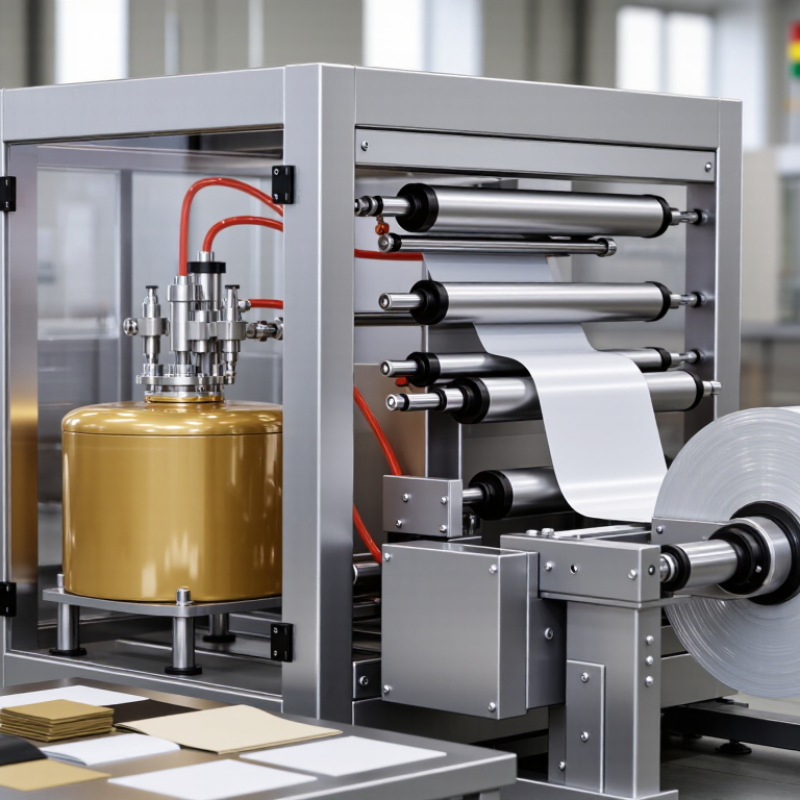
What Is a Hot Melt Coating Machine? The question sounds simple, but the equipment is more than a heated roller. A Hot Melt Coating Machine melts solid adhesive, meters it accurately, and applies a controlled film to paper, film, foil, fabric, or another substrate. The process usually involves a heated tank, precision pump, coating head, web system, and cooling section. Each part affects coating weight, surface appearance, and bonding strength.

Brian D. Baer, a recognized adhesive technology author and researcher, emphasizes a central principle: “The adhesive must wet the surface before it can bond.” This idea explains why temperature, viscosity, web tension, and line speed must work together. Small changes matter. A few degrees can alter flow, while excessive heat may damage the adhesive. The machine may look straightforward. It is not.

This article will explain how a Hot Melt Coating Machine operates, where it is used, and which features influence production quality. It will examine slot-die, roll, and curtain coating methods without treating them as interchangeable. Readers will see practical details, such as heated hoses, release liners, edge beads, and coating thickness checks. An uneven film can appear as streaks, wrinkles, or weak bonding after cooling.

One weakness in many explanations is the assumption that faster production always means better performance. It does not. A reliable evaluation considers material behavior, operator experience, maintenance access, energy use, and final product requirements. Understanding those limits helps manufacturers choose equipment with clearer expectations and fewer costly surprises.
What Is a Hot Melt Coating Machine?

What Is a Hot Melt Coating Machine?

What Is a Hot Melt Coating Machine?

A hot melt coating machine applies adhesive or functional resin without using water or solvent. Solid material enters a heated tank and becomes a controlled liquid. A pump then moves it toward a slot die, roller, or spray head. The coating lands on paper, film, foil, fabric, or foam. It cools quickly and forms a strong bond.

A typical line includes an unwinder, heating unit, metering pump, coating head, cooling roller, and rewinder. Operators closely monitor temperature, web tension, coating weight, and line speed. Application temperatures often range from 120°C to 180°C, but the correct setting depends on the material. Too much heat can damage the substrate. Too little heat causes poor wetting.

Market figures show why this equipment matters. Grand View Research valued the global hot-melt adhesives market at about USD 11.17 billion in 2023. It forecasts a 6.2% compound annual growth rate through 2030. MarketsandMarkets gives a different estimate, placing the market near USD 10.3 billion in 2024 and forecasting roughly 5.8% growth. These differences reflect varied definitions and research methods. They should not be treated as absolute facts.

From practical production experience, stable coating depends on more than machine speed. Clean filters, calibrated sensors, and even substrate tension matter greatly. Small temperature changes can create visible streaks. Perfect settings are rarely permanent. Material batches, humidity, and operator judgment still influence the result.

What Is a Hot Melt Coating Machine?

Data Dimension Typical Information Description
Definition Continuous coating equipment A hot melt coating machine applies thermoplastic adhesive or polymer to a web, film, foil, paper, fabric, or other substrate without using water or solvent as the coating carrier.
Operating principle Melt, meter, apply, cool Solid hot melt material is heated until it flows, metered through a coating head, applied to the moving substrate, and solidified by cooling or contact with another layer.
Common coating methods Slot-die, gravure, roll, curtain, and spray The selected method depends on the adhesive viscosity, coating width, target coat weight, line speed, and required coating pattern.
Typical material forms Pellets, blocks, granules, or preformed adhesive The material is supplied to a heated tank or hopper, where it is melted and transferred to the coating head by a heated pump or hose.
Typical melt temperature Approximately 80–200 °C The actual temperature depends on the adhesive chemistry and must remain within the supplier’s recommended processing range to prevent degradation or poor coating quality.
Coating thickness Commonly about 10–250 g/m² The practical range varies with the coating head, adhesive viscosity, substrate, line speed, and whether the application is patterned or full-surface.
Line speed Approximately 10–300 m/min Production speed depends on the adhesive, coating weight, web properties, cooling capacity, and bonding requirements. Actual machine capabilities differ by configuration.
Substrate width Commonly 300–2,000 mm Working width is selected according to the product design and may include edge-trim, multi-lane, or intermittent-coating requirements.
Main machine sections Unwinder, heating system, pump, coating head, laminator, cooling unit, and rewinder These sections control material feeding, adhesive temperature, coating uniformity, bonding pressure, web cooling, and finished-roll winding.
Temperature control Independent heating zones Separate temperature zones are commonly used for the melting tank, pump, hoses, and coating head to maintain stable viscosity and consistent coating weight.
Energy and emissions profile No solvent drying oven is normally required Because hot melt systems contain little or no volatile solvent, they can reduce drying energy and solvent-related emissions compared with solvent-based coating processes.
Key advantages Fast solidification, high coating efficiency, and precise application Hot melt coating can support high production speeds, immediate handling after cooling, reduced drying equipment, and accurate full-width or patterned coating.
Main limitations Heat sensitivity, viscosity control, and limited open time The process requires careful thermal management. Some substrates or additives may be damaged by heat, and the adhesive may solidify before proper bonding if cooling occurs too quickly.
Typical applications Hygiene products, labels, tapes, packaging, textiles, and construction materials Hot melt coating machines are used for pressure-sensitive adhesives, laminating adhesives, protective layers, breathable films, nonwoven products, and composite materials.
Quality control factors Coat weight, temperature, web tension, line speed, and adhesion Stable process conditions help prevent streaks, pinholes, uneven coating, poor wet-out, substrate distortion, and inconsistent bonding performance.
Safety considerations Burn protection, guarding, ventilation, and pressure control Operators should use suitable personal protective equipment and follow procedures for hot surfaces, molten adhesive, pressurized lines, moving webs, and equipment maintenance.

How a Hot Melt Coating Machine Works

What Is a Hot Melt Coating Machine?

A hot melt coating machine applies heated adhesive to a moving material, such as film, paper, foil, or fabric. Unlike water-based systems, it usually needs no drying oven. The adhesive becomes fluid through controlled heating, then bonds after cooling.

How a Hot Melt Coating Machine Works

The process begins with an unwinding unit that feeds the substrate at a steady speed. A heated tank melts the adhesive and maintains its temperature. A pump then moves the adhesive toward a slot die, roller, or spray head. The coating unit spreads a measured layer across the web. A nip roller can press the layers together and improve contact. Cooling rollers help the adhesive set before the finished material is rewound.

Operators must control temperature, line speed, pressure, and coating weight together. If the adhesive is too cool, the layer may look uneven. If it is too hot, the material can deform or the adhesive can degrade. Small changes matter. I have found that stable web tension often improves results more than increasing machine speed. Still, every material behaves differently, so trial runs remain necessary.

Tips: Check the adhesive temperature before production starts. Clean the die regularly to prevent blocked openings. Measure coating weight from several web positions, not one sample. Watch for streaks, bubbles, and edge buildup. Keep a simple production record. It can reveal patterns that operators miss during a busy shift.

Key Components and Their Functions

What Is a Hot Melt Coating Machine?

Key Components and Their Functions

A hot melt coating machine applies heated adhesive to films, foils, fabrics, or paper. Unlike liquid coating systems, it uses little or no solvent. The process begins inside the melting tank, where solid adhesive pellets become a controlled, flowing material. Temperature sensors monitor each heating zone.

Heat changes everything. Uneven heating can cause bubbles, charred residue, or unstable viscosity.

The metering pump transfers adhesive at a steady rate. Its speed affects coating weight and line stability. A slot die then spreads the adhesive across the moving substrate. Die lips must remain clean and correctly aligned. Even a small gap can create streaks.

In production trials, operators often adjust pump speed, web tension, and die temperature together. Changing only one setting may hide the real cause of a defect.

The unwinding and rewinding units guide the substrate through the machine. Tension controls help prevent wrinkles, stretching, and edge movement. A cooling roller solidifies the adhesive before the coated material is wound.

Some systems include thickness gauges and automatic feedback controls. These tools improve consistency, but they do not replace inspection. Operators should check coating weight, bonding strength, surface appearance, and roll edges.

The first trial rarely behaves perfectly. Dust, moisture, or a worn seal can affect results.

A reliable maintenance routine includes filter checks, sensor verification, die cleaning, and safe handling of hot surfaces.

Common Coating Materials and Application Methods

A hot melt coating machine applies a solid adhesive or polymer after heating it into a flowing layer.

The material cools and bonds without water or solvent evaporation. This process suits films, foils, textiles, labels, and protective sheets.

Common coating materials include ethylene-vinyl acetate, polyolefin, polyamide, and thermoplastic polyurethane. Each material behaves differently during heating and cooling.

Ethylene-vinyl acetate often offers flexible bonding. Polyolefin can provide stronger moisture resistance. Polyamide may withstand higher temperatures, while thermoplastic polyurethane supports elasticity.

Material selection should match the substrate, service temperature, and required bond strength. A laboratory test is essential. Datasheets alone are not enough.

Application methods include slot-die, roll, spray, and curtain coating.

Slot-die coating can produce a controlled, even layer at stable web speeds. Roll coating works well when the adhesive needs transfer through a rotating surface. Spray coating handles uneven shapes, but overspray and coat-weight variation require attention. Curtain coating covers broad surfaces quickly, although edge control can be difficult.

Operators adjust melt temperature, pump pressure, coating gap, and line speed together. Too much heat can damage sensitive films. Too little heat may create streaks or weak adhesion.

I have seen excellent materials fail because the cooling stage was overlooked. Small adjustments matter.

Industrial Uses and Machine Selection Factors

What Is a Hot Melt Coating Machine?

A hot melt coating machine applies heated, solvent-free adhesive or polymer onto a moving material. The coating cools quickly and forms a functional layer. In factories, it supports labels, tapes, filters, packaging films, roofing membranes, textiles, and hygiene products. A typical line may include an unwinder, heating system, coating head, cooling rollers, and rewinder.

The process looks simple. It is not.

Industrial use determines the machine design. A tape producer may need narrow web control and precise coating weight. A roofing manufacturer may require wide working widths and heavier application rates. For films or nonwoven fabrics, tension control matters because stretching can create uneven edges. Slot-die coating often suits accurate layers, while roller systems can handle different materials and textures. The best choice depends on adhesive viscosity, melting temperature, substrate sensitivity, production speed, and required coating thickness.

Operators should inspect temperature stability, pump accuracy, cleaning access, and emergency protection. A machine that reaches high speed may still waste material during start-up. That detail is easy to overlook.

Ask for trial coating data using your actual substrate, not only sample specifications. Check whether the heating zones respond evenly and whether the coating remains stable during long shifts. No selection is perfect. Maintenance skill, floor space, ventilation, and future product changes also affect the investment. Some buyers focus on output speed and later discover that changeovers take too long.