
Automated Dispensing Robot Videos
A World of Robotic Dispensing and Assembly SolutionsTop Natural Gas Generator Manufacturers in China
China’s generator industry serves factories, commercial buildings, farms, and remote sites that need dependable power. Among its products, the Natural Gas Generator attracts attention for its fuel flexibility and suitability for continuous or standby operation. Yet a polished brochure is not proof of field performance. Buyers should look beyond headline output and ask how a unit behaves under changing loads, hot weather, and routine maintenance.
This guide introduces leading Natural Gas Generator manufacturers in China and the practical details that help distinguish them. It considers product range, engine and alternator options, control systems, customization, service support, and the availability of technical documentation. Useful checks include rated power, fuel pressure requirements, emissions data, noise levels, and stated maintenance intervals. Ask for test records, warranty terms, and references for installations with similar duty cycles. Small details matter. A generator room, for example, needs suitable ventilation and space for service access; these are easy to overlook during a catalog comparison.
No single company is automatically the best choice for every project. Rankings can shift with product updates, export experience, and the quality of local support, while public information may not reveal every limitation. That uncertainty deserves attention. The profiles that follow offer a starting point for careful comparison, not a substitute for checking specifications and confirming that a proposed system fits the site.
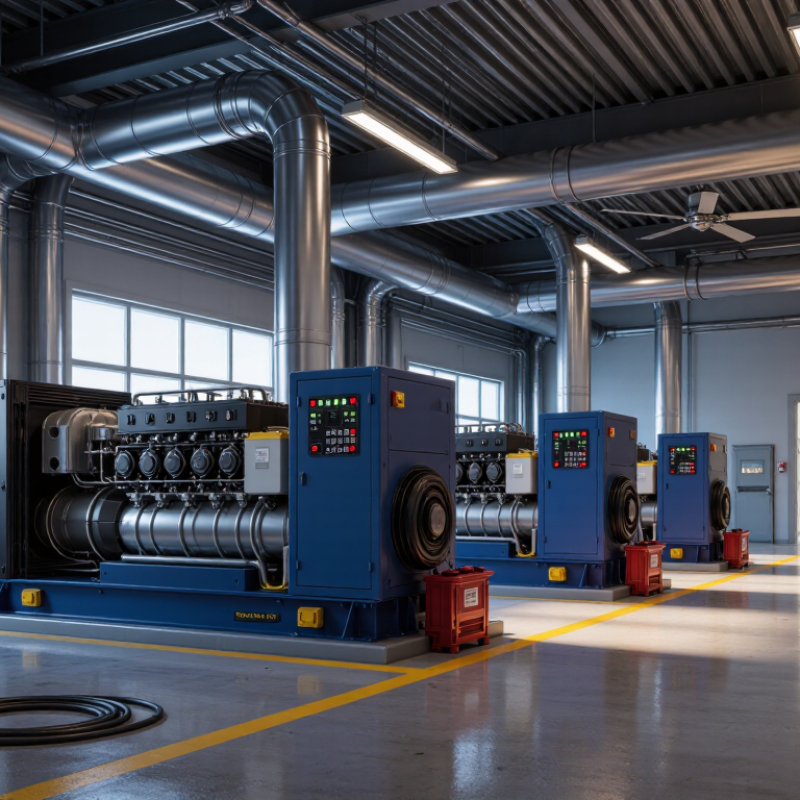
How China’s Natural Gas Generator Industry Is Organized
China’s natural gas generator industry is organized around several connected layers. Engine manufacturers develop the core power unit, while generator-set producers combine it with an alternator, cooling system, controls, and enclosure. Component suppliers provide items such as gas valves, sensors, and heat exchangers. That division is not always neat.
System integrators adapt equipment for specific sites. A factory may need steady combined heat and power, while a hospital may prioritize dependable backup power. Integrators assess gas pressure, fuel composition, ambient temperature, ventilation, and electrical load before selecting a configuration. Small details matter. A regulator sized poorly can affect performance, even when the engine itself is suitable.
Manufacturing capability alone does not show how well a supplier supports a project. Buyers should review test records, rated output conditions, control-system documentation, and the availability of trained service technicians. Ask how the quoted output changes with altitude or hot weather. Also check whether waste heat recovery is included or priced separately. Product categories and service quality can vary across suppliers, so published specifications deserve careful verification. Some project requirements are still easy to overlook.
Top Natural Gas Generator Manufacturers in China - How China’s Natural Gas Generator Industry Is Organized
This table describes the industry by role and product type rather than listing individual companies or brands. The categories can overlap, and project specifications vary by application, gas quality, site conditions, and local requirements.
| Industry Segment | Typical Products or Scope | Role in the Supply Chain | Common Applications and Considerations |
|---|---|---|---|
| Gas engine and generator-set integrators | Packaged natural-gas generator sets combining an engine, alternator, control system, and supporting equipment. | Coordinate major components and provide a complete generating package, with configuration selected for the project’s load and operating conditions. | Used for standby, prime, or continuous power. Installation requirements include ventilation, exhaust routing, fuel supply, electrical protection, and maintenance access. |
| Engine and powertrain suppliers | Spark-ignition gas engines and associated components designed to operate on gaseous fuels. | Provide the prime mover used in a generator set. Engine selection depends on output, duty cycle, fuel composition, and operating environment. | Natural gas composition and pressure can affect engine setup and performance. Biogas and other gas fuels may require equipment specifically configured for those fuels. |
| Alternator and electrical-system suppliers | Alternators, voltage regulation equipment, switchgear, protection devices, and power-management components. | Convert mechanical output into electrical power and support safe connection, control, and operation of the generating system. | Electrical design is matched to voltage, frequency, site loads, and whether the set operates independently or in parallel with other sources. |
| Controls and automation providers | Generator controllers, monitoring systems, synchronization controls, and remote-operation interfaces. | Manage starting, shutdown, alarms, operating parameters, and coordination with other generator sets or site systems. | Control functions are specified according to whether a unit is used for emergency backup, regular power generation, or a multi-set installation. |
| Combined heat and power (CHP) system providers | Natural-gas generator packages integrated with heat-recovery equipment and site-level energy systems. | Recover useful heat from engine exhaust and cooling circuits in addition to producing electricity. | Suitable where there is a consistent demand for both electricity and usable heat, such as industrial facilities and large buildings. Overall benefits depend on the site’s heat-use profile. |
| Project engineering and system integrators | Engineering, procurement coordination, installation, commissioning, and integration with fuel, electrical, and building systems. | Connect generator equipment to the wider project and coordinate site-specific design and installation requirements. | Projects must account for gas supply, emissions rules, noise limits, fire safety, grid-connection requirements, and applicable local codes. |
| Service and aftermarket providers | Inspection, preventive maintenance, troubleshooting, replacement parts, and overhaul services. | Support equipment availability over its operating life and help maintain performance and safe operation. | Service intervals depend on the engine, operating hours, load profile, fuel quality, and manufacturer’s maintenance guidance. |
| End users and project owners | Factories, commercial buildings, utilities, infrastructure operators, and other organizations with on-site power needs. | Define the required duty, capacity, reliability, operating schedule, and project economics. | Selection typically considers the site’s electrical load, gas availability, expected runtime, backup requirements, emissions obligations, and lifecycle costs. |