7 Tips for Buying the Right Place Machine
Buying a Place Machine is not simply a matter of choosing the fastest model or the lowest price. The right choice depends on what you need to place, how often you will run the machine, and the space available in your facility. A machine for small, delicate components may not suit larger parts or continuous production. Start with the actual job, not the sales brochure.
Specifications deserve close attention. Check placement accuracy, operating speed, supported materials, setup requirements, and compatibility with your existing equipment. Ask suppliers to demonstrate your real components, using realistic production settings. A polished showroom test can be useful, but it may not reveal changeover delays, maintenance needs, or operator challenges. Details matter.
Budget beyond the purchase price. Installation, tooling, training, spare parts, and routine servicing can affect the total cost over time. Confirm warranty terms and ask how quickly the supplier can provide technical support. References from businesses with similar workloads may offer a clearer picture than general claims. No machine is perfect. And no brochure tells the whole story.
The following seven tips will help you compare options with practical questions rather than guesswork. Consider the people who will operate the equipment, too; a complicated interface can slow an otherwise capable line. Some requirements may change after production begins. That is worth admitting early. Careful evaluation cannot remove every risk, but it can help you choose a Place Machine that fits your work, budget, and plans for growth.
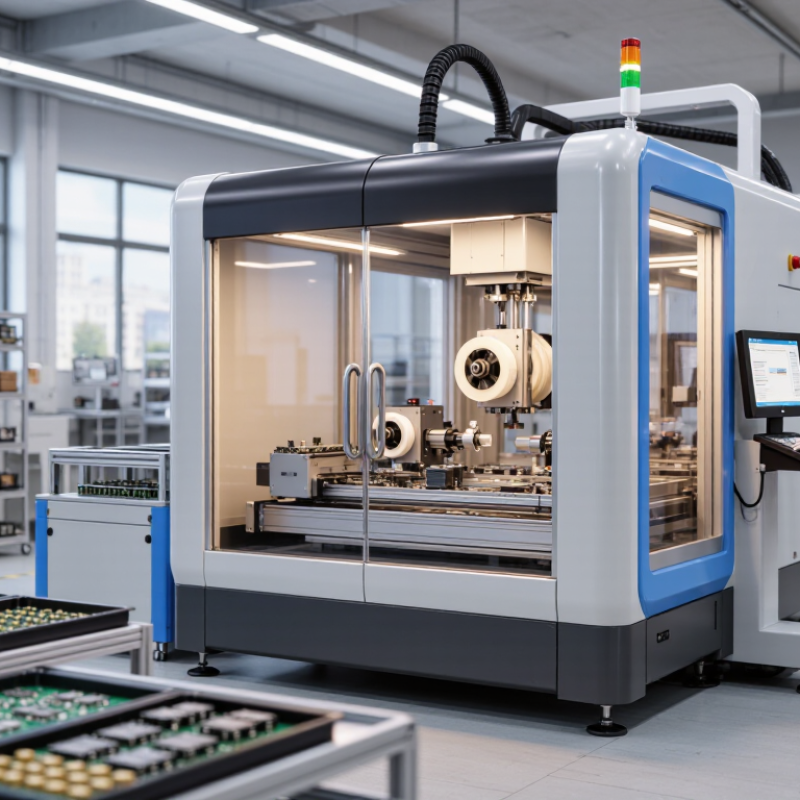
Define Your Placement Tasks and Production Requirements
Define your placement tasks before comparing machine specifications. List the board sizes, component packages, and smallest parts you run today. Add the products expected over the next two or three years. A machine that places tiny components accurately may still struggle with tall connectors or frequent product changeovers. Measure actual output across a full shift, including feeder loading, nozzle changes, and stoppages. Catalog placement speed alone can mislead. It is an imperfect starting point.
Then translate your production plan into measurable requirements: boards per hour, acceptable placement accuracy, component range, feeder capacity, and changeover time. Record the mix of high-volume and short-run jobs. Deloitte and MAPI’s 2019 smart factory study found that 86% of surveyed manufacturing executives expected smart factory initiatives to drive competitiveness within five years. That broader finding makes data collection relevant, but it does not predict a particular line’s output. Use your own job logs. Include a difficult board, not only the easiest one. Ask suppliers to demonstrate your representative components and board layout, then compare usable throughput and first-pass quality. I would also leave room for uncertainty: product mixes change, and forecasts are often wrong.
Compare Machine Types and Placement Capabilities
Placement machines generally fall into three groups: high-speed chip shooters, flexible placement machines, and modular lines. Chip shooters suit boards with many small components; flexible machines handle broader package ranges and awkward parts. Compare feeder capacity, nozzle options, board size, and placement accuracy against your actual product mix. IPC-9850 provides a common framework for characterizing placement equipment, but rated speed alone can mislead. Changeovers and component supply matter, too.
Tip: Run a representative board trial. Count accepted placements per hour, not just advertised placements per hour. IFR’s World Robotics 2023 report recorded 553,052 industrial robot installations worldwide in 2022, up 5% year over year. That figure signals wider automation growth, but it does not guarantee faster SMT output. Ask suppliers for test conditions and include your smallest and largest components.
Tip: Match machine type to production variation. A dedicated high-speed line may excel with stable, repeat orders; a modular setup can be easier to adapt when jobs change. Check placement accuracy, feeder loading time, and recovery after a stoppage. A few minutes lost at each changeover can erase impressive peak-speed claims. I would still test the line with real operators. Paper specifications rarely show every small delay.
Evaluate Accuracy, Speed, and Component Compatibility
When comparing a pick-and-place machine, treat its accuracy figures as a starting point, not a guarantee. Ask how repeatability was measured and under what operating conditions. A demonstration using your own PCB, component reels, and placement program is more revealing than a brochure. Check small-pitch parts under magnification, then inspect larger connectors for rotation and offset. Tiny shifts matter. Record several boards, not just one; occasional drift can disappear during a short trial.
Speed needs the same scrutiny. A quoted placements-per-hour rate may assume ideal parts, short travel, and uninterrupted feeding. Run a representative mix, including component changes, board transfers, and replenishment. Watch actual cycle time and note stoppages. Fast on paper. Not always on the line. Compatibility is equally practical: confirm support for your component sizes, feeder types, nozzle range, PCB dimensions, and software files. Ask whether setup data imports cleanly or needs manual correction. If a package sits near the machine’s stated limit, test it before purchase. That is where assumptions tend to show. Real production varies, and my first estimate is rarely perfect.
7 Tips for Buying the Right Place Machine: Evaluate Accuracy, Speed, and Component Compatibility
These illustrative weights provide a starting point for comparing machines: prioritize placement accuracy, production speed, and component compatibility, then consider changeover flexibility and service support. Adjust the weights to match your board designs, production volume, and operating needs; they are not market statistics.
Review Software, Maintenance, and Technical Support
Before choosing a place machine, review the software with the same care as the hardware. Ask for a live demonstration using a job similar to your own, not only a polished sample program. Check how quickly an operator can import placement files, edit component libraries, and recover a job after an interruption. Small delays add up. Confirm that the software records setup changes and reports placement errors clearly. If your team uses existing production or inspection systems, verify compatibility with real files and workflows. A promise of “easy integration” is not a test.
Maintenance and technical support matter once the machine is on your floor. Request the recommended service schedule, including cleaning intervals, calibration checks, and parts that wear with regular use. Ask which spare parts should be kept nearby and how quickly common replacements can be supplied. A short support response time sounds useful, but clarify whether it means an initial reply or a working repair plan. Can technicians help remotely? What requires an on-site visit? Get training details in writing, too. Watch a technician explain a feeder fault or nozzle change; vague instructions can leave a new operator guessing. No checklist catches everything. I would still leave room in the budget for unexpected downtime, because even a careful plan can miss a stubborn software or setup issue.
Compare Total Costs and Verify the Supplier’s Reliability
7 Tips for Buying the Right Place Machine
Compare Total Costs and Verify the Supplier’s Reliability
The purchase price is only one part of a pick-and-place machine’s cost. Add feeders, nozzles, software fees, installation, operator training, shipping, and spare parts. A realistic comparison includes expected maintenance and the cost of production delays. Ask each supplier to quote the same package and service period. Small omissions add up.
Check whether the supplier can support your actual production needs. Ask for references from businesses with similar board sizes, component ranges, and output targets. Find out how quickly technicians respond, which parts are stocked locally, and what the warranty excludes. Request a live demonstration using a representative board, then compare placement accuracy and changeover time. A polished demo alone proves little.
Look beyond the first year. Estimate costs over several years, including service visits, software updates, and likely downtime. Get delivery dates, training details, and acceptance criteria in writing. The comparison will never be perfect; forecasts can miss an unexpectedly slow repair. I would not choose the lowest quote without understanding what happens when a feeder fails on a busy shift.