
Automated Dispensing Robot Videos

A World of Robotic Dispensing and Assembly Solutions

Top 10 Ferrule Crimping Tools for Global Buyers

Selecting the right Ferrule Crimping Tool can influence connection quality, installation speed, and long-term maintenance costs. For global buyers, the choice involves more than price or attractive product photos. Jaw design, crimp profile, wire range, handle comfort, and material strength deserve close inspection. A tool that feels solid in a showroom may become tiring after hundreds of crimps.

This guide presents the Top 10 Ferrule Crimping Tools for Global Buyers through practical purchasing criteria. It considers adjustable and fixed dies, square and hexagonal crimping patterns, insulation support, ratchet performance, and compatibility with common ferrule sizes. Manufacturer specifications provide a useful starting point. Real handling details matter too. Smooth ratchet release, clear size markings, and balanced grips can prevent avoidable mistakes during repetitive work.

No ranking is perfect. That matters.

Different technicians prefer different jaw actions, and workshop conditions can change performance. A compact hand tool may suit control cabinets, while a heavier model may better serve field installation teams. We also examine quality consistency, replacement parts, packaging, documentation, and supplier communication. These details often decide whether an international purchase remains reliable after delivery. Buyers should verify samples, certifications, and after-sales support before placing large orders. Even a highly rated tool can disappoint when its stated wire range does not match the actual ferrules used. This comparison aims to provide practical, evidence-based guidance while recognizing those limitations.
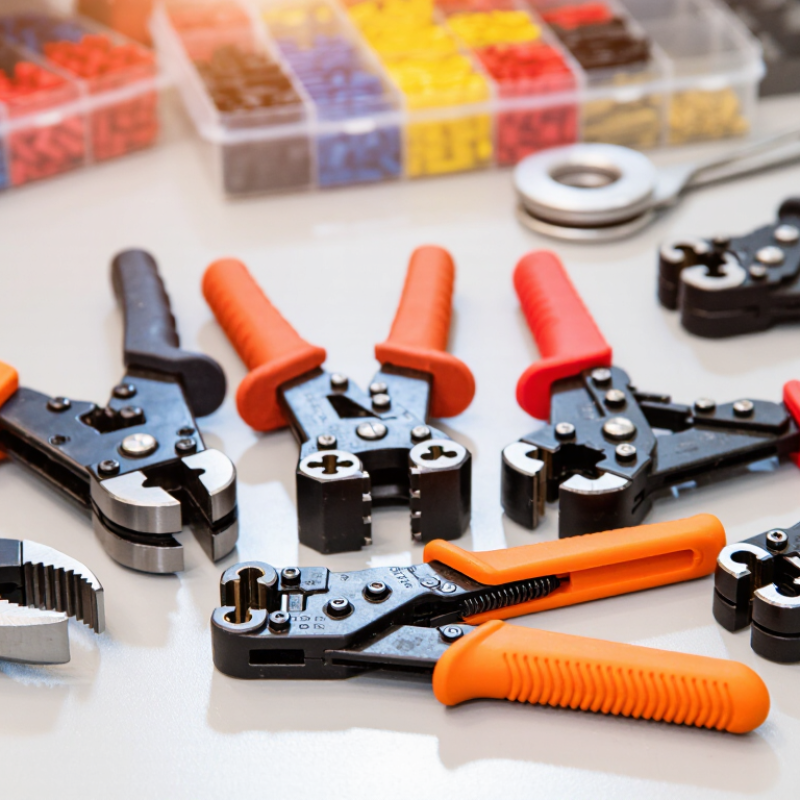
Top 10 Ferrule Crimping Tools for Global Buyers

What Ferrule Crimping Tools Are and How They Work

What Ferrule Crimping Tools Are and How They Work

A ferrule crimping tool attaches insulated metal sleeves to stranded wires. The ferrule gathers loose strands into one compact end. This improves insertion into terminal blocks and reduces strand damage.

The tool compresses the ferrule around the conductor with controlled pressure. Many models use a square, hexagonal, or trapezoidal crimp profile. Each profile suits different terminals and wire sizes.

A ratchet mechanism helps complete the cycle before releasing the handle. That feature prevents weak, half-finished crimps.

Reliable Electrical Connections

Demand for reliable electrical connections is rising. The International Energy Agency’s Electricity 2024 report expects global electricity demand to grow by about 3.4% annually from 2024 to 2026. More control panels, battery systems, and industrial equipment mean more small conductor terminations.

However, a higher tool price does not always mean better results. Die accuracy, calibration stability, handle force, and compatibility matter more. IEC 60999-1 also emphasizes secure, repeatable connections for screw-type terminals.

Key Features Global Buyers Should Compare

Global buyers comparing the top 10 ferrule crimping tools should start with application fit, not appearance. The International Energy Agency’s Electricity 2024 report expects global electricity demand to grow by about 4% annually through 2026. More control-panel and industrial wiring work may increase demand for consistent terminations.

Look for a ratcheting mechanism that completes the cycle before release. Check compatible conductor sizes, die profiles, and ferrule standards, including DIN 46228 requirements. A tool covering 0.25–6 mm² may suit general control wiring, but larger cable projects need another range. Crimp symmetry matters. Uneven compression can leave loose strands or damage insulation.

Force, durability, and verification deserve equal attention. A 2023 International Labour Organization safety report links poor equipment maintenance with increased workplace risk, although it does not measure crimp tools directly. That limitation matters. Buyers should request cycle-life testing, calibration records, and inspection guidance. A tool rated for thousands of cycles sounds useful, but test conditions may differ from field work.

Handle pressure is easy to ignore. It should not be. Compare grip shape, total weight, return spring action, and access inside crowded cabinets. Some tools feel smooth during ten test crimps, then become tiring after several hundred. I would also check spare dies, adjustment stability, and batch traceability. The cheapest option may still cost more after rework, rejected assemblies, and technician fatigue.

Top 10 Ferrule Crimping Tools for Global Buyers - Key Features Global Buyers Should Compare
No. Tool Configuration Ferrule Range Crimp Profile Operating Method Adjustment Typical Length Typical Weight Best-Fit Application Key Comparison Point
1 Compact manual ratchet crimper 0.25–6 mm² Square Two-hand manual ratchet Fixed die 175–210 mm 0.35–0.55 kg Control cabinets, panel wiring and general field maintenance A practical general-purpose range; compare release mechanism, die alignment and handle comfort.
2 Self-adjusting square-profile crimper 0.08–10 mm² Square Automatic cycle with ratchet Self-adjusting; fine adjustment usually available 190–220 mm 0.45–0.70 kg Mixed wire sizes in production and electrical assembly Reduces die changes, but buyers should verify minimum conductor size and adjustment repeatability.
3 Large-capacity self-adjusting crimper 0.08–16 mm² Square Two-hand manual ratchet Self-adjusting with pressure control 210–250 mm 0.60–0.90 kg Industrial control wiring and larger bootlace ferrules Offers broad coverage; check the required hand force and whether 10–16 mm² ferrules are included in the die geometry.
4 Hex-profile manual ratchet crimper 0.25–6 mm² Hexagonal Two-hand manual ratchet Fixed die 180–220 mm 0.40–0.65 kg Applications requiring radial compression around the ferrule Compare hex dimensions, ferrule insertion depth and compatibility with insulated and non-insulated ferrules.
5 Hex-profile medium-capacity crimper 0.25–10 mm² Hexagonal Long-lever manual ratchet Fixed die; pressure adjustment on some designs 210–250 mm 0.55–0.85 kg Industrial wiring, motor control and higher-volume assembly Longer handles can lower hand effort, but increase tool size and shipping weight.
6 Twin-ferrule crimper 0.5–6 mm² twin ferrules Square or trapezoidal Manual ratchet Fixed die; size-specific cavities 180–220 mm 0.40–0.70 kg Two-conductor termination into one terminal block Confirm the actual twin-ferrule range, because twin ferrules require more cross-sectional space than single ferrules.
7 Heavy-duty large-ferrule crimper 6–16 mm² Hexagonal or square Long-lever manual ratchet Fixed die or interchangeable die 230–280 mm 0.75–1.20 kg Large control conductors, distribution panels and industrial equipment Prioritize mechanical advantage, die hardness and complete closure before selecting a compact design.
8 Precision plier-style ferrule crimper 0.25–2.5 mm² Square or trapezoidal Direct hand pressure; usually non-ratcheting Fixed die 145–180 mm 0.20–0.40 kg Service work, small control panels and occasional installations Light and portable, but less suitable for repetitive production or larger conductor sizes.
9 Automatic wire-stripper and ferrule crimper 0.25–6 mm² Square Strip, position and crimp in one workflow Strip length and conductor-size adjustment 190–240 mm 0.45–0.75 kg High-volume panel assembly and repetitive field wiring Saves process time, but buyers should test insulation stripping quality and ferrule positioning together.
10 Battery-powered hydraulic ferrule crimper 4–16 mm² Hexagonal or square Powered hydraulic cycle Interchangeable dies; automatic pressure release 280–360 mm 1.50–2.50 kg including battery High-volume industrial installation and reduced-hand-force operations Compare battery voltage, cycles per charge, charging time, die availability and service support.

Note: Dimensions, weights and capacity ranges are representative specifications commonly found in these tool configurations. Buyers should verify the final supplier datasheet, ferrule standard, conductor material and required crimp profile before purchase.

Top 10 Ferrule Crimping Tools by Application and Performance

Top 10 Ferrule Crimping Tools for Global Buyers

The best ferrule crimping tool depends on the application, conductor size, and required connection profile. For control panels, insulated ferrule crimpers provide clean, repeatable results with less conductor damage. Non-insulated models suit maintenance work and exposed terminal assemblies. Ratcheting tools improve consistency because the jaws release only after full compression. This matters during long wiring sessions.

Self-adjusting crimpers support mixed wire sizes and reduce die changes. Compact hand tools fit narrow cabinets and field service bags. Hydraulic crimpers deliver higher force for larger conductors, while pneumatic models support faster production cycles. Battery-powered tools reduce wrist fatigue on installation sites. They need regular charging and careful storage. Precision square-profile tools create even compression for terminal blocks. Hex-profile tools can perform well when the terminal design requires six-sided contact. Multi-function crimpers may combine cutting, stripping, and crimping, but their extra features sometimes reduce precision.

Performance should be checked through pull-out testing, jaw alignment, and cycle durability. A professional buyer should inspect handle comfort, return spring action, die markings, and replacement-part access. Material quality also matters; hardened steel jaws usually resist deformation better. Real workshop conditions can be messy. Dust affects moving parts, and oversized conductors can damage a compact tool. No tool is perfect. I have seen skilled operators produce weak crimps when they selected the wrong profile. Clear sizing marks, reliable calibration, and practical operator training often matter as much as maximum force.

Top 10 Ferrule Crimping Tools by Application and Performance

The comparison uses common tool configurations for global purchasing decisions. Maximum ferrule capacity is shown in mm², while typical output represents approximate manual or machine crimping cycles per hour under normal operating conditions. Actual performance varies by conductor size, ferrule type, operator skill, and production setup.

Safety, Compatibility, and Quality Standards for International Use

Top 10 Ferrule Crimping Tools for Global Buyers

Safety begins with a stable crimp, not a low purchase price.

A reliable tool should compress the ferrule evenly around the conductor. Uneven pressure can leave loose strands, damaged insulation, or exposed copper. Choose models with insulated handles, controlled jaw movement, and a visible crimp profile. Ratcheting mechanisms can prevent incomplete cycles. However, they still require regular inspection.

Compatibility matters across international projects.

Check ferrule sizes, conductor cross-sections, and insulation collars before ordering. Square, hexagonal, and trapezoidal crimps serve different terminal designs. The tool should match the ferrules used in control panels, machinery, and electrical cabinets. DIN 46228 is a useful reference for ferrule dimensions. Regional equipment may also require local conformity marks or documented testing. Requirements can vary by installation environment.

Quality assessment should include jaw hardness, alignment, corrosion resistance, and cycle testing.

A tool with clear size markings reduces selection errors during repetitive work. Ask suppliers for inspection records, material details, and replacement-part availability. ISO 9001 production controls can support consistency, but certification alone does not prove field performance. Test several crimps with a pull check and visual inspection. This step is often skipped. That is a mistake. Even a well-designed tool may feel awkward after long shifts, so hand comfort and access should influence the final ranking.

How to Select the Right Ferrule Crimping Tool for Your Market

Selecting among the top 10 ferrule crimping tools requires more than comparing prices. Market requirements differ sharply. European panel builders often follow IEC 60352-2 and demand consistent compression. North American buyers may request documentation aligned with local wiring practices. Verify conductor ranges, die profiles, and calibration records before purchasing.

The International Energy Agency reported more than 14 million electric cars sold globally in 2023. This growth increases demand for reliable wiring assemblies and repeatable terminal preparation. A suitable tool should handle the ferrule sizes used in your target market, not only the sizes listed in advertisements. Check crimp-force consistency, cycle testing, jaw alignment, and replacement-part availability. A clear inspection guide matters, too. It reduces training errors across different factories.

Tips: Build a scoring sheet before reviewing the top 10. Give separate scores for size range, ergonomics, quality evidence, service support, and total ownership cost. Ask for sample crimps and pull-test results under IEC 60352-2 conditions. Do not trust polished photographs alone. In practice, a lighter tool may improve output, but its handle can feel weak after repeated use. That trade-off deserves testing. Reports and standards guide decisions, yet real operators reveal what specifications miss. Check local stock and technical support before committing to volume orders.