2026 Top Power Distribution Cabinet Manufacturers
Choosing among the 2026 Top Power Distribution Cabinet Manufacturers requires more than comparing prices or polished product photographs. A cabinet must suit its actual load, installation environment, protection requirements, and maintenance plan. Look closely at practical details: busbar ratings, breaker coordination, enclosure material, cable-entry space, heat management, and the clarity of circuit labels. Small omissions matter.
Electrical safety author John Cadick’s published work offers a useful lens for evaluating equipment: safety depends on sound design and disciplined work practices. This guide expresses that principle in a practical editorial maxim: “A dependable Power Distribution Cabinet begins with protection that matches the installation.” This is original wording, not a verbatim quotation from Cadick. It reflects why manufacturer claims should be checked against technical documentation, applicable standards, and project conditions.
The manufacturers featured here serve different needs, from compact commercial panels to larger industrial distribution systems. Compare their stated ratings, customization options, quality controls, technical support, and service availability. Ask for drawings and clear answers about installation limits. A neat specification sheet helps, but it cannot reveal every site constraint. Even a carefully prepared shortlist may miss an important detail; cabinet selection deserves a second review by a qualified electrical professional.
What Is a Power Distribution Cabinet?
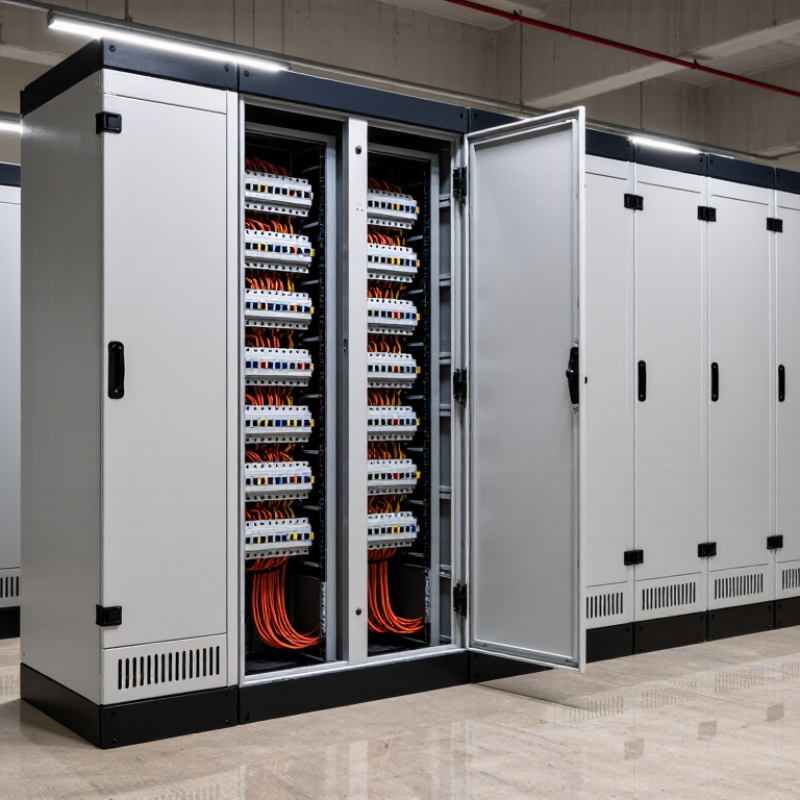
A power distribution cabinet is an enclosed assembly that receives electrical power and routes it to several circuits. It commonly contains incoming terminals, busbars, circuit breakers, meters, and grounding connections. Protective devices help interrupt excessive current before it damages wiring or connected equipment. The cabinet also helps shield live components from dust, accidental contact, and impact. That matters. It is not merely a metal box: its internal layout affects access, heat movement, and maintenance.
In a workshop, one cabinet might feed lighting, ventilation, and separate machine circuits. A clearly marked schedule helps a technician identify the right breaker without tracing every cable. Cabinet size and ratings should match the supply, expected load, installation environment, and future expansion needs. Details such as cable-entry direction and clearance can make installation easier—or unexpectedly awkward. A tidy drawing does not always show how difficult it will be to reach a rear terminal. Selection and installation should therefore be checked against the actual site conditions by qualified electrical professionals. Regular inspection can reveal loose connections, unusual heat, or damaged labels before they become bigger problems.
Power Distribution Cabinets: Voltage Classes in IEC Standards
What is a power distribution cabinet? It is an enclosure that houses equipment such as circuit breakers, protective devices, and meters to control and distribute electrical power. IEC 61439 covers low-voltage assemblies rated up to 1 kV AC, while IEC 62271-200 applies to metal-enclosed AC switchgear above 1 kV and up to 52 kV. These figures describe the standards’ voltage scopes, not product ratings or manufacturer performance.
Core Components and Main Cabinet Types
A power distribution cabinet is more than a metal enclosure. It routes electricity, isolates faults, and gives technicians a safe point for inspection. Its core components commonly include copper or aluminum busbars, circuit breakers, fuses, meters, protection relays, and a grounding system. Ventilation and cable supports matter, too. Heat matters.
Component selection depends on rated voltage, fault current, load profile, and installation conditions. A breaker must interrupt the expected fault current, while busbars need suitable current capacity and thermal performance.
In practice, cramped cable bends and poor airflow can undermine an otherwise sound design. Drawings do not always show the whole story.
Main cabinet types include low-voltage distribution boards for building circuits, motor control centers for grouped motor loads, and medium-voltage switchgear for higher-voltage networks. Outdoor cabinets add weather-resistant enclosures for exposed sites.
The International Energy Agency’s Electricity 2024 report states that global electricity demand grew 2.2% in 2023 and projects average annual growth of 3.4% for 2024–2026. That expanding demand makes clear circuit separation and maintainable layouts increasingly important.
Still, cabinet selection is not a formula; actual load data and site conditions deserve careful review.
How to Evaluate Power Distribution Cabinet Manufacturers
Evaluating a power distribution cabinet manufacturer starts with evidence, not a polished brochure. Check whether the proposed assembly matches your system voltage, rated current, fault level, operating environment, and maintenance access. The IEA’s 2023 report, Electricity Grids and Secure Energy Transitions, says annual grid investment must rise to over USD 600 billion by 2030, from about USD 300 billion. That expansion makes dependable equipment and clear documentation increasingly important.
Ask for IEC 61439 design verification and routine verification records for the actual cabinet configuration. Review busbar material and sizing, short-circuit withstand ratings, enclosure protection, temperature-rise results, and component traceability. A sample cabinet can reveal practical details: Are terminals reachable with insulated tools? Can filters be replaced without disturbing adjacent equipment? Request inspection and test plans, corrective-action records, and references for installations with similar loads. A certificate alone is not the whole story.
Tips: Compare the same technical specification across suppliers. Visit the factory if possible, and watch how workers label wires and torque busbar joints. Details matter. Also ask how spare parts and fault support are handled. A weak point in our own evaluation can be overlooking installation conditions; dust, heat, and cramped clearances may change performance after delivery.
Leading Power Distribution Cabinet Manufacturers in 2026
Leading power distribution cabinet manufacturers in 2026 are judged by more than catalog size. A cabinet must suit the site’s electrical load, fault level, environment, and expansion plans. Ask for clear drawings, component schedules, temperature-rise data, and test records. Details matter. A 400-amp panel serving a dusty workshop needs different enclosure protection and service access than an indoor unit.
Experienced manufacturers involve engineers before fabrication, while design changes are still manageable. They check busbar ratings, breaker coordination, cable-entry space, earthing points, and heat dissipation against the project specification. Look for documented inspections, traceable materials, and routine electrical tests. A smooth powder-coated door looks reassuring, but it cannot prove suitable internal clearances. Request sample inspection reports and ask how revisions are approved.
Reliable suppliers also consider installation and maintenance. Labels should stay readable, terminals should be reachable, and spare capacity should be stated clearly. Ask how drawings, replacement parts, and technical support are provided after delivery. Compare lead times and warranty terms in writing. Check the evidence. Buyers can focus heavily on purchase price and overlook commissioning support; that trade-off deserves a closer look. Factory documents are valuable, but site conditions can reveal gaps in the original assumptions.
Industry Applications and Emerging Market Trends
2026 Top Power Distribution Cabinet Manufacturers
Industry Applications and Emerging Market Trends
Power distribution cabinets are becoming more important as electricity use rises across industrial sites, commercial buildings, and data centers. The IEA’s Electricity 2024 report projects global electricity demand to grow by around 3.4% annually from 2024 through 2026. That growth increases pressure on equipment that separates circuits, protects loads, and supports safe maintenance. In a factory, clear circuit labels and accessible breakers can save valuable time during a fault. Small details matter.
Renewable energy projects and electric vehicle charging sites also need adaptable distribution systems. The IEA’s Electricity Grids and Secure Energy Transitions report estimates that 80 million kilometres of grids must be added or refurbished worldwide by 2040 to meet climate and energy goals. Cabinets may need space for additional feeders, metering, and protection devices as projects expand. Retrofitting an old enclosure is not always simple; space and heat limits can constrain upgrades.
A visible market trend is the use of sensors and remote monitoring to track temperature, current, and breaker status. This can help maintenance teams spot unusual conditions before an outage, especially in facilities operating around the clock. Yet digital monitoring is not magic. Poor wiring, unclear labels, or missed inspections still create risk. Buyers should assess fault ratings, enclosure conditions, service access, and local operating loads—not just connectivity features.