
Automated Dispensing Robot Videos

A World of Robotic Dispensing and Assembly Solutions

China Top M8 Pico Connector Manufacturers for Global Buyers

China offers a broad supplier base for compact industrial connectors, but choosing a manufacturer takes more than comparing prices. This guide introduces China-based M8 Pico Connector manufacturers for global buyers seeking reliable products and clear communication. In tight control cabinets, sensor housings, and machine assemblies, a connector’s size and fit can affect installation time. Small parts matter.

The term “top” should be treated carefully. A polished catalog does not prove consistent production quality, and supplier capabilities can differ. Buyers should compare pin configurations, contact materials, cable options, operating temperatures, and stated ingress-protection ratings against their actual application. Ask for current datasheets, sample units, and details about inspection procedures, lead times, minimum order quantities, and customization. If a connector must mate with an existing component, verify the interface before ordering; a product photo is not enough. Details still vary.

A useful supplier review also considers traceability and the clarity of technical support. Look for responses that address practical questions, such as cable length tolerances or available test reports, rather than broad assurances alone. Where possible, evaluate a sample under realistic installation conditions and document any fit or performance issues. This takes extra time, and it may not eliminate every risk. It does, however, give buyers a firmer basis for comparing manufacturers and making sourcing decisions with fewer surprises.
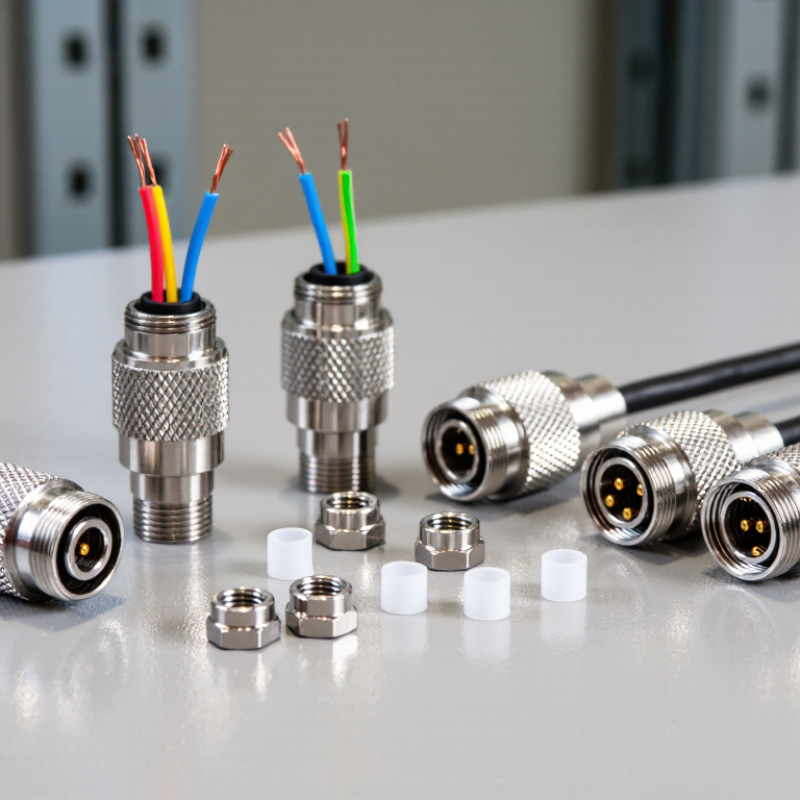
China Top M8 Pico Connector Manufacturers for Global Buyers

What Is an M8 Pico Connector and Where Is It Used?

An M8 Pico connector is a compact circular connector with an 8 mm threaded coupling, commonly used to link sensors, actuators, and control equipment. “Pico” is not applied consistently across the industry; M8 usually describes the connector’s coupling size, not a universal contact layout. IEC 61076-2-104 specifies requirements for M8-style circular connectors, including mating dimensions and connection characteristics. Small, but not trivial.

In practice, M8 connectors appear on photoelectric sensors, proximity switches, and compact devices mounted near conveyors or machine frames. Their threaded coupling helps resist vibration, while molded cable assemblies can reduce exposure to dust and moisture when correctly selected. Check pin count, coding, current rating, cable material, and the required ingress protection rating under IEC 60529. One detail is easy to overlook: an IP rating applies only to the specified, properly mated assembly.

The scale of automation makes these small connections relevant. The International Federation of Robotics reported 4,281,585 industrial robots operating worldwide in its World Robotics 2024 report. That figure does not measure M8 connector demand, but it illustrates the equipment environment where compact sensor connections are common. For buyers, confirm the device interface and installation conditions before specifying a connector; “M8” alone is not enough.

Key Design Features and Technical Specifications of M8 Pico Connectors

M8 Pico connectors use a compact, threaded coupling, typically built around an 8 mm locking interface. Their small footprint suits sensors and actuators in crowded machine layouts. Small, but demanding. Contact counts commonly range from three to six, while pin assignments depend on the device and signal type. Check the wiring diagram rather than assuming that matching shell sizes mean matching connections.

Key specifications vary by construction. Rated voltage and current depend on contact design, cable size, and insulation materials, so buyers should confirm the values on the product datasheet. Some versions offer straight or right-angle bodies, molded cables, and shielding for electrically noisy environments. In a wet area, verify the stated ingress rating and whether it applies only when fully mated. Fit matters. Thread engagement, sealing surfaces, and cable bend radius all affect installation reliability.

For selection, compare operating temperature, conductor gauge, mating cycles, and available coding options against the actual application. A short cable may reduce clutter, yet leave too little slack for maintenance. That detail is easy to overlook. Connector dimensions also deserve a physical check: a wrench or neighboring cable can obstruct a tight installation, even when the CAD model looks clear. Specifications are useful, but a sample assembly can reveal awkward access before a full production run.

How M8 Pico Connectors Are Manufactured and Quality-Tested

M8 pico connectors are built through several controlled steps. Metal contacts are stamped or machined, then plated to suit the required conductivity and corrosion resistance. Insulating parts are molded, and contacts are positioned before the housing is closed. Cable versions add sealing and strain relief around the cable entry. Small parts demand careful alignment. A slight contact-position error can affect mating.

Quality checks should match the intended environment, not just the drawing. IEC 60512 describes test methods for electrical connectors, including continuity and insulation resistance; IEC 60529 defines enclosure protection tests. Manufacturers may also check contact retention, cable pull strength, mating durability, and water ingress. Bishop & Associates’ 2023 connector market review puts global connector sales above US$80 billion, reflecting the scale of a sector where consistent inspection matters. That figure is not an M8-specific quality benchmark. Published yield data for M8 pico connectors is limited, so buyers should request test records for the actual configuration.

Tips: Ask for sample test reports, rated mating cycles, and the exact IP test conditions. Check whether testing covers the assembled cable set, not only the connector shell. A label alone is not enough.

China Top M8 Pico Connector Manufacturers for Global Buyers - How M8 Pico Connectors Are Manufactured and Quality-Tested

Manufacturing or QC stage What is checked or produced Typical process or test details Why it matters to buyers
Design and configuration review Connector size, pole count, coding, termination, cable, and sealing requirements M8 circular interfaces are commonly designed to the applicable IEC 61076-2-104 configuration. Pin arrangements and keying depend on the selected version. Confirms mechanical and electrical compatibility with the mating device and installation.
Contact and terminal production Stamped or machined conductive contacts, followed by plating and dimensional inspection Contact base metal and plating are selected for the specified current, environment, and mating-cycle requirements; dimensions are checked against the drawing. Contact geometry and surface condition affect fit, conductivity, and durability.
Insulator molding Molded insulating insert that positions and isolates the contacts Molding dimensions, contact cavities, and visible defects are checked. Resin selection depends on electrical, temperature, and environmental requirements. Accurate contact positioning supports reliable mating and electrical isolation.
Housing and sealing assembly Metal or polymer housing, coupling features, seals, and cable-entry components Assembly checks cover thread and key alignment, seal placement, and visible damage. An IP rating applies only to the tested connector configuration and installation conditions. Correct assembly helps achieve the specified ingress protection and mechanical fit.
Cable termination Soldered, crimped, or otherwise specified wire-to-contact connection Process controls may include strip length, conductor placement, crimp dimensions or solder-joint inspection, and strain-relief assembly. Consistent termination reduces the risk of loose connections and cable pull-out.
Visual and dimensional inspection Finished connector appearance and drawing-critical dimensions Inspection can verify housing condition, contact position, keying, thread features, cable length, and marking against the approved specification. Catches assembly and workmanship issues before electrical or environmental testing.
Electrical continuity and pin mapping Electrical path through each specified contact and cable conductor Automated fixtures commonly check for open circuits, short circuits, and incorrect pin assignments. Acceptance limits are set by the product specification. Verifies that the connector is wired correctly and each intended circuit is complete.
Insulation resistance and dielectric testing Isolation between contacts and, where applicable, between contacts and housing Test voltage and acceptance limits must follow the connector design, rated voltage, and applicable specification; values should not be assumed from the M8 form factor alone. Checks electrical insulation and helps identify contamination or assembly faults.
Mechanical and sealing validation Mating fit, retention, cable strain relief, and ingress protection when specified Type testing may include mating-cycle, retention, or water-ingress tests. The test method and rating must match the exact connector, cable, and mating conditions. Provides evidence that the assembly suits its intended handling and operating environment.
Lot traceability and release Inspection records, material or production batch identification, and shipment documentation Buyers can request the applicable drawing revision, test records, material declarations, and sampling or inspection plan for the ordered configuration. Supports supplier qualification, incoming inspection, and investigation of quality issues.

Note: Test methods, ratings, materials, and acceptance limits vary by connector design and order specification. Confirm the exact configuration and applicable test documentation with the supplier before purchase.

How to Evaluate Chinese M8 Pico Connector Manufacturers

When evaluating Chinese M8 Pico connector manufacturers, request a dimensioned drawing and confirm thread size, pin arrangement, keying, and cable options. Compare these details with your equipment requirements rather than relying on product photos. Ask for material specifications, contact plating details, and documented sealing conditions. A stated ingress rating matters only when its test conditions match your application.

Ask for sample units from the production process, not specially prepared display pieces. Check connector fit, pin alignment, cable strain relief, and sealing after repeated mating. Small details matter. Review inspection records, batch traceability, and the manufacturer’s process for handling defects. Ask how production changes are controlled and whether test reports can be linked to specific batches. A polished datasheet can still leave gaps.

Communication is part of the evaluation. Send one clear technical question and see whether the reply addresses it with evidence, not just reassurance. Clarify lead times, minimum order quantities, and how changes to drawings are approved. I would not choose a supplier from one successful sample alone; that is an easy mistake. Compare repeated samples and inspect a later production batch when possible. A measured, documented review gives buyers a stronger basis for judging consistency and fit.

How to Evaluate Chinese M8 Pico Connector Manufacturers

Suggested evaluation priorities for global buyers

These illustrative weights are a practical buyer-planning guide, not measured market data or a ranking of manufacturers. Confirm applicable IEC 61076-2-104 requirements, electrical ratings, ingress-protection claims, quality traceability, customization capability, and delivery terms for each specific product.

Global Sourcing, Compliance, and Supplier Selection Considerations

Global sourcing for M8 pico connectors involves more than comparing unit prices. Confirm the connector’s pin count, coding, cable length, mounting style, and operating conditions against your equipment design. A compact connector can still fail if its keying or cable exit conflicts with nearby parts. Small details matter. Request current drawings and samples before approving a production order.

Compliance requirements depend on the destination market and end use. Ask suppliers for relevant test reports, material declarations, and traceability records, then verify that each document matches the exact connector and cable assembly being quoted. Do not treat a certificate for a similar product as sufficient evidence. Ask for evidence. Evaluate sealing claims against your actual exposure to dust, moisture, vibration, and cleaning chemicals. Compare inspection plans, change-notification procedures, and defect handling, not just advertised specifications.

A factory audit may help, but it cannot replace incoming checks. Supplier selection is rarely tidy; lead times, documentation quality, and sample results may point in different directions. Record unresolved gaps and agree on corrective actions before scaling orders.