Top 10 Heat Shrink Wire Terminals for Global Buyers
Heat Shrink Wire Terminals help protect electrical connections from moisture, abrasion, and vibration. For global buyers, the challenge is choosing products that perform consistently across different wire sizes, installation conditions, and supply chains. A terminal may look robust on a catalog page. Its seal, conductor grip, and tubing recovery matter more in use.
Electrical-contact specialist Peter G. Slade, editor of Electrical Contacts: Principles and Applications, emphasizes the importance of reliable contact design. The following sentence is a paraphrase of that broader principle, not a verified direct quotation: “A dependable connection starts with sound contact design and controlled installation.” That distinction matters. Buyers deserve clear evidence, not invented quotations.
This Top 10 guide compares Heat Shrink Wire Terminals by practical selection factors: wire-gauge range, insulation material, adhesive lining, temperature rating, crimp compatibility, and available certifications. Look closely at the small details. A visible adhesive seal can help indicate proper recovery, while an undersized terminal may compromise the crimp. Ask suppliers for current datasheets and sample parts. Check whether product specifications match your actual wire and tooling.
The ranking is a starting point, not a substitute for testing. Real assemblies can behave differently. Some details are easy to overlook. Evaluate samples under your own operating conditions before committing to volume orders.
What Heat Shrink Wire Terminals Are and How They Work
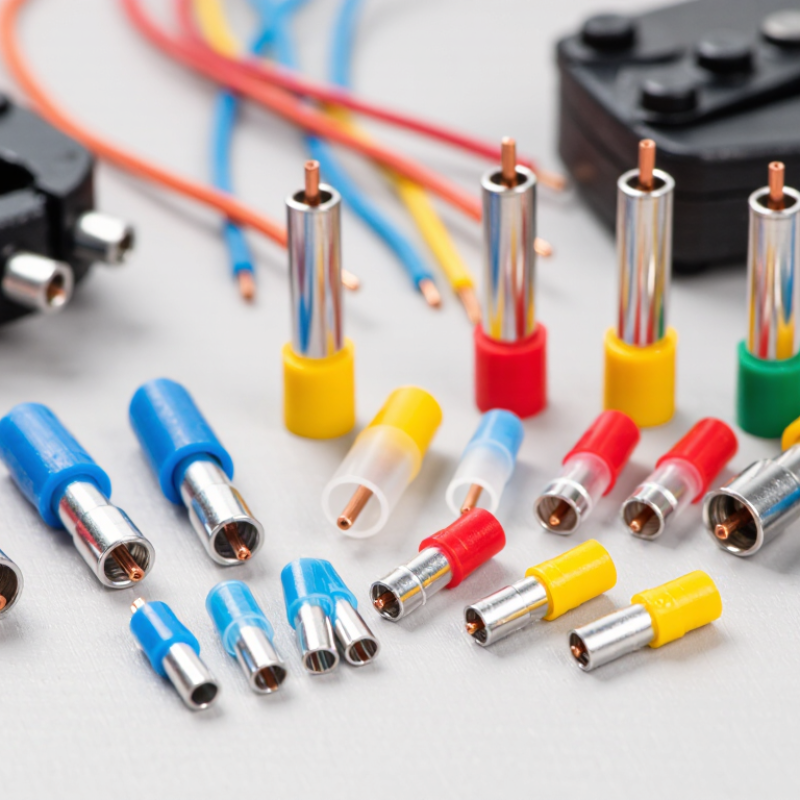
Heat-shrink wire terminals are crimp connectors with a metal barrel and a heat-recoverable insulating sleeve. The barrel grips the stripped conductor, creating the electrical and mechanical connection. The sleeve is not the connection itself. It shrinks around the barrel and wire insulation when heated. Adhesive-lined versions also soften an inner sealant, helping limit moisture and contaminant entry when fitted correctly.
Installation matters. Strip the wire to the specified length, insert it fully, then crimp with a compatible tool and die. Apply controlled heat until the sleeve conforms; avoid scorching the insulation. Too little heat may leave gaps, while too much can damage the wire.
NFPA’s Electrical Fires in U.S. Homes report estimated 46,700 home structure fires annually involving electrical failure or malfunction during 2015–2019. That figure covers many electrical systems, not terminals alone.
A polished sleeve can be misleading: check the crimp, conductor size, and product temperature rating rather than judging by appearance. Adhesive does not make every connection waterproof.
Key Materials, Sealing Features, and Performance Ratings
For global buyers comparing heat shrink wire terminals, material choice affects crimp stability, corrosion resistance, and long-term sealing. Many terminals use copper barrels, while tin plating can help limit oxidation in humid environments. The heat-shrink sleeve is commonly made from polyolefin; adhesive-lined versions add a seal around the wire insulation. Small details matter. Check that the barrel fits the conductor size and that the sleeve shrinks evenly without splitting.
Sealing claims need careful reading. A waterproof description alone does not confirm an ingress rating. Ask for the stated IP rating, test method, and installation conditions, including required heating tools and shrink temperature. A visible adhesive bead at each end can indicate melt flow, but it is not proof of a tested seal. I may be overcautious here; labels can make performance sound simpler than it is.
Compare operating temperature and voltage ratings against the actual circuit, not just the product category. Ratings vary by terminal design, wire insulation, and test standard. A sleeve that looks fully recovered may still have a weak crimp underneath, so inspect sample joints for pull strength and insulation coverage. For a top-ten shortlist, favor products with traceable test data, clear conductor ranges, and consistent dimensions across samples.
How the Top 10 Terminal Types Differ by Design and Use
Heat-shrink wire terminals vary in contact shape, not just color or insulation. A ring terminal forms a closed loop around a stud, making it useful where vibration could loosen an open connection. A fork terminal slips beneath a screw without fully removing it, though it needs enough clearance to stay secure. Fit matters. Match the barrel to the wire size and the stud to the hardware.
For joining wires end to end, a butt splice encloses both stripped ends; a step-down splice accepts different wire sizes. Male and female quick-disconnect terminals pair for removable connections, while bullet terminals offer a compact, inline alternative. A pin terminal gathers fine strands for a screw clamp. Hook terminals catch beneath a post, and blade terminals suit compatible flat receptacles. Flag terminals turn the connection sideways where space is tight.
The sleeve shrinks around the barrel when heated, helping resist moisture and strain, but it cannot fix a weak crimp. Use a crimping tool suited to the terminal, then apply controlled heat until the tubing conforms without scorching. I have seen selection based on shape alone lead to poor fit. Check the wire range, insulation temperature rating, and equipment requirements before choosing; similar-looking terminals are not always interchangeable.
Applications Across Automotive, Marine, Industrial, and Electrical Systems
Across automotive systems, heat-shrink wire terminals protect crimped connections from splash, vibration, and road grime. OICA reported 93.5 million motor vehicles produced worldwide in 2023, showing the scale of wiring exposed to demanding conditions. The International Energy Agency also recorded nearly 14 million electric-car sales that year. In these vehicles, technicians must consider cable size, current load, temperature, and the terminal’s sealing performance—not just its appearance.
Marine installations face a different challenge. UNCTAD reports that shipping carries over 80% of world trade by volume, while onboard wiring encounters salt, humidity, and confined spaces. Salt finds weak points. Adhesive-lined heat-shrink tubing can help seal a properly crimped joint, but it cannot fix loose strands or the wrong terminal size. A practical check: inspect the crimp, then heat the sleeve evenly until it conforms without scorching.
Industrial panels and building electrical systems need reliable connections during maintenance and operation. Choose terminals by conductor material, wire gauge, insulation temperature rating, and expected exposure. Confirm compatibility with the specified crimping tool. A seal may look complete and still conceal a poor crimp; visual checks alone are imperfect. The cited production and trade figures describe system scale, not terminal failure rates, so they should not be treated as proof that one terminal design suits every application.