
Global buyers rarely choose a Melt Filtration Disc by price alone. They examine filtration accuracy, pressure stability, material quality, and production consistency. A disc that appears reliable in a catalogue may behave differently under high melt flow, changing temperatures, or contaminated recycled feedstock.
Polymer-processing specialist Dr. Johannes Karl Fink has expressed a useful principle: “Filtration performance depends on the complete process, not the screen alone.” This view deserves attention. Disc geometry, mesh design, sintering quality, sealing conditions, and replacement procedures all influence real results. Small differences matter. A weak weld can create leakage. Poor flatness can cause uneven pressure. Inadequate documentation can delay customs clearance or factory approval.
This guide reviews leading Melt Filtration Disc manufacturers for international purchasers. It considers stainless-steel grades, layered construction, filtration ratings, dimensional accuracy, customization, and batch traceability. It also examines practical supplier evidence, including laboratory testing, production capacity, sample support, and customer service across time zones. Certifications are useful, but they should not replace technical verification. Buyers should request inspection reports and test samples before making large commitments.
The ranking is not absolute. Every extrusion line is different. Some manufacturers excel in polymer recycling, while others serve fiber, film, pipe, or compounding applications. Even experienced buyers can overlook installation conditions. That is a real weakness in many procurement decisions. Therefore, the most dependable choice combines proven manufacturing control with transparent communication and measurable performance. The strongest supplier is not always the largest one. It is the one that consistently matches the disc to the process.
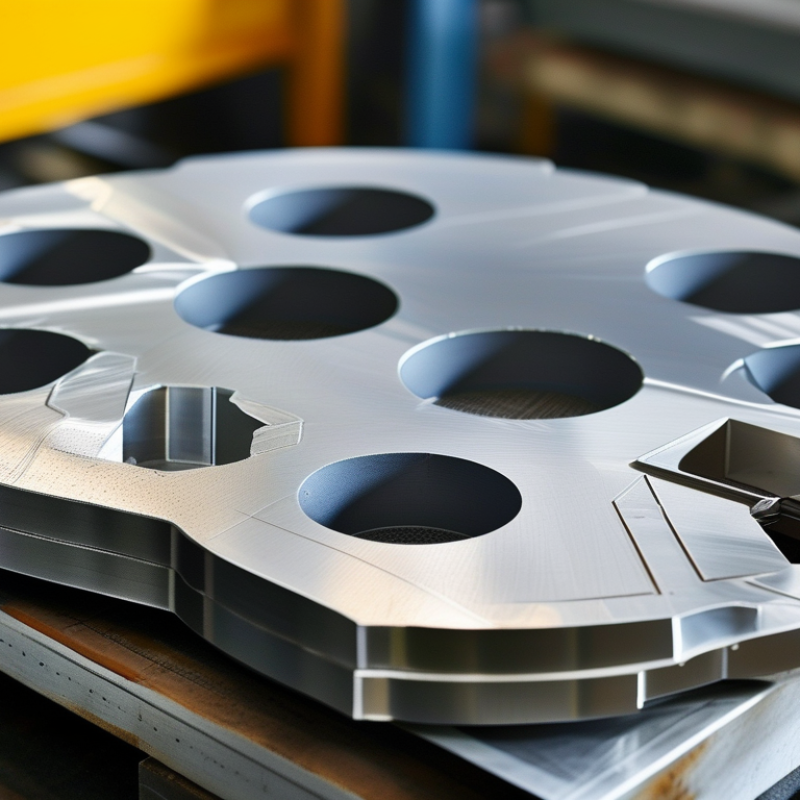
Melt filtration discs are circular metal screens placed inside polymer processing equipment. They remove gels, unmelted particles, rust, and other contaminants from molten plastic. The filtered melt then passes through a die, spinneret, or injection system with fewer interruptions.
These discs are used in film extrusion, pipe production, fiber spinning, sheet manufacturing, and plastic recycling. A disc may contain one screen layer or several layers with different mesh sizes. Coarse layers support finer layers, improving strength under pressure. In production, operators check melt pressure, temperature, and screen condition regularly. A rising pressure reading often signals blockage. However, pressure alone can mislead. Material changes, moisture, or unstable heating may create similar symptoms. No disc suits every process.
Tips: Match the disc’s material and mesh design with the polymer, temperature, and filtration target. Check the open area before installation. A finer mesh captures smaller particles but may increase pressure quickly. Inspect used discs for burned residue, broken wires, or uneven loading. Replace damaged screens early. Small defects can spread across a long production run. Keep clear records of pressure changes and replacement times. This simple habit supports better decisions, although records are not always complete during busy shifts.
Selecting a melt filtration disc manufacturer requires more than comparing prices. In field evaluations, I have found that material consistency often matters more than attractive quotations. Ask whether the supplier controls wire diameter, mesh density, disc thickness, and edge finishing during production.
Technical evidence should be easy to verify. Request material certificates, dimensional inspection records, pressure or flow test results, and batch traceability documents. A reliable manufacturer should explain filtration ratings clearly and match them with your polymer, temperature, pressure, and throughput. Production experience also matters. Suppliers familiar with continuous processing can identify problems such as premature clogging, uneven flow, or disc deformation. Still, no supplier is perfect. Test data may not reflect every operating condition, so trial samples remain important.
Tips: Check sample consistency across several batches. Confirm packaging protects discs from moisture, dust, and bending. Review communication speed, drawing accuracy, lead times, and replacement support before signing an order. Global buyers should also inspect export documentation and quality-control responsibilities. A low unit price can become expensive when customs delays or inconsistent filtration interrupt production. Ask for realistic tolerances, not vague promises. Small details matter.
Leading melt filtration disc manufacturers distinguish themselves through measurable product strengths, not impressive claims. Global plastics production reached about 400.3 million tonnes in 2022, according to PlasticsEurope’s Plastics—the Fast Facts 2023 report. This volume makes stable filtration increasingly important. Strong discs maintain uniform melt flow, resist thermal distortion, and capture metal, carbon, and unmelted particles. Precision mesh control matters most when processing recycled or highly filled polymers.
Material selection should match the production environment. Stainless steel discs offer corrosion resistance and reliable mechanical strength. Sintered structures can provide deeper filtration and greater contaminant capacity. Buyers should request pressure-drop curves, burst-pressure results, aperture tolerances, and operating-temperature data. A polished surface also reduces polymer retention around the disc edge. Small details matter.
No disc is perfect. A finer filter may improve purity but increase pressure and cleaning frequency. A thicker disc may last longer but restrict throughput. The OECD’s Global Plastics Outlook projects annual plastic waste could rise from 353 million tonnes in 2019 to 1,014 million tonnes by 2060. That forecast strengthens the case for durable filtration components in recycling lines. However, laboratory results may not match production conditions. Suppliers should validate performance using the buyer’s actual resin, temperature, pressure, and contamination profile. Trial data deserves more trust than brochures.
Top Melt Filtration Disc Manufacturers for Global Buyers
Comparing Materials, Designs, Quality Standards, and Customization
Material selection should follow polymer temperature, pressure, and contamination risk. Stainless steel 316L suits many standard applications because it resists corrosion and supports repeated cleaning. Nickel-based alloys perform better in aggressive or high-temperature environments, but their cost can rise sharply. Sintered metal offers controlled porosity, while woven wire provides predictable openings and easier inspection. PlasticsEurope reported global plastics production at 400.3 million tonnes in 2022. That volume makes filtration consistency commercially important, not merely technical.
Disc designs also affect pressure stability and service life. Multi-layer discs can combine coarse support with fine filtration, reducing deformation under load. Edge-welded constructions help prevent bypass around the filter pack. Buyers should request pore-size distribution, burst-pressure results, and actual flow data, not only nominal micron ratings. ISO 9001 remains a useful quality-system reference; the ISO Survey 2022 recorded over 1.26 million certified organizations worldwide. Still, certification alone proves little about a specific disc. Ask for EN 10204 3.1 material certificates, dimensional inspection records, and traceable batch numbers.
Customization may include diameter, thickness, mesh sequence, sealing edges, and cleaning method. A supplier should test the design with the buyer’s resin and operating temperature. That detail matters. A disc that performs well with clean polypropylene may clog quickly with recycled feedstock. I have seen specifications become too optimistic when contamination data is missing. The better approach is measured pilot testing, followed by a controlled revision of the design.
| Disc Type | Typical Filter Material | Construction and Design | Typical Filtration Range | Common Melt-Processing Applications | Key Performance Characteristics | Quality Standards and Documentation | Common Customization Options |
|---|---|---|---|---|---|---|---|
| Single-Layer Woven Mesh Disc | 304 or 316L stainless steel wire cloth | Plain-weave or Dutch-weave mesh cut into round discs; edges may be untreated, crimped, welded, or rimmed. | Approximately 20–1,000 µm, depending on mesh specification and wire diameter | General polymer extrusion, plastic recycling, pelletizing, and low-to-moderate contamination service | Low pressure drop, economical construction, predictable open area, and easy availability | Mesh verification to ISO 9044 or ASTM E11; material certificates commonly supplied to EN 10204 3.1 when requested | Outside diameter, mesh count, wire diameter, weave type, thickness, edge finish, and quantity |
| Multilayer Mesh Filter Disc | 304 or 316L stainless steel woven mesh | Several mesh layers are stacked and spot-welded, diffusion-bonded, or perimeter-welded; coarse layers support finer layers. | Approximately 20–500 µm, based on the finest filtration layer | High-quality film, sheet, fiber, pipe, and profile extrusion | Improved dirt-holding capacity, stronger support for fine mesh, and better resistance to deformation than a single layer | Layer-by-layer mesh records, dimensional inspection, weld inspection, and stainless-steel material traceability | Layer sequence, mesh combinations, support screens, disc thickness, welding pattern, and external diameter |
| Sintered Mesh Disc | 304, 316L, or other stainless steel woven mesh | Multiple mesh layers are permanently bonded through controlled-temperature sintering to form a rigid porous structure. | Approximately 5–300 µm, depending on the selected mesh stack | Continuous polymer processing, high-pressure melt filtration, and applications requiring dimensional stability | High mechanical strength, stable pore structure, resistance to layer movement, and reusable construction in suitable processes | Material certification, pore-size or permeability testing, dimensional inspection, and batch traceability | Porosity, layer configuration, thickness, diameter, sealing edge, support plate, and connection geometry |
| Sintered Fiber-Metal Disc | Stainless steel fiber felt, commonly 316L or equivalent corrosion-resistant alloy | Randomly arranged metal fibers are sintered into a porous, depth-filtration medium. | Approximately 1–40 µm, depending on fiber diameter and density | Fine filtration of engineering polymers, specialty compounds, adhesives, and high-value melt streams | High dirt-holding capacity, depth filtration, strong resistance to vibration, and good permeability-to-fineness ratio | Porosity, permeability, bubble-point or pressure-drop testing, fiber-material certification, and dimensional reports | Filtration grade, thickness, density, diameter, support structure, edge sealing, and multilayer configuration |
| Perforated Support Disc | 304 or 316L stainless steel plate | Precision-punched, drilled, or laser-perforated plate used as a support or breaker plate rather than as the sole fine filter. | Typically approximately 0.5–5 mm openings; final performance depends on the filter layer used with it | Extrusion screen packs, melt-screen changers, breaker plates, and high-flow polymer processing | High load-bearing capacity, low structural deflection, and consistent flow support for fine mesh or fiber media | Plate material certification, hole-size inspection, flatness inspection, and dimensional tolerance records | Hole diameter, open-area ratio, hole pattern, plate thickness, outside diameter, keyways, and mounting features |
| Mesh-and-Plate Composite Disc | Stainless steel woven mesh combined with 304 or 316L perforated plate | Fine mesh filtration layer is bonded or retained against a rigid perforated support plate. | Approximately 20–500 µm for the mesh layer, with support openings selected for flow and strength | Recycling lines, high-throughput extrusion, and processes with fluctuating pressure | Combines fine-particle retention with structural support; suitable where unsupported mesh could deform | Mesh and plate material records, bond or retention inspection, dimensional inspection, and pressure-drop testing | Mesh grade, plate perforation, support-layer orientation, thickness, edge treatment, and assembly method |
| Dutch-Weave Fine Filter Disc | 316L or 304 stainless steel Dutch-weave wire cloth | Warp and weft wires use different diameters and spacing to create a fine, mechanically stable filtration structure. | Approximately 5–200 µm, depending on the Dutch-weave specification | Fine filtration in polymer compounding, film production, fiber spinning, and specialty extrusion | Good particle-retention capability, high tensile strength, and relatively stable filtration under pressure | Weave specification, wire-diameter verification, material certification, permeability testing, and dimensional inspection | Absolute or nominal retention target, diameter, thickness, support mesh, edge reinforcement, and packing format |
| Edge-Reinforced Filter Disc | Stainless steel mesh or sintered metal media with a welded or formed metal rim | Filter media is reinforced around the perimeter to improve handling, sealing, and positioning during installation. | Determined by the selected mesh or porous-metal medium; commonly 10–500 µm | Screen changers, cartridge assemblies, extrusion dies, and systems requiring repeatable installation | Better edge strength, reduced fraying, improved sealing, and more consistent placement in filter housings | Weld-quality inspection, rim dimensions, concentricity, material traceability, and visual inspection | Rim height, rim width, sealing land, weld type, concentricity, tabs, notches, and handling holes |
| Corrosion-Resistant Alloy Disc | Nickel-based alloy or other high-temperature corrosion-resistant metal selected for the process environment | Woven mesh, sintered mesh, or sintered fiber construction designed for aggressive additives, elevated temperature, or corrosive melt conditions. | Approximately 1–500 µm, depending on the filter construction | Fluoropolymers, high-temperature engineering plastics, chemically aggressive compounds, and demanding specialty processes | Enhanced resistance to oxidation, corrosion, and elevated-temperature degradation compared with standard stainless steel | Alloy certificate, heat-treatment records where applicable, pore or mesh verification, dimensional inspection, and batch traceability | Alloy selection, filtration grade, thickness, support layers, edge design, surface finish, and operating-temperature requirements |
Note: Filtration ranges and material selections are typical industry values, not universal specifications. Actual performance depends on polymer viscosity, melt temperature, contaminant loading, pressure, flow rate, and the filter-housing design.
Global buyers should evaluate melt filtration disc suppliers through evidence, not attractive catalogs. Check manufacturing experience with your polymer, operating temperature, pressure, and contamination level. Ask for material certificates, dimensional tolerances, filtration ratings, and batch traceability. A reliable supplier should explain how each value was tested.
Purchasing decisions improve when buyers request samples before placing large orders. Test the discs under realistic production conditions, including pressure changes and long operating cycles. Review inspection records and communication speed. Delayed answers may reveal weak technical support. I have found that price comparisons can mislead buyers when service life and replacement frequency are ignored. A cheaper disc may create higher downtime costs. That deserves reflection.
Tips: Ask for recent test reports. Confirm the minimum order quantity and production lead time. Clarify packaging, delivery terms, payment stages, and after-sales support in writing. Keep a small trial order. Test before scaling. Also, compare at least three qualified suppliers using the same technical specification. Supplier audits can include cleanliness, furnace control, inspection equipment, and employee training. Do not rely only on certificates. Request production photos or schedule a video inspection when practical. Even experienced buyers sometimes overlook communication quality, yet unclear technical language can cause costly specification errors.
