
A Multi Stage Cylinder can turn a compact installation into a long, controlled stroke. Its nested stages extend in sequence, making it useful in dump trailers, lifting platforms, agricultural equipment, and other applications where space is limited. Yet the design is not magic. Load, stroke length, mounting geometry, operating pressure, and duty cycle all affect performance. A cylinder that looks right on a specification sheet may still be a poor fit in the field.
Hydraulic author Andrew Parr’s work offers a useful principle, paraphrased here: “Reliable hydraulic performance begins with matching the component to the system.” That reminder matters when comparing global manufacturers. Buyers should look beyond headline capacity and check materials, seals, testing practices, customization options, documentation, and support after delivery. Ask for drawings. Review the operating limits. Confirm how the maker handles quality control.
Details matter.
This guide to the Top 10 Multi Stage Cylinder Manufacturers for Global Buyers is intended to help procurement teams build a more informed shortlist. It considers product range, manufacturing capability, market reach, and practical buyer considerations. Rankings can never replace application-specific engineering review, and available information may change. That is worth admitting. A supplier’s reputation is useful, but evidence from the actual project—clear specifications, traceable tests, and responsive technical support—should carry more weight.
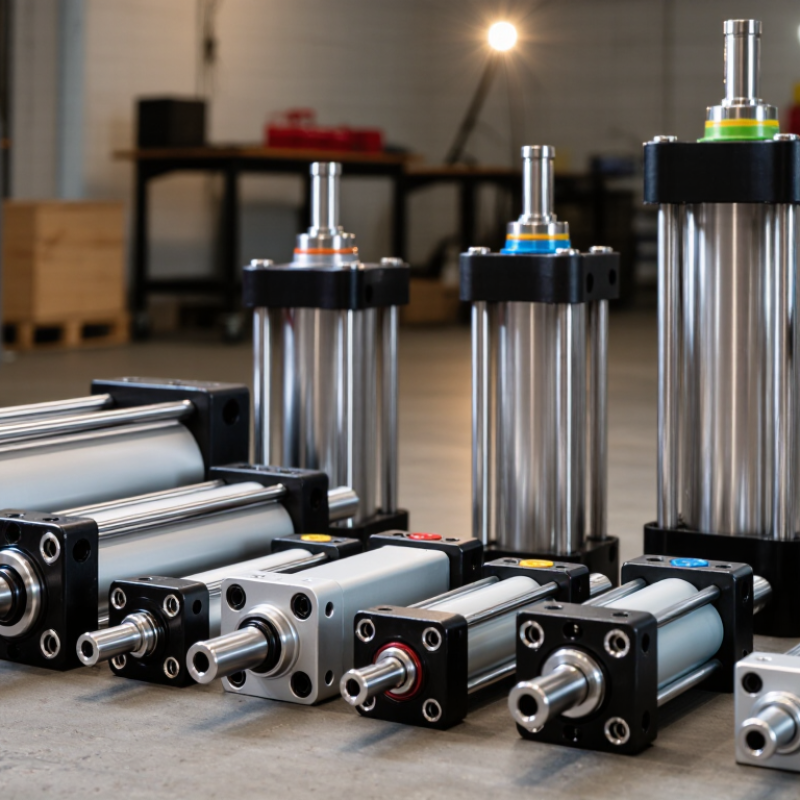
A multi-stage cylinder is a telescoping actuator: several nested sections fit inside one compact housing. When retracted, the stages overlap, keeping the unit relatively short. Under hydraulic pressure, they extend in sequence to produce a much longer stroke. This design is useful where space is limited but equipment still needs substantial reach, such as on lifting platforms or mobile machinery.
Here is the basic idea. Pressurized oil pushes on a piston, moving one stage outward. Once that stage reaches its travel limit, pressure acts on the next stage, continuing the extension. The exact sequence depends on the cylinder’s internal design. Some models extend and retract through hydraulic pressure; others rely partly on gravity or an external load to retract. Not magic—just carefully controlled surfaces, seals, and fluid paths.
The trade-off is worth checking. More stages can create a longer stroke, but each nested section adds seals and potential wear points. Dirt in the hydraulic system may shorten seal life, while side loading can cause uneven wear. Buyers should verify rated pressure, load, mounting position, and retraction method against the actual machine. The tidy diagram is not the whole story; temperature, maintenance, and real operating loads can change performance. That detail is easy to overlook.
Multi-stage cylinders are common where equipment needs a long working stroke but limited storage space. A tipper truck is a clear example: nested stages extend to raise a loaded body, then retract beneath the chassis. Similar designs lift grain trailers, refuse bodies, and mobile service platforms. The fit is practical. But load angle, debris, and uneven ground can change operating demands.
Construction equipment is another major setting. Global Construction Perspectives and Oxford Economics projected in Global Construction 2030 that worldwide construction output would grow 85% to US$15.5 trillion by 2030. That was a forecast, not a measured result. Still, cranes, lifting platforms, and specialist vehicles rely on compact high-stroke actuators. Small details matter. A cylinder selected only by maximum force may perform poorly if its mounting geometry or duty cycle is wrong.
Agriculture also uses staged cylinders on trailers and machinery that must lift or position loads in tight spaces. FAO’s 2023 report, The Status of Women in Agrifood Systems, estimated that agrifood systems employed 1.23 billion people worldwide in 2019. This figure describes the sector, not cylinder demand, but it shows the scale of work supported by agricultural equipment. Field conditions are rough. Dust, side loading, and inconsistent maintenance can shorten service life, so buyers should check seals, stroke sequence, and retracted length against real operating conditions.
Selecting a multi-stage cylinder manufacturer requires more than comparing prices. Buyers should examine rated pressure, extended and retracted lengths, load charts, and duty cycles. A compact unit may fit a machine frame but still fail under side loading or repeated shock. Request drawings, material specifications, seal compatibility data, and documented pressure-test results. Small details matter.
MarketsandMarkets’ Hydraulic Cylinder Market report estimated the sector at USD 14.2 billion in 2023 and projected USD 17.7 billion by 2028. That growth raises the value of checking production capacity and quality controls, not just delivery promises. Ask how each production batch is traced and how dimensional tolerances are verified. ISO 10100:2020 provides a useful reference for hydraulic cylinder acceptance tests. A supplier’s test records should show actual results, not only a claim of compliance.
Also compare spare-part availability, warranty terms, and response times for field issues. One overlooked point: designs can look sound on paper, yet perform poorly when seals meet heat, dust, or an unexpected duty cycle. Buyers should share real operating conditions before approving a specification.
Selecting a multi-stage cylinder manufacturer is less about catalog size and more about verified performance. Grand View Research’s Hydraulic Cylinder Market Size report estimated the global market at USD 14.2 billion in 2023, with projected growth through 2030. That broad market figure signals demand, but it does not certify any supplier’s product quality. Buyers should compare rated pressure, stroke length, retracted length, load capacity, mounting geometry, and seal compatibility against the actual machine cycle.
Ask each candidate for pressure-test records, material specifications, dimensional drawings, and clear warranty terms. Check how the cylinder behaves near full extension, where side loading can accelerate wear. Look closely at corrosion protection, too. A coating that survives a clean factory floor may fail on a wet truck bed. Small detail. Large repair bill. ISO 4413 provides general safety requirements for hydraulic fluid power systems, but supplier documentation still needs practical review. The uncomfortable part: polished brochures rarely show failure rates or real service intervals. Request application references and discuss maintenance access before ranking the top ten. A response that is slow or vague is useful evidence, though not a complete verdict.
The entries below are anonymized supplier profiles, not named or ranked companies. Capability ranges are indicative examples; confirm specifications, certifications, and availability directly with each supplier.
| No. | Supplier Profile | Typical Market Region | Cylinder Focus | Typical Stages | Indicative Pressure Range | Common Applications | Buyer Checkpoints |
|---|---|---|---|---|---|---|---|
| 1 | Heavy-duty hydraulic telescopic cylinder specialist | North America | Single- and double-acting hydraulic telescopic cylinders | 2–5 | Often designed for hydraulic systems around 140–250 bar; verify model rating | Dump bodies, trailers, material handling equipment | Collapsed length, stroke, mounting geometry, seal availability |
| 2 | Mobile-equipment cylinder manufacturer | Europe | Compact telescopic cylinders for vehicle-mounted equipment | 2–4 | Commonly engineered for approximately 160–250 bar systems | Lifting platforms, municipal vehicles, access equipment | Load case, corrosion protection, duty cycle, applicable conformity requirements |
| 3 | Agricultural hydraulics supplier | Asia-Pacific | Telescopic cylinders for agricultural machinery | 2–5 | Typically matched to hydraulic circuits in the 160–250 bar range | Grain trailers, sprayers, farm implements | Contamination tolerance, local spare parts, pin and port compatibility |
| 4 | Custom-engineered hydraulic cylinder builder | Global export markets | Made-to-order multi-stage cylinders | 2–6+ | Project-specific; ratings must be confirmed on the approved drawing | Special machinery, limited-clearance installations, OEM projects | Design review, test documentation, delivery lead time, change control |
| 5 | Pneumatic actuator manufacturer | Europe and Asia | Multi-position or staged pneumatic actuators | 2–3 sections or positions, depending on design | Many industrial pneumatic systems operate near 6 bar; check the actuator rating | Automation, positioning, packaging machinery | Air quality, force at operating pressure, cushioning, mounting standard |
| 6 | Construction-equipment cylinder supplier | Asia-Pacific | Large-bore hydraulic telescopic cylinders | 2–5 | Often specified for systems around 200–350 bar; model-specific validation required | Construction vehicles, lifting equipment, earthmoving machinery | Side loading, fatigue life, surface treatment, pressure testing |
| 7 | Marine and offshore hydraulic cylinder maker | Northern Europe and East Asia | Corrosion-resistant multi-stage hydraulic cylinders | 2–4 | Application-dependent; commonly engineered for industrial hydraulic pressures | Deck equipment, marine handling systems, offshore machinery | Material certificates, coating system, salt-spray requirements, sealing details |
| 8 | Industrial process-cylinder specialist | North America and Europe | Custom hydraulic cylinders for plant equipment | 2–4 | Usually defined by the machine circuit and cylinder design | Steel processing, presses, factory automation | Integration drawings, seals for process environment, maintenance access |
| 9 | Compact-cylinder and OEM production supplier | East Asia | Space-saving staged cylinders for equipment manufacturers | 2–3 | Set according to hydraulic or pneumatic application | Compact machinery, automated fixtures, OEM assemblies | Dimensional tolerances, repeatability, production consistency, inspection plan |
| 10 | Replacement and aftermarket cylinder supplier | Global distribution markets | Replacement telescopic cylinders and service assemblies | 2–5, depending on application | Varies by replacement model; verify pressure and load ratings before installation | Fleet maintenance, equipment repair, aftermarket service | Part-number matching, dimensions, warranty terms, replacement-seal support |
Note: Pressure values are indicative system ranges, not guaranteed product ratings. Confirm working pressure, load limits, stroke, mounting, materials, and testing requirements for the exact cylinder configuration.
A multi stage cylinder should be selected around the machine, not just its maximum force. Define the required stroke, retracted length, mounting position, and load direction before comparing suppliers. A unit that fits the force rating may still collide with a frame or leave too little room for hoses. Measure the available space with the equipment in its working position. Small details matter.
Ask manufacturers for drawings, pressure and load ratings, materials, seal options, and test documentation. Check that their stated performance matches your duty cycle, operating temperature, and fluid. If the cylinder will extend repeatedly during a shift, ask how wear and maintenance are addressed. Requesting a sample or inspection plan can clarify details a brochure may leave out. Ask for evidence.
Manufacturing capability matters, but so does communication. Confirm whether the supplier can support custom dimensions, provide replacement seals, and explain lead times clearly. Discuss installation tolerances and service access before approving a design. A low purchase price may not be the best fit if parts are difficult to source later. Still, no checklist catches every issue; application data is sometimes incomplete. Share what you know, flag what remains uncertain, and compare each proposal against the same project requirements.
