
Automated Dispensing Robot Videos

A World of Robotic Dispensing and Assembly Solutions

Why Is 3D Print Filament Quality Important?

Why does 3d Print Filament quality matter? Because every layer begins with material passing through a hot nozzle. A spool with uneven diameter, moisture, or inconsistent pigment can cause visible shifts, weak layer bonds, rough surfaces, and frustrating print failures. A small defect can become a whole failed part.

The stakes are growing with the industry. Wohlers Report 2024 estimated that the global additive manufacturing industry reached $20.0 billion in 2023, an 11.1% increase over 2022. That figure covers more than filament, but it shows why repeatability matters across professional and desktop printing. Dr. Ian Gibson, co-author of Additive Manufacturing Technologies, studies additive manufacturing as a complete process. His work supports a practical takeaway: consistent results depend on controlling material and process variables. This is a paraphrase, not a direct quotation.

Look closely at a filament spool. Is its diameter consistent? Has it been stored dry? Does the manufacturer provide material data and processing guidance? Those details affect flow, adhesion, and the finish you see on the build plate. Yet filament alone cannot guarantee success. Printer calibration, nozzle condition, and settings still matter. That distinction is easy to overlook.

Good filament reduces uncertainty. It does not eliminate it. A quality spool is the dependable starting point for stronger parts, cleaner surfaces, and fewer wasted prints.
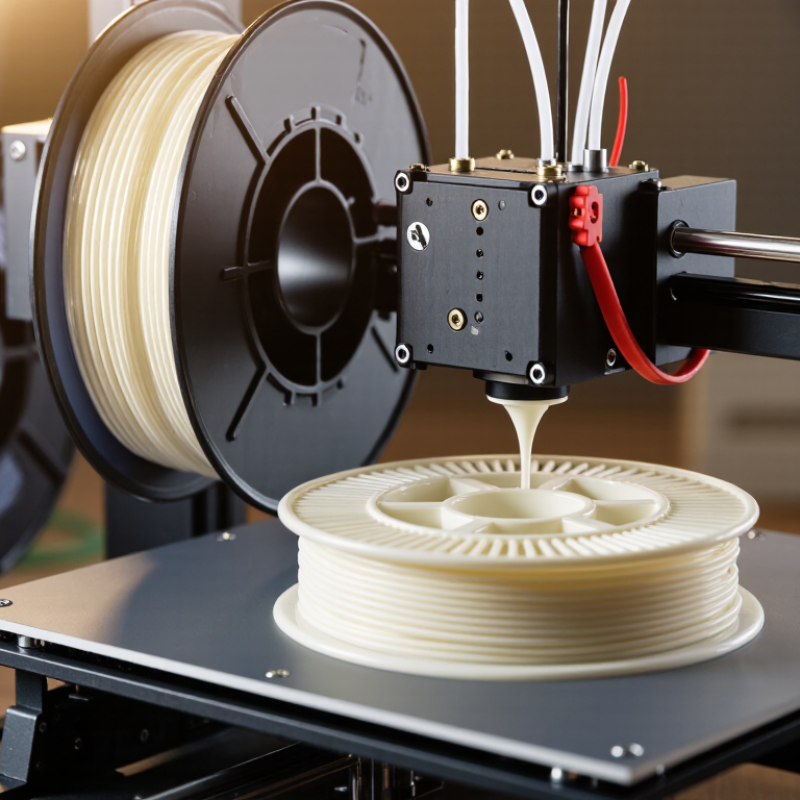
Why Is 3D Print Filament Quality Important?

What Defines the Quality of 3D Printing Filament?

Filament quality is more than a neat spool or a precise diameter label. It depends on consistent diameter and roundness, low moisture, stable polymer composition, and predictable melting behavior. A small bulge can increase friction in a Bowden tube; damp filament may hiss at the nozzle and leave rough, bubbly surfaces. These signs matter, but they do not identify every cause.

Testing makes quality easier to judge. ISO/ASTM 52903-1:2020 covers feedstock for material-extrusion printing, while ISO 1133-1 specifies how to measure melt mass-flow rate. Tensile testing, such as ASTM D638, helps assess strength, though a printed part’s layer bonding also affects its performance. Standards provide a shared method, not a guarantee of perfect prints. A sensible check is to measure filament at several points and compare test prints made with consistent settings. Small details count.

Quality is also application-specific. A flexible part needs different behavior from a rigid bracket, and an easy-to-print material may not suit a hot environment. The Wohlers Report 2024 estimated that the global additive-manufacturing industry reached $20.0 billion in 2023, up 11.1% from 2022. That growth raises the cost of inconsistent feedstock across more workflows. Still, there is no single metric that captures quality. Even a carefully tested spool can behave differently after poor storage, and that part is easy to overlook.

How Filament Consistency Shapes Print Accuracy

Why Is 3D Print Filament Quality Important?
How Filament Consistency Shapes Print Accuracy

Consistent filament helps a printer lay down predictable lines, which matters when parts need to fit together. A small diameter change can alter how much plastic reaches the nozzle. The result may be uneven walls, gaps, or dimensions that drift across a print. Check the filament at several points with calipers, rather than trusting one measurement. Small changes matter.

Shape and moisture matter, too. Filament that is slightly oval may feed differently as it turns through the extruder. Damp material can produce popping sounds, rough surfaces, and tiny voids. These signs are useful clues, but they do not prove the filament is the only cause; nozzle wear, temperature, and calibration also affect accuracy. A practical test is to print a simple cube, then measure its sides and inspect the layers under good light. If results vary between spools, record the measurements and storage conditions. I would not assume every error comes from the printer. It is easy to overlook the material, and that is worth reconsidering.

Why Is 3D Print Filament Quality Important? — How Filament Consistency Shapes Print Accuracy
Quality Dimension Practical Check Consistent Filament Indicator Effect on Print Accuracy
Filament diameter Measure the filament at several points along the spool using calipers or a micrometer. For common 1.75 mm filament, a tolerance such as ±0.02 mm is a frequently used quality target; check the supplier’s stated specification. Diameter changes affect the volume of plastic delivered, which can cause uneven line width, gaps, or over-extrusion.
Diameter variation along the spool Compare measurements from multiple locations rather than checking only one short section. Measurements remain close to the nominal diameter throughout the spool. More uniform feed helps maintain consistent walls, dimensions, and surface appearance during long prints.
Ovality and cross-sectional shape Measure the filament in two directions at the same point. The cross-section is close to round, with little difference between the two measurements. Excessive ovality can affect how the filament passes through the feed path and can contribute to inconsistent extrusion.
Moisture content Check the material’s recommended drying and storage guidance; listen for popping and look for steam or bubbles during extrusion. Filament is stored dry and dried when required. Suitable moisture levels depend on the polymer and its storage history. Moisture-sensitive filament can produce bubbles, rough surfaces, stringing, and weaker or less predictable layer bonding.
Material composition Use the same polymer type and formulation for a print job, and follow its temperature guidance. Material behavior, such as shrinkage and thermal response, is consistent from one section of the spool to another. Changes in shrinkage or flow can affect fit, hole size, warping, and repeatability between printed parts.
Contamination and debris Inspect the filament surface and watch for particles, residue, or sudden nozzle obstruction. The filament is clean and free from visible foreign material. Debris can interrupt extrusion, mark surfaces, or contribute to a clogged nozzle and missing features.
Color and additive distribution Compare the color and appearance of filament from different sections of the spool. Color and visible texture remain reasonably uniform throughout the spool. Uneven pigments or additives can change appearance and may also alter flow or print settings in some formulations.
Spool winding and feed Check that the filament unwinds smoothly without crossed loops, tangles, or sudden snags. The spool feeds steadily with no visible winding obstruction. Feed interruptions can cause under-extrusion, layer gaps, or a failed print even when the filament itself is dimensionally consistent.
Batch-to-batch repeatability Record the material type, settings, and results when replacing a spool. New spools behave similarly under the same printer setup, with adjustments made when material specifications differ. Repeatable material behavior makes it easier to maintain part dimensions and reproduce successful prints.
Note: The diameter target shown is a commonly used example for 1.75 mm filament, not a universal requirement. Check the stated tolerance and drying guidance for the specific filament and material type.

How Material Quality Affects Strength and Surface Finish

Why Is 3D Print Filament Quality Important?

How Material Quality Affects Strength and Surface Finish

Filament quality influences how consistently plastic melts, flows, and bonds between layers. A spool with uneven diameter can feed inconsistently, leaving thin sections, blobs, or gaps. Moisture can also cause tiny bubbles during extrusion. On a finished part, those may appear as rough patches or weak seams. Small flaws matter. Ahn and colleagues reported tensile strengths ranging roughly from 22 to 33 MPa across different fused-deposition build configurations, showing how strongly printed-part strength can vary with process conditions (Rapid Prototyping Journal, 2002, 8(4), pp. 248–257). Their findings concern build settings, not filament quality alone, but they underline why a reliable material baseline matters.

For a practical check, print a small test piece using the same settings and inspect its walls under bright light. Look for consistent extrusion lines, clean corners, and layers that resist splitting. A glossy surface is not proof of stronger material; temperature and cooling also shape the finish. It is tempting to blame the spool alone, but that is not always fair. A damp filament, worn nozzle, or poor calibration can create similar defects. Still, repeatable diameter and low moisture make settings easier to control, which supports steadier strength and smoother surfaces. I would not judge a filament from one attractive print. Run the same test more than once.

Why Reliable Filament Helps Prevent Printing Failures

Reliable filament is a process control, not a cosmetic upgrade. An inconsistent spool can vary in diameter, feed unevenly, or soften unpredictably when moisture enters the polymer. On the printer, that may look like thin gaps between lines, rough corners, or a nozzle that clicks as it struggles to feed. Moisture can also create tiny bubbles and a brittle, uneven extrusion. Small changes matter. A stable spool cannot prevent every failure, but it removes avoidable variables.

Wohlers Associates’ Wohlers Report 2024 estimated that the global additive manufacturing industry reached $20.035 billion in 2023, growing 11.1% from the previous year. That market figure does not measure filament failures, but it shows why repeatable production matters as printing scales. ASTM International’s D618 practice describes conditioning plastics before testing, underscoring how temperature and humidity affect fair material comparisons. In practice, keep filament sealed with fresh desiccant, inspect it for tangles, and note its storage history. A brief test print can reveal inconsistent flow before a long job wastes hours. Still, careful storage is not a perfect fix: spool condition, printer settings, and room humidity all interact. When a print fails, check the material and the machine before blaming either one.

How to Assess and Maintain Filament Quality

Filament quality is easier to judge with a few repeatable checks than by appearance alone. Look for crushed sections, tangled winding, and brittle spots near the spool edge. Measure the filament with calipers at several points, turning it to check for ovality. A single reading can be misleading; calipers capture only a small moment of a long strand. Note the measurements and compare them with the filament’s stated tolerance. Look closely. Also inspect the spool and packaging for signs of moisture exposure, such as a torn seal or damp residue. These clues are useful, but they do not prove a problem by themselves.

Print a small test object and watch for uneven extrusion, popping sounds, rough surfaces, or unexpected gaps. Check the nozzle and printer settings too, since similar symptoms can come from clogs, temperature, or feed tension. One test is not a verdict. I sometimes find it tempting to blame the filament too quickly; that shortcut can hide a simpler cause. Store spools in sealed containers with fresh desiccant, and dry them only according to the material supplier’s guidance. Keep dust off the strand, and avoid leaving a spool exposed beside a warm, humid window. Small habits matter. Record storage conditions and print results, then change one factor at a time. That makes troubleshooting more reliable, even when the evidence is imperfect.