
Automated Dispensing Robot Videos

A World of Robotic Dispensing and Assembly Solutions

Why Choose a Liquid Ring Compressor for Industrial Use?

Industrial gases are rarely as clean and dry as a specification sheet suggests. They may contain moisture, process vapors, or small amounts of entrained liquid. A Liquid Ring Compressor is often considered for these conditions because its impeller rotates within a casing partly filled with sealing liquid. The liquid forms a ring that helps compress the gas and carries away heat. The principle is straightforward. The application still needs careful review.

In vacuum and low-pressure duties, this design can offer stable operation when gas streams are wet or contain some contaminants. For example, a process line may deliver warm vapor with droplets after a separator. A liquid ring machine can tolerate such service better than some alternatives, but it is not immune to poor operating conditions. Seal-liquid choice, temperature, corrosion risk, and discharge handling all affect performance. Water is common, though process compatibility may call for another fluid. Not always simple.

Before selecting a unit, engineers should compare the required capacity and pressure range with the manufacturer’s performance data. They should also check seal-liquid consumption, cooling needs, and how the liquid will be recovered or treated. Efficiency can be lower than that of some dry technologies in certain operating ranges, so “rugged” does not automatically mean “best.” A thoughtful selection considers the full process, not just the compressor casing. That is easy to overlook. Done well, this evaluation helps determine whether a Liquid Ring Compressor offers the reliability, maintenance profile, and operating fit an industrial plant actually needs.
Why Choose a Liquid Ring Compressor for Industrial Use?

Liquid Ring Compressors: Basic Design and Operating Principle

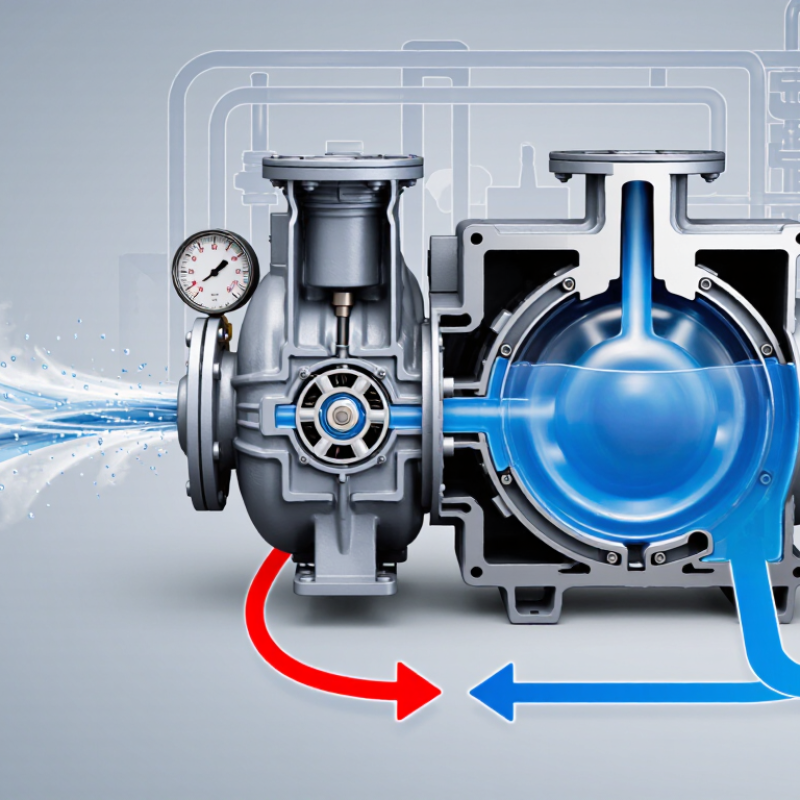
A liquid ring compressor moves gas using a rotating liquid seal, often water or another process-compatible fluid. Its impeller sits eccentrically inside a round casing. As the rotor turns, centrifugal force pushes liquid against the casing wall, forming a ring. The blades and liquid create pockets that expand and contract with each rotation.

Gas enters through an inlet port as the pockets expand. When they shrink, the trapped gas is compressed and directed to the discharge port. The liquid also absorbs heat and helps seal small clearances between moving parts. The seal is liquid. In practice, the neat textbook diagram leaves out an important variable: liquid temperature can affect capacity and compression performance.

This design can handle wet gas and occasional liquid carryover better than some dry-running machines, but it is not maintenance-free. Operators should monitor seal-liquid flow, temperature, and level, along with separator performance. A warm liquid supply may reduce capacity, while poor separation can send droplets downstream. These details are easy to overlook during equipment selection. Sizing should reflect gas composition, inlet pressure, discharge pressure, and the intended operating range.

Why Choose a Liquid Ring Compressor?

Idealized compression of air: pressure rises as gas volume decreases. Liquid ring compressors use direct contact with a sealing liquid, which helps remove heat and makes compression closer to isothermal than adiabatic. Actual performance depends on operating conditions and machine design.

How Liquid Ring Compression Handles Gas and Heat

A liquid ring compressor forms a moving seal from liquid inside a rotating casing. As the impeller turns, gas pockets expand near the inlet and shrink toward the discharge. This change in volume compresses the gas, while the seal liquid absorbs part of the resulting heat. The temperature rise is often moderated, but it is not eliminated. Warm liquid carries heat away through circulation and, when needed, an external cooler. The result is gentler. Small details matter.

This arrangement can suit humid gas streams, since some vapor may condense into the seal liquid. Droplets are often manageable, but abrasive particles can still cause wear. Seal-liquid choice and temperature affect capacity, sealing, and vaporization risk. Operators should check whether the liquid is compatible with the gas and whether it needs cooling or replacement. It is tempting to call the design simple; operating details argue otherwise. The compressor can handle demanding conditions, but it is not careless-proof. A process review should account for gas composition, discharge temperature, and liquid contamination before selecting a unit.

Key Advantages in Demanding Industrial Environments

In demanding industrial environments, gas streams are rarely perfect. They may carry moisture, condensable vapors, or small amounts of process liquid. A liquid ring compressor can handle these conditions because its rotating liquid forms a seal around the impeller. That matters. It reduces the risk of damage from wet gas compared with equipment designed for clean, dry service.

The liquid also absorbs heat during compression, helping keep discharge temperatures moderate. This can be useful in chemical processing, vacuum systems, and plants handling humid or vapor-rich streams. With no close contact between the impeller and casing, routine wear may be lower, though bearings and seals still need inspection. Operators should monitor seal-liquid temperature, flow, and contamination. A warm liquid can reduce capacity. Small changes count.

There are trade-offs. Liquid ring machines may use more power than some alternatives on dry-gas duties, and the seal liquid must suit the process. Corrosive or contaminated fluids can create maintenance problems if materials and treatment are chosen poorly. Not every installation needs one. A practical selection starts with measured gas composition, operating pressure, temperature, and expected liquid carryover. Field conditions can differ from the design sheet, so performance should be checked after startup.

Why Choose a Liquid Ring Compressor for Industrial Use? - Key Advantages in Demanding Industrial Environments

Industrial Requirement Liquid Ring Compressor Advantage Typical Applications Operating Consideration
Handling wet or saturated gas The liquid ring can accommodate moisture and condensable vapors in the gas stream, making the compressor suitable for many wet-gas duties. Evaporation systems, vapor recovery, and process-gas handling Check that the seal liquid and materials are compatible with the process gas and condensate.
Managing heat during compression Compression occurs in contact with the seal liquid, which absorbs heat and helps keep discharge temperatures relatively low. Gas recovery and processes where temperature control is important Seal-liquid temperature and flow affect performance and should be controlled within the equipment design limits.
Reliable operation in demanding service The rotating assembly has a comparatively simple design with few wearing parts, supporting robust operation when correctly selected and maintained. Continuous industrial process service and plant utility systems Routine inspection is still needed for bearings, seals, clearances, and seal-liquid condition.
Gas streams containing small amounts of liquid or contaminants The liquid-sealed compression principle can tolerate some entrained liquid and process variation better than many dry-running designs. Vacuum and gas-transfer duties with variable or moist inlet conditions Large solids, abrasive particles, or corrosive compounds may require upstream separation or special materials.
Reducing ignition risk in certain services Because the compression chamber is liquid-filled, the process can avoid some hot, dry compression conditions. Selected flammable-gas and vapor-handling systems This does not by itself make a system explosion-proof; a full process hazard review and suitable equipment design are essential.
Matching compression to process pressure needs Liquid ring compressors are available for vacuum and low-to-moderate pressure duties, with configurations selected for the required operating range. Vacuum distillation, filtration, and process-gas compression Confirm inlet pressure, discharge pressure, gas composition, capacity, and whether multistage equipment is needed.
Balancing equipment choice with operating cost Rugged construction and tolerance of wet gas can simplify operation in suitable applications. Plants prioritizing dependable handling of moist or condensable gases Energy use and seal-liquid handling should be evaluated against alternatives at the actual operating point.

Common Industrial Applications and Gas-Handling Needs

Liquid ring compressors suit plants handling wet, saturated, or contaminated gas. Their rotating impeller forms a liquid seal, helping manage vapors that may condense during compression. In refineries, operators use them for vapor recovery and vacuum service around distillation equipment. Chemical plants may apply them to reactor evacuation and solvent-vapor handling, where gas composition can change between batches. The details matter: seal-liquid choice, corrosion resistance, and discharge temperature must match the process.

Wastewater facilities also handle digester gas containing methane, carbon dioxide, water vapor, and sometimes hydrogen sulfide. The International Energy Agency’s Global Methane Tracker 2024 estimates fossil-fuel operations emitted about 120 million tonnes of methane in 2023, underscoring the scale of gas-management needs across energy industries. That figure is not a compressor-sizing guide. It does show why reliable vapor capture and transfer deserve attention. Operators should check gas flow, pressure, moisture, solids, and chemical compatibility before selecting equipment. Small oversights count. A liquid ring machine can tolerate demanding service, but it is not immune to poor seal-fluid control or unsuitable materials. Real plants also see changing loads, and sizing for a tidy design case alone can disappoint.

Factors to Consider When Selecting a Liquid Ring Compressor

Selecting a liquid ring compressor starts with the gas, not the nameplate capacity. Record the gas composition, inlet temperature, moisture, and any contaminants. Then compare the required flow and discharge pressure across the full operating range, including startup. A unit sized for one steady condition may struggle when production fluctuates. Small details matter.

The sealing liquid needs careful attention. Its temperature and vapor pressure affect achievable suction pressure, while its chemistry must suit the gas and wetted materials. Water may be practical in some services, but process fluids or other liquids may be preferable when contamination or corrosion is a concern. Ask how much liquid can leave with the gas, and whether a separator or recovery loop is needed. Check utility demand, too: cooling water, makeup liquid, and motor power all influence operating cost.

Installation conditions can change the decision. Confirm available floor space, piping loads, drainage, ambient temperature, and access for routine inspection. Noise matters, too. Request performance data at the actual suction conditions, not just a single headline rating. A tidy datasheet can still omit the effect of hot sealing liquid or changing gas composition. I would verify those assumptions with the supplier and leave room for operating variation. There is no perfect selection; sometimes the most efficient option on paper is harder to maintain on site.