Why Choose a RO Water Machine Plant?
Why Choose a RO Water Machine Plant?
Safe water is becoming a practical business priority, not merely an environmental concern. The WHO and UNICEF Joint Monitoring Programme reported that 2.2 billion people lacked safely managed drinking water in 2022. That figure exposes a clear need for dependable treatment systems. A well-designed Ro Water Machine Plant can convert uncertain source water into consistent, monitored output. It can support bottled water production, hospitality, food processing, and community supply projects.
The numbers deserve careful attention. The United Nations World Water Development Report 2024 states that agriculture uses about 70% of global freshwater withdrawals. Industrial users therefore face stronger pressure to reduce waste and improve efficiency. Reverse osmosis can remove many dissolved salts, metals, and other contaminants when the system is correctly selected and maintained. The details matter: membrane pressure, pretreatment, recovery rate, cleaning schedules, and laboratory testing all affect performance. A plant is not magic.
Dr. Peter Gleick, co-founder of the Pacific Institute and a leading water expert, has said, “Water is the most precious resource on Earth.” His observation gives this investment a wider meaning. A professional Ro Water Machine Plant should be judged by more than production capacity. Look for documented testing, trained operators, hygienic materials, energy controls, and compliance with applicable standards, including NSF/ANSI 58 where relevant. The Global Water Intelligence market reports also show continuing investment in water treatment infrastructure worldwide, although market forecasts vary by region. That uncertainty is useful. It reminds buyers to verify local demand, source-water quality, operating costs, and after-sales support before choosing a plant. Small oversights become expensive quickly.
What Is a RO Water Machine Plant?
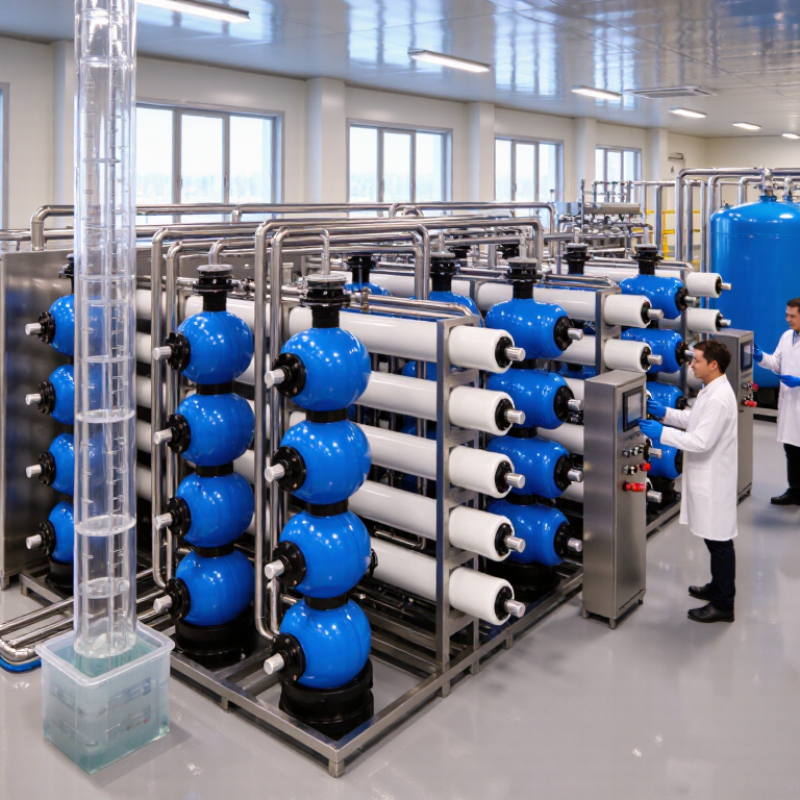
A RO water machine plant is an engineered system for reducing dissolved salts and unwanted impurities in water. RO means reverse osmosis. The system pushes pretreated water through a semi-permeable membrane under controlled pressure. Water molecules pass through, while many dissolved substances remain in the reject stream. The treated water is called permeate. It may enter a storage tank, filling line, or further polishing stage.
A practical plant usually contains sediment filters, carbon filters, high-pressure pumps, membrane housings, flow meters, and control instruments. Pretreatment matters greatly. Sand, rust, chlorine, and suspended particles can damage membranes or reduce their service life. Operators commonly check pressure, conductivity, recovery rate, and cleaning intervals. Small readings can reveal larger problems. A rising conductivity value may indicate membrane fouling or a damaged seal.
Many facilities choose an RO plant because it provides consistent water quality for beverage production, food processing, laboratories, and other controlled applications. However, it is not a perfect solution. The plant produces reject water and needs electricity, maintenance, and trained supervision. An ignored filter can create costly problems. In real operation, water quality changes with seasons and source conditions. For that reason, reliable design should include regular laboratory testing, documented maintenance, and settings based on the actual feed water rather than assumptions.
Why Choose a RO Water Machine Plant?
A reverse osmosis (RO) water machine plant can produce consistent-quality water while recovering a useful portion of the feed water. The chart shows representative recovery values commonly used for preliminary system planning; actual performance depends on salinity, temperature, pressure, membrane design, and pretreatment.
Typical planning ranges: municipal water approximately 70–90%, brackish water approximately 50–85%, and seawater approximately 35–50% recovery.
How Does a RO Water Machine Plant Work?
A reverse osmosis (RO) water machine plant works by forcing water through several treatment stages. Raw water enters a pretreatment unit that removes sand, rust, and suspended particles. Activated carbon can reduce chlorine and organic compounds. Then, a high-pressure pump pushes the water toward the RO membrane.
The membrane contains extremely small pores. Water molecules pass through, while many dissolved salts, metals, and microorganisms remain behind. The cleaned flow is called permeate. The rejected flow, or concentrate, needs controlled handling and permitted disposal. The process is powerful, but it is not magic. Membranes cannot work well when pretreatment is neglected.
In daily operation, technicians check pressure, flow rate, temperature, and conductivity. These readings reveal fouling, leaks, or declining membrane performance. Post-treatment may adjust mineral balance or provide final disinfection, depending on the water’s intended use. Storage tanks and sanitary piping also require regular inspection. In field practice, seasonal water changes often create unexpected problems. A plant can look efficient on paper yet waste more water than planned. Replacing filters too late may increase energy use and damage the membrane. Careful records, laboratory testing, and timely maintenance make the system more dependable.
What Benefits Does a RO Water Machine Plant Offer?
A RO water machine plant offers controlled purification for factories, hotels, hospitals, and municipal projects. Its semi-permeable membranes reduce dissolved salts, heavy metals, and many microorganisms. The World Health Organization and UNICEF reported that 2.2 billion people lacked safely managed drinking water in 2022. This pressure makes reliable treatment infrastructure increasingly valuable. A well-designed plant can provide consistent water quality, support process stability, and reduce dependence on uncertain raw-water sources. It is not a magic box.
Tips: Test feed water before choosing membranes. Check hardness, silica, iron, and microbial risks. Install pretreatment and monitor pressure, conductivity, and recovery daily. The American Water Works Association’s M46 guidance emphasizes proper pretreatment and membrane protection. Ignoring these steps can shorten membrane life. That mistake is common.
The benefits also include flexible capacity and measurable operating performance. Operators can track permeate quality through conductivity trends, rather than relying only on occasional laboratory tests. The U.S. Environmental Protection Agency notes that treatment performance depends on source water, system design, and maintenance. Energy use remains a concern, especially for high-salinity water. The UN World Water Development Report 2024 highlights growing seasonal water scarcity across many regions. A RO plant may improve resilience, but its concentrate stream still needs responsible management. Poor recovery planning can undermine the environmental benefit. Experienced engineers should compare recovery targets, energy demand, replacement costs, and local discharge requirements before construction.
How Should a RO Water Machine Plant Be Selected?
Why Choose a RO Water Machine Plant?
Selecting a RO water machine plant should begin with the source water, not the equipment catalogue. Request a recent laboratory report covering TDS, hardness, iron, silica, turbidity, and microbiological results. Seasonal changes matter. A clear winter sample may hide muddy conditions during heavy rain.
Match the plant’s capacity to actual demand, including peak hours and future expansion. Check the pretreatment design, membrane recovery rate, storage tanks, pumps, control panel, and cleaning system. A competent supplier should explain operating pressure, expected water quality, energy use, and membrane replacement intervals. Ask for commissioning records, operator training, maintenance schedules, and accessible spare parts. Independent testing after installation improves reliability. In my experience, a system can meet its paper capacity but perform poorly when filters clog or feed pressure falls. That possibility deserves honest discussion.
Tips: Visit an operating installation if possible. Observe the control room, pipe labels, filter condition, and water testing routine. Compare three detailed quotations, not just prices. Confirm that the design follows applicable local water and electrical requirements. Leave room for doubt. The cheapest proposal may omit essential pretreatment, while an oversized plant can waste energy and require more maintenance. Keep written performance targets for flow, conductivity, recovery, and downtime before signing.