
Automated Dispensing Robot Videos

A World of Robotic Dispensing and Assembly Solutions

Why Choose a Horizontal Directional Drilling Machine?

Why Choose a Horizontal Directional Drilling Machine?

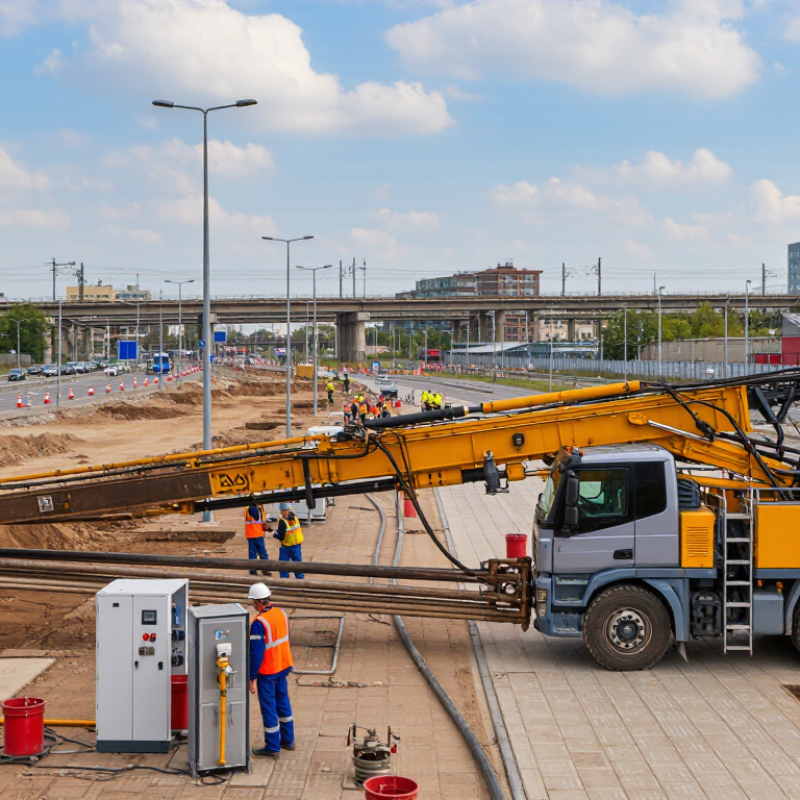
Urban construction is becoming more crowded, expensive, and sensitive to disruption. Roads, railways, rivers, and existing utilities often leave little room for open excavation. A horizontal directional drilling machine creates a controlled underground path with limited surface disturbance. It can install water lines, telecommunications cables, gas pipelines, and electrical conduits beneath active infrastructure.

The Global Market Insights 2024 report estimates continued growth in the horizontal directional drilling equipment market, supported by expanding fiber-optic networks and underground utility projects. Grand View Research also identifies trenchless construction as a major growth area, driven by urbanization and infrastructure renewal. These figures show demand, not guaranteed results. Ground conditions still decide performance.

HDD specialist John E. Hair describes the principle simply: “HDD is a process, not a product.” That statement matters. A powerful machine cannot replace accurate surveying, drilling-fluid control, operator experience, or careful design. On a worksite, success may depend on small details, such as locating a buried water main or adjusting the pilot bore after unexpected cobbles appear.

The advantages are practical. Less excavation can reduce traffic closures, spoil removal, restoration costs, and public complaints. Installation can also continue beneath roads without cutting through fresh asphalt. However, HDD is not a magic solution. Poor geological data, weak steering, or inadequate monitoring can create costly delays. Choosing the right horizontal directional drilling machine therefore requires more than comparing engine power. It requires evidence, competent planning, and honest attention to risk.
Why Choose a Horizontal Directional Drilling Machine?

What Is a Horizontal Directional Drilling Machine?

A horizontal directional drilling machine creates underground pathways without opening a continuous trench. It drills from a launch point, steers beneath roads or landscapes, enlarges the bore, and pulls in pipe or cable.

The system usually includes a drill rig, mixing tank, locating equipment, and drilling-fluid pumps. A locator tracks the drill head’s depth, pitch, and direction above ground.

Precision matters.

The process begins with a pilot bore. Crews then use a reaming tool to widen the pathway. Drilling fluid cools the cutting head and carries soil toward the entry pit.

A 2024 market assessment by Grand View Research projects the HDD market to grow at roughly 6% annually through 2030. That growth reflects demand for utility installation with less traffic interruption and surface disturbance.

However, market growth does not guarantee safe work. Ground conditions, buried utilities, drilling-fluid pressure, and operator judgment still control the result.

It is not a magic, no-dig solution.

A narrow street may remain open, yet the underground route can still fail. The Common Ground Alliance’s DIRT reports repeatedly identify utility locating and excavation practices as major damage factors.

Field planning should include utility records, electromagnetic locating, potholing, bore-path calculations, and fluid management.

A clean surface can hide a poor bore. That uncomfortable possibility deserves attention before drilling starts.

How Does Horizontal Directional Drilling Work?

Why Choose a Horizontal Directional Drilling Machine?

Horizontal directional drilling creates an underground path without opening a continuous trench. The process starts with a pilot bore, guided by an electronic tracking system. The drill head follows a planned line and depth beneath roads, gardens, or waterways. Operators monitor its position after each drilling pass. Small changes matter.

Once the pilot hole reaches the exit point, the crew attaches a reamer. This tool enlarges the bore to the required diameter. Drilling fluid cools the cutting head and carries soil back through the hole. It also supports the bore wall in suitable ground conditions. The fluid mixture must match the soil, or the hole may become unstable.

The final stage is pullback. A conduit or cable is connected behind the reamer and drawn through the prepared bore. Careful control prevents excessive tension, sharp bends, and damage to the product. Site surveys remain essential because old utility records may be incomplete. Even experienced crews can misread changing soil layers. That possibility deserves attention. Clay, gravel, and groundwater can alter drilling pressure within a few meters. Reliable work depends on accurate locating, trained operators, measured pulling forces, and inspection records from the entire crossing.

What Are the Main Applications of HDD Machines?

Horizontal directional drilling (HDD) machines install utilities beneath roads, railways, rivers, and landscaped areas without opening a continuous trench. Their main applications include fiber-optic conduits, power cables, gas lines, water mains, and selected sewer connections. A compact rig can steer a pilot bore, enlarge it, and pull the product pipe through the prepared path. The surface stays open. This matters near busy intersections, hospital entrances, and mature trees.

Demand is closely linked to aging infrastructure and network expansion. The U.S. Environmental Protection Agency’s 7th Drinking Water Infrastructure Needs Survey estimates $625 billion in drinking-water investment needs from 2021 to 2040. Many projects require less disruptive installation methods. The Federal Highway Administration identifies HDD as a practical option for crossings beneath highways and waterways, where excavation would create traffic, safety, and restoration problems. Telecommunications projects also use HDD to place ducts through dense neighborhoods, supporting broader fiber deployment.

Good results depend on more than machine pulling force. Operators must review ground conditions, drilling fluid behavior, entry angles, and utility records. A 2023 industry good-practice guide from the HDD Consortium stresses planning, locating existing services, and controlling drilling fluids. These details are easy to underestimate. Unexpected cobbles, weak soils, or inaccurate utility maps can change the bore path and increase costs. HDD is not suitable everywhere, especially where clearance, soil stability, or environmental controls are inadequate. Careful surveying and experienced supervision remain essential.

Why Choose a Horizontal Directional Drilling Machine? - What Are the Main Applications of HDD Machines?

Application Typical Product Installed Indicative Installation Length Common Crossing Environment Key Advantages of HDD Main Design Considerations
Telecommunication Networks HDPE ducts, microduct bundles and fiber-optic conduit Approximately 30–600 m per bore Roads, sidewalks, driveways, landscaped areas and urban corridors Low surface disruption
Reduces the need to excavate continuous trenches through developed areas.
Maintain duct alignment, protect minimum bend radius, and allow for conduit pullback and future cable capacity.
Water Service and Distribution HDPE, PE4710 or other approved pressure pipe Approximately 30–300 m per bore Road crossings, riverside areas, parks and congested utility corridors Continuous pipe installation
Can reduce the number of joints and avoid extensive open-cut excavation.
Verify pipe pressure class, soil conditions, required cover, pullback force and separation from existing utilities.
Sewer and Gravity Pipelines HDPE, PVC or other approved sewer pipe Approximately 30–300 m per bore Roads, rail corridors, environmentally sensitive land and built-up areas Controlled grade installation
Provides an alternative where deep open-cut excavation would be disruptive or unsafe.
Accurate bore tracking is critical because gravity systems require a designed slope and controlled invert elevation.
Natural Gas Distribution Polyethylene gas pipe or approved steel pipe systems Approximately 30–300 m per bore Urban streets, highways, railways and areas with numerous existing services Reduced traffic impact
Limits excavation near pavements, intersections and other buried infrastructure.
Follow applicable gas regulations, maintain required clearances, control drilling fluid, and complete pressure and integrity testing.
Electrical Power Conduits HDPE conduit, PVC conduit or multi-duct banks Approximately 30–500 m per bore Highways, airport approaches, commercial districts and landscaped public areas Suitable for congested corridors
Helps install conduits without removing long sections of pavement or hardscape.
Allow for thermal requirements, cable pulling tension, conduit spacing, minimum cover and electromagnetic or utility clearances.
Highway and Road Crossings Utility conduits, water pipes, gas lines and communication ducts Approximately 20–300 m per crossing Multi-lane roads, intersections, medians and paved shoulders Maintains road operation
Avoids prolonged lane closures and extensive pavement replacement.
Coordinate entry and exit pits, traffic-control requirements, existing utility records, bore depth and drilling-fluid management.
Railway Crossings Telecom ducts, power conduits, water lines and gas pipelines Approximately 30–150 m per crossing Active railway rights-of-way and rail embankments Minimal rail disruption
Installs utilities beneath the rail corridor without removing tracks.
Require detailed alignment control, adequate cover beneath the track structure, settlement monitoring and railway-owner approval.
River, Canal and Waterway Crossings Water mains, gas pipelines, power conduits and communication ducts Approximately 100–1,000+ m per crossing Rivers, canals, wetlands and shorelines Avoids in-water construction
Can reduce impacts on navigation, banks, aquatic habitats and surface water.
Assess geological profiles, buoyancy, drilling-fluid containment, minimum cover below the channel and environmental permits.
Industrial and Campus Utilities Process piping, electrical ducts, fiber ducts, water and drainage lines Approximately 30–500 m per bore Factories, hospitals, universities, data-center sites and operating facilities Keeps facilities operational
Reduces interference with buildings, internal roads, foundations and active work areas.
Map existing services precisely, manage drilling-fluid returns, coordinate shutdowns and maintain access for site operations.
Environmental and Protected Areas Small-diameter utility lines and monitoring or remediation conduits Approximately 30–300 m per bore Wetlands, parks, contaminated sites and protected landscapes Smaller construction footprint
Limits disturbance to vegetation, soil surfaces and sensitive habitats.
Use an approved drilling-fluid plan, prevent inadvertent returns, manage contaminated spoil and meet environmental monitoring requirements.

Note: Lengths shown are indicative industry ranges for individual HDD bores. Actual capacity depends on ground conditions, pipe diameter and material, bore geometry, required cover, drilling-fluid properties, available entry and exit space, and machine pullback capacity.

Why Choose HDD Over Conventional Excavation Methods?

Why Choose a Horizontal Directional Drilling Machine?

Why Choose HDD Over Conventional Excavation Methods?

Conventional excavation opens a visible trench from the surface down to the installation depth. This approach can work well in open land, but it becomes difficult near roads, sidewalks, trees, and active buildings. Horizontal directional drilling creates a controlled underground path with far less surface disturbance. Traffic can continue moving above the work area. Businesses may keep their entrances open, too.

HDD usually requires fewer restoration activities after installation. Crews avoid removing long sections of asphalt, concrete, landscaping, or carefully maintained soil. A pilot bore guides the route, while reaming enlarges the underground passage before the product is pulled through. I have seen this process reduce noise, dust, and daily disruption on crowded projects. The work still needs accurate locating, soil information, and experienced machine operation. Small planning errors can become expensive underground problems.

The method also protects many established surfaces and natural features. It can pass beneath a driveway, drainage channel, or planted area without cutting through each one. However, HDD is not a magic solution. Rocky ground, unstable soil, limited working space, or unexpected underground utilities may change the plan. That assumption can be costly. Good teams review ground conditions, confirm utility positions, calculate drilling fluid needs, and monitor the bore path continuously. Conventional excavation may remain the better choice for short, shallow, and easily accessible installations. Choosing HDD should depend on site evidence, not advertising claims.

What Factors Should Guide Your HDD Machine Selection?

Choosing a horizontal directional drilling machine requires more than comparing engine power or purchase price. The right choice depends on soil conditions, bore length, diameter, access, and daily production targets. Ground changes quickly. A route may begin in compact clay and end in fractured rock, demanding different cutting performance and fluid control.

Match the machine’s thrust, pullback force, torque, and rotation speed to the planned work. A small unit may struggle with long bores or dense gravel. An oversized unit can increase transport costs, fuel use, and surface disturbance. Review the drilling fluid system carefully. Adequate pump capacity helps remove spoil and stabilize the bore. Tracking accuracy also matters, especially near utilities, roads, and existing foundations. Reliable locating equipment supports safer decisions underground.

Site logistics should guide the selection too. Measure entry width, working height, turning space, and ground bearing capacity before choosing a rig. Operator controls should be clear, responsive, and suitable for long shifts. Check access to replacement parts, technical training, inspection support, and routine maintenance. These details often influence uptime more than advertised specifications. A spreadsheet cannot predict every underground condition. That assumption can fail. Field records, geotechnical data, and experienced contractor feedback should shape the final decision. Leave room for uncertainty, because real soil rarely follows the test report perfectly.