Why Choose Hot Stamping Plates for Your Business?
Packaging buyers notice the finish before they inspect the specification sheet. A crisp metallic mark on a carton, label, or book cover can make a product feel more considered. A Hot Stamping Plate helps create that effect by transferring foil under controlled heat and pressure. The plate’s material, engraving, and condition influence detail, consistency, and production life. Small flaws matter.
The wider market offers useful context. Smithers’ The Future of Global Packaging to 2028 projects the global packaging market will reach about $1.3 trillion by 2028. That forecast is not specific to hot stamping plates, but it points to a large, competitive packaging sector where shelf appeal can influence purchasing decisions. For a business, the practical question is not simply whether stamping looks attractive. It is whether the design, substrate, run length, and setup costs make the finish worthwhile. Test samples on the actual stock. Check fine lines and foil coverage. A beautiful proof can still disappoint on press.
Experienced operators often emphasize process control, but no named specialist quotation or source was supplied here. Inventing one would weaken reliability. Before publication, verify a quotation with a named plate maker, printer, or finishing specialist. There is no shortcut. This guide explores why businesses choose hot stamping plates, what affects their performance, and which questions deserve careful review before investment. The answer may depend on your workflow more than on the shine.
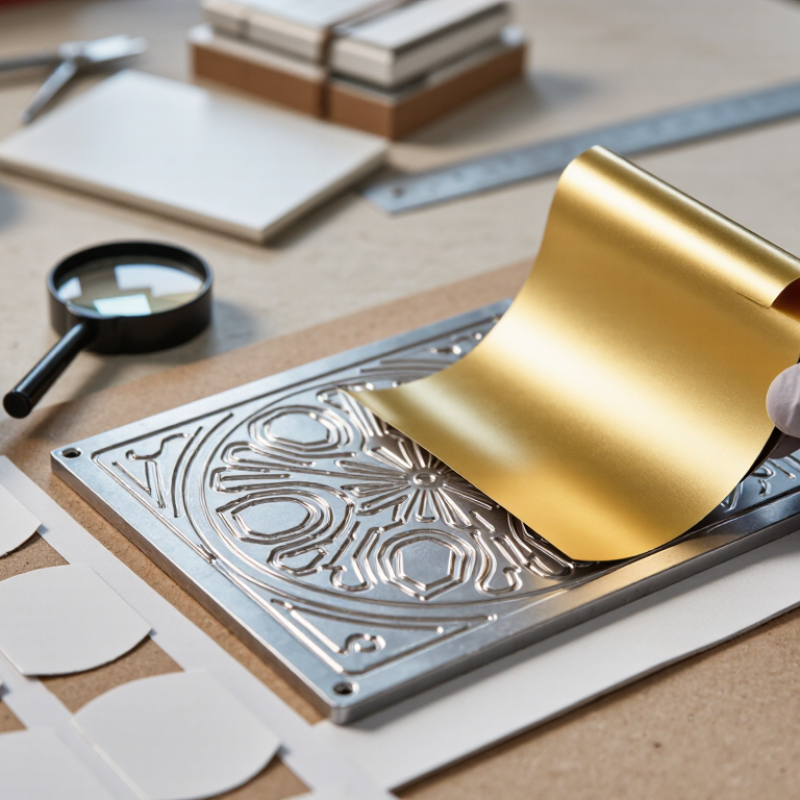
What Hot Stamping Plates Are: Magnesium, Copper, and Brass Die Materials
Hot stamping plates are engraved dies that press foil onto paper, labels, or packaging with heat and pressure. Magnesium, copper, and brass each bring different weight, machining, and wear characteristics. ASM International’s ASM Handbook, Volume 2, lists typical densities of about 1.74 g/cm³ for magnesium, 8.96 for copper, and 8.4–8.7 for brass. Exact values vary by alloy. The difference is practical: a magnesium plate is much lighter to handle and mount. That matters on press.
Magnesium is often considered for short runs and detailed designs, though its softer surface may wear sooner under demanding production. Copper offers strong heat transfer and can hold fine detail, but its higher density makes plates heavier. Brass sits between them in common die applications, with a useful balance of machinability and durability. The trade-off is not always tidy. Job length, foil type, press temperature, and storage all affect plate life and print quality. A small test run can reveal whether fine lettering stays sharp or whether pressure needs adjustment. Material data helps narrow the choice; press conditions decide the result.
Why Choose Hot Stamping Plates? Material Density Comparison
Typical densities are approximately 1.74 g/cm³ for magnesium, 8.5 g/cm³ for brass, and 8.96 g/cm³ for copper. Brass density varies with alloy composition. Density is one consideration when choosing a plate; durability, engraving detail, application, and production volume also matter.
How Plate Thickness Affects Detail: A Common 0.032-Inch Magnesium Die
A 0.032-inch magnesium die measures 0.8128 mm thick. That conversion follows the exact inch definition in NIST Special Publication 811. Thickness matters because it sets the die’s base, but it does not define the smallest detail the finished mark can hold. Etch depth, relief, artwork, and material all affect the result. Fine lettering may look crisp on screen yet fill in when foil meets a textured carton.
FSEA technical guidance treats heat, pressure, dwell time, and substrate as interacting setup factors. A thicker die is not automatically more detailed; the press must transfer heat evenly, and the foil needs clean contact with raised areas. For a small line of text, test the actual type size and stroke width on the intended stock. Check counters in letters such as “e” and “a,” plus the edges of thin rules. Small details matter.
A 0.032-inch plate can suit many general-purpose jobs, but it is only a starting specification. I would confirm relief and mounting with the die maker, then run a short press proof before approving a full batch. Not magic. Paper texture, pressure variation, and operator setup can still soften a fine edge. I would not promise detail from thickness alone.
Why Material Matters: Brass Dies for Longer, High-Volume Production Runs
For long production runs, a hot-stamping plate must transfer heat evenly while holding fine details through repeated impressions. Brass is valued for that balance. The Copper Development Association lists C26000 cartridge brass at approximately 121 W/m·K thermal conductivity. In practical terms, a heated brass die can distribute heat across small lettering and narrow borders.
That matters.
Material consistency matters, too. ASTM B36/B36M specifies C26000 brass at 68.5–71.5% copper, with zinc making up most of the balance. A defined composition helps buyers compare material grades and supports repeatable machining and setup. For a busy shop, that can mean fewer adjustments between jobs, especially when the artwork includes fine lines or small type.
It does not guarantee a perfect impression.
Brass plates are often chosen for extended runs because they can retain detail under repeated use, but results depend on plate thickness, engraving depth, press pressure, temperature, and the stamping substrate. Keep a close eye on edge wear and impression quality during production. Brass is not magic. A poorly calibrated press can still produce weak coverage, blurred edges, or wasted stock. When quoting a high-volume job, discuss expected run length and artwork detail with the plate maker, then test a sample before committing to the full run.
How Heat Is Set: Typical Foil-Stamping Temperatures of 100–150°C
Hot stamping is not controlled by temperature alone. Industry process guidance from the Foil & Specialty Effects Association (FSEA) places many foil-stamping setups within a typical 100–150°C working range. Treat it as a starting window, not a fixed recipe. The foil’s adhesive, die design, press speed, and paper coating all affect transfer. A coated carton may release foil at a different setting than uncoated paper. Small changes matter.
Set the die gradually and test on the actual stock. Use a calibrated contact probe to check die temperature; a press display may not reflect the surface precisely. FSEA’s process guidance and technical data sheets from foil suppliers both stress matching heat, pressure, and dwell time to the materials.
If fine lettering looks broken, the die may be too cool, pressure too light, or contact too brief. If edges blur or the sheet marks, excess heat or pressure may be involved. Not always obvious.
Record each test: temperature, dwell, pressure, and result. One imperfect habit is changing several settings at once; it makes the cause of a better or worse impression hard to identify.
How to Choose a Plate by Substrate, Design Detail, and Run Length
Why Choose Hot Stamping Plates for Your Business?
How to Choose a Plate by Substrate, Design Detail, and Run Length
Start with the substrate, not the artwork. Uncoated paper absorbs heat differently from coated board, while plastic films can distort under excess pressure. Test the actual stock with the foil and adhesive planned for production. A small press trial often reveals dull areas, weak edges, or unwanted marks.
Design detail narrows the choice. Fine lettering and narrow rules need a plate that holds crisp edges and transfers pressure evenly. Magnesium plates can suit simpler designs and shorter runs; brass is often selected for detailed work and repeated production. These are starting points, not rules. A trial can still disappoint.
Run length affects both plate cost and consistency. For a few hundred impressions, a lower-cost plate may be practical. Longer runs can justify a more durable plate, especially when stopping to replace a worn die would waste stock.
Smithers’ The Future of Global Packaging to 2028 estimated the global packaging market at about $1.17 trillion in 2023. That broad market figure signals varied packaging needs; it is not a plate specification.
Record stock, temperature, pressure, and impression count during testing.
Small details matter. And sometimes, the first setup is simply wrong.