Why Are Tungsten Tiles Used in Industrial Applications?
Tungsten Tiles are used in industrial settings where ordinary materials may struggle with heat, wear, or limited space. Tungsten is exceptionally dense and has a very high melting point, qualities that make it useful in carefully engineered components. In some applications, tiles can provide compact mass, protect selected surfaces, or form part of equipment exposed to demanding conditions. The exact purpose depends on the tile’s grade, dimensions, mounting method, and operating environment.
That matters.
Their performance is not automatic. A tile can be heavy, costly, and difficult to machine, so engineers must weigh its benefits against handling needs and total system design. For example, a dense tile may help where space is restricted, while its weight could complicate installation or support requirements. Thermal expansion, joining methods, and exposure to chemicals also deserve attention. Small design details matter.
This article explores why manufacturers choose Tungsten Tiles, where they may be used, and what trade-offs influence that choice. It also distinguishes material properties from real-world performance: a specification sheet cannot explain every operating condition. Results should be assessed using reliable material data and application-specific testing. Tungsten is not the right answer for every plant or machine. But when density, temperature resistance, or surface durability is a priority, it can offer a compelling option—provided the design accounts for its limitations as carefully as its strengths.
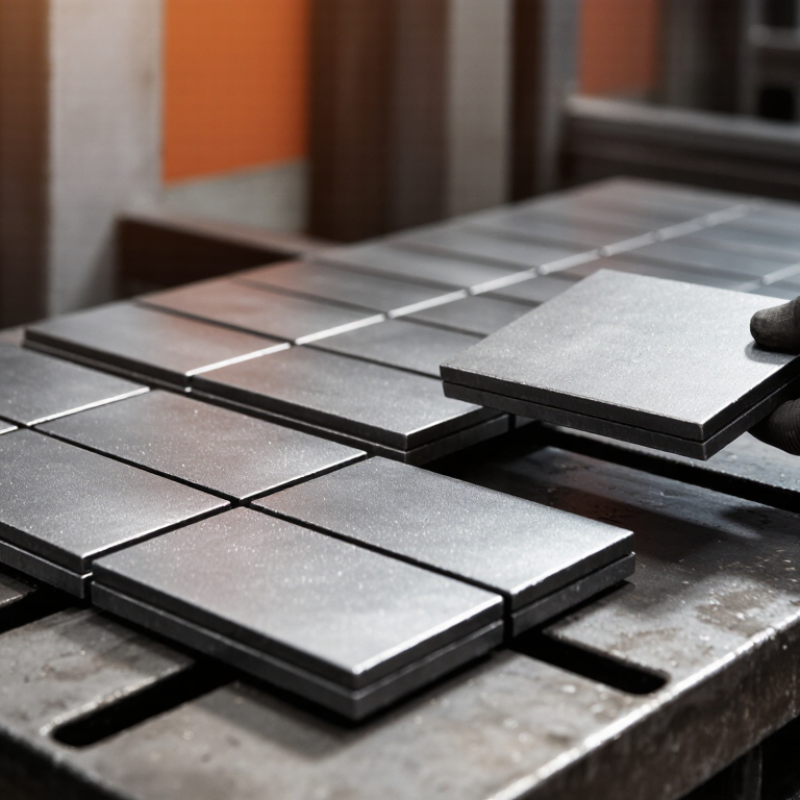
Tungsten’s Key Properties for Industrial Use
Tungsten’s Key Properties for Industrial Use
Tungsten tiles suit demanding equipment because the metal combines exceptional heat resistance with high density. The International Tungsten Industry Association reports a melting point of about 3,422°C and a density near 19.3 g/cm³. That density helps tiles attenuate radiation and resist vibration in compact assemblies. Tungsten also retains useful strength at elevated temperatures, making it valuable near hot surfaces, furnace components, and thermal shields. The numbers matter.
Its properties involve trade-offs. Tungsten is hard and wear-resistant, but it can be brittle, especially under impact or sudden temperature changes. Tiles therefore need careful support and installation; a poorly fitted edge can chip. The U.S. Geological Survey’s Mineral Commodity Summaries documents tungsten’s role in hard materials and industrial products, while NIST reference data support its unusually high melting point. These sources describe material performance, not a guarantee for every design. In practice, engineers also consider tile thickness, joints, heat cycling, and the surrounding structure. One detail is easy to miss: high density adds weight, which can complicate mounting. Tungsten is not always the simplest choice.
How Tungsten Tiles Are Made
Making tungsten tiles starts with choosing the right material. Some use nearly pure tungsten, while others are made from tungsten heavy alloys or tungsten carbide. Their properties differ, so designers consider the expected heat, wear, and impact. Small details matter.
For many tungsten products, production begins with fine metal powder. The powder is blended, pressed in a shaped die, and heated in a controlled atmosphere. This sintering step bonds particles into a solid tile without melting the tungsten. Temperature and time must be closely managed; uneven heating can affect density and strength. There is no single recipe.
After sintering, tiles may be ground or cut to meet dimensional requirements. This stage can leave small edge chips if handling is rough, so careful finishing matters. Inspectors check measurements and look for visible flaws; some applications also require density or material tests. A polished surface alone proves little. In practice, manufacturing specifications should reflect the tile’s real operating conditions, not just a preferred shape or finish. That point is easy to overlook.
Industrial Applications of Tungsten Tiles
Industrial Applications of Tungsten Tiles
Tungsten tiles are used where equipment faces intense heat, radiation, or abrasive contact. Their high density helps attenuate X-rays and gamma radiation, so tiled panels can serve as shielding around inspection systems and research equipment. The tile format allows technicians to fit protection around uneven housings or replace a damaged section without rebuilding an entire panel. Small details matter: gaps between tiles can weaken shielding performance.
In high-temperature processing, tungsten tiles may protect furnace areas exposed to heat and repeated contact with heavy parts. Tungsten retains strength at elevated temperatures, but it is not a universal lining material. It can oxidize in air at high heat, and sudden temperature changes may cause cracking. Atmosphere control and careful thermal design are essential. The engineering is in the details.
Tiles also appear in wear-resistant assemblies, where dense material helps withstand impact or sliding contact. Their mass can be useful for shielding, yet problematic for moving machinery and supporting structures. Installation needs precise machining and secure mounting; rough edges can complicate fitting. A thoughtful design weighs service life against weight, cost, and maintenance. Sometimes a different material is the better choice. That deserves a second look.
Performance Benefits in Demanding Environments
In demanding industrial environments, tungsten-based tiles, often made from tungsten carbide, can protect surfaces exposed to steady abrasion. They are used in chutes, hoppers, mixers, and transfer points where mineral particles scrape against metal throughout a shift. Their hardness helps slow surface wear, while the tile format allows damaged areas to be replaced without rebuilding an entire structure. That matters. Less frequent replacement can mean less downtime, though results depend on the material being handled and the installation quality.
It is tempting to treat hardness as the whole story; it isn’t. Tungsten carbide can be brittle under sharp impact, so a tile that performs well against fine abrasive dust may crack when struck by large, heavy pieces. Tile thickness, backing, joint design, and temperature all affect service life. Operators can look for chipped edges, loose sections, or uneven wear during routine inspections. A practical trial on one high-wear zone may reveal more than assumptions based on material specifications alone. Not every surface needs it. In some settings, the added cost and careful fitting may outweigh the wear benefit.
Why Are Tungsten Tiles Used in Industrial Applications?
Typical material density at room temperature (g/cm³)
Tungsten’s high density allows substantial mass to fit into a compact space, making it useful in applications such as radiation shielding and counterweights. Actual performance depends on the tile’s design and operating conditions. Values shown are approximate typical densities; tungsten refers to pure tungsten.
Factors to Consider When Selecting Tungsten Tiles
Selecting tungsten tiles starts with the operating conditions, not just the material’s reputation. Record the peak temperature, exposure time, contact load, and any corrosive gases or liquids. Tungsten melts at about 3,422°C, according to the NIST Chemistry WebBook, but a high melting point alone does not guarantee a long service life. Tile thickness, support, joints, and thermal cycling matter.
Check the grade and manufacturing route. Dense, nearly pure tungsten offers different properties from tungsten heavy alloys, which may be easier to machine. Ask for density, composition, dimensional tolerances, and test documentation. The USGS Mineral Commodity Summaries 2024 estimated global tungsten mine production at 78,000 metric tons in 2023, including 63,000 tons from China. That supply concentration makes lead times and material traceability worth checking. Availability can change.
Fit matters. Measure the mounting surface and allow for expansion; gaps can create uneven contact or localized stress. Confirm how the tiles will be fastened, and whether drilling or edge finishing is needed. A frequent oversight is impact resistance: tungsten is very dense, but pure tungsten can be brittle, especially under sudden loading. Ask a qualified materials engineer to review the application. The specification may still miss something. Test a small installation under representative conditions before committing to a full lining.