Automated Dispensing Robot Videos

A World of Robotic Dispensing and Assembly Solutions

2026 Top Vial Filling Machine Types for Global Buyers

Selecting the right Vial Filling Machine in 2026 requires more than comparing advertised speed. Global buyers must connect machine design with product viscosity, container size, filling accuracy, and production scale. A compact intermittent machine may suit a small batch line, while a continuous system can support demanding output. Neither option is automatically better.

This guide examines the main vial filling machine types used across pharmaceutical, biotechnology, diagnostic, and healthcare manufacturing. It considers peristaltic, piston, time-pressure, and rotary piston technologies. Each design creates different handling conditions. For example, a peristaltic pump can reduce product contact with the equipment. A piston system may provide strong repeatability for controlled volumes. Time-pressure filling can offer flexibility, but it depends heavily on stable air pressure and product behavior.

Details matter.

Experienced engineers inspect more than the filling head. They review stainless-steel contact surfaces, cleanability, changeover time, stopper integration, environmental controls, and data-recording functions. A vial moving beneath a filling needle should remain stable, centered, and protected from unnecessary splashing. Small mechanical variations can become costly during long production runs.

Global purchasing decisions also require documented factory testing, installation support, operator training, and dependable spare-parts access. Regional utilities and production standards may influence the final configuration. Buyers should request realistic performance evidence, not only brochure figures. Claimed accuracy may change with temperature, foam, viscosity, or container variation. That assumption deserves scrutiny.

The following overview compares leading Vial Filling Machine types and explains where each one may perform best. It also highlights practical limitations, because reliable equipment choices begin with honest evaluation rather than attractive specifications.
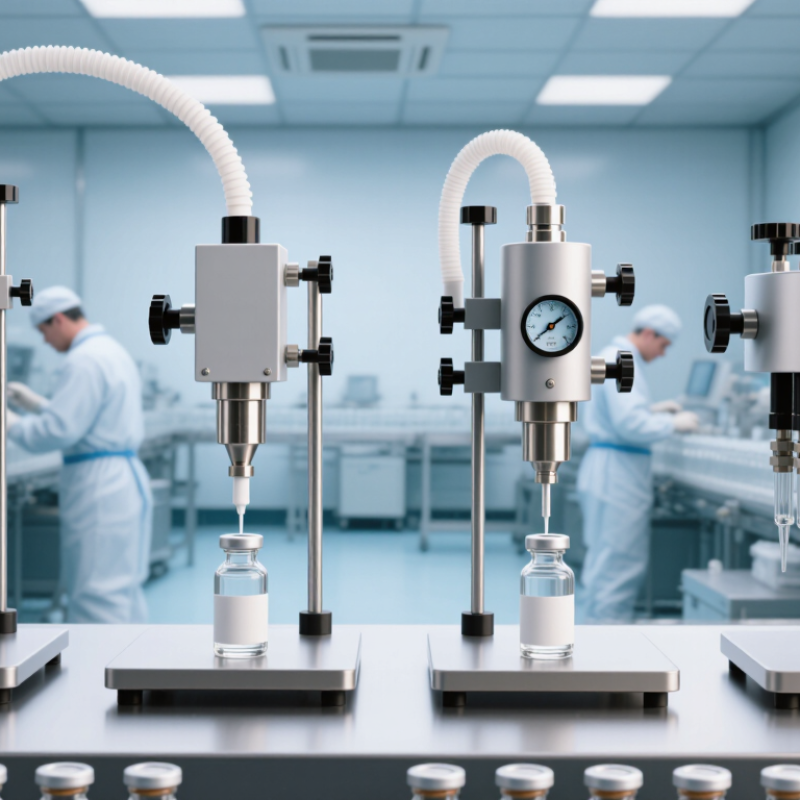
2026 Top Vial Filling Machine Types for Global Buyers

What Is a Vial Filling Machine and How Does It Work?

A vial filling machine is a controlled system that transfers a measured liquid dose into small glass containers. It commonly works with pharmaceutical, diagnostic, cosmetic, or laboratory formulations. The machine combines vial handling, liquid dosing, stopper placement, and process monitoring. Small errors matter. A slight volume difference can affect product quality and inspection results.

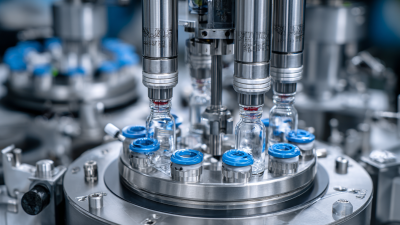
Vials usually move along a guided conveyor or rotating table. Sensors detect their position before filling begins. A pump or pressure system then delivers the selected volume through a filling needle. Peristaltic pumps reduce direct contact with the product, while piston pumps can provide strong dosing accuracy for thicker liquids. The needle may rise from the vial or fill from above, depending on the equipment design. After dosing, filled vials move toward partial or complete stoppering. Sterile applications require controlled airflow, validated cleaning, and carefully maintained contact parts.

Common machine types include intermittent-motion, continuous-motion, rotary, and monoblock systems. The right choice depends on batch size, viscosity, container size, and required accuracy. Experienced operators also check foaming, dripping, and unstable liquid levels during trials. No machine performs perfectly without adjustment. Temperature can change viscosity, and worn tubing can influence the delivered dose. Buyers should review calibration records, material compatibility, changeover time, and accessible maintenance areas before selecting equipment for 2026 production plans.

Which Vial Filling Machine Types Will Lead the 2026 Market?

Which Vial Filling Machine Types Will Lead the 2026 Market?

In 2026, flexible aseptic vial filling machines are likely to attract the strongest global demand. Rotary systems suit high-volume facilities with stable product portfolios and continuous production schedules. Their synchronized dosing stations can improve output while reducing manual handling. However, complex changeovers may slow smaller manufacturers.

Linear vial filling machines will remain important for contract manufacturers and research-focused sites. They support shorter batches, varied vial sizes, and simpler format adjustments. In practical commissioning work, operators often value accessibility more than maximum speed. That choice can reduce training time and maintenance errors.

Aseptic systems with isolators or restricted-access barriers may lead premium projects. They offer stronger contamination control when paired with validated sterilization and environmental monitoring. Ready-to-use vial handling will also grow where washing and depyrogenation equipment create space or utility limits. Small footprint matters.

Automation will not solve every problem. Poorly designed recipes, unstable pumps, or weak container feeding can still damage performance. Buyers should compare fill accuracy, particle-control strategy, cleaning access, and documented validation support. Local service capability deserves equal attention. A fast machine without dependable technical support becomes an expensive bottleneck. Forecasts can be wrong, especially when product pipelines change suddenly. A balanced selection may outperform the most advanced option.

How Do Different Vial Filling Technologies Compare?

Vial filling machines differ mainly in how they measure and transfer liquid. Piston systems draw a defined volume, then discharge it through a filling needle. They suit viscous solutions and larger fills, but piston seals need careful inspection. For low-viscosity products, peristaltic pumps offer a gentler product path. The tubing contacts the liquid, which can simplify changeover and reduce cleaning exposure. Yet tubing fatigue may affect accuracy during long runs.

Time-pressure fillers use sterile air or gas to push liquid through calibrated paths. They handle foamy products well when pressure is tuned gradually. Small errors appear when viscosity, temperature, or head pressure changes. That detail is easy to underestimate. Vacuum-assisted filling can help with narrow-neck vials and certain liquid behaviors. It may struggle with foaming or unstable surface conditions. No option is perfect.

For aseptic lines, the filling principle is only one decision. Needle design, stopper placement, environmental control, and cleanability also shape risk. In factory trials, buyers should compare fill-weight data, reject rates, and intervention frequency across several batches. A machine can look excellent during a short demonstration. That proves little. I would question claims based only on nominal accuracy. Real performance includes setup time, product loss, documented validation, and repeatability after cleaning. Local service capability matters too, especially when production schedules are tight.

What Factors Should Global Buyers Evaluate Before Purchasing?

2026 Top Vial Filling Machine Types for Global Buyers

Global buyers should match the vial filling machine to the product, container, and production scale. A machine for small laboratory batches may not suit continuous commercial manufacturing. Check the filling range, dosing accuracy, line speed, and compatibility with liquid viscosity. A 2 ml vial containing a thin solution behaves differently from a 50 ml vial with a thicker formulation. Small errors become costly during long production runs.

Aseptic performance deserves close attention. Review airflow design, sterilization methods, cleaning access, and environmental monitoring points. Ask for documented factory testing and clear qualification support, including FAT, SAT, IQ, and OQ records. Do not rely only on a polished specification sheet. It may hide difficult changeovers or frequent stopper jams. Request sample runs using your actual vials, stoppers, and liquid. Watch the operator’s movements. Awkward access can create safety and productivity problems.

Global purchasing also requires practical planning. Confirm electrical standards, language options, software controls, data integrity features, and local installation requirements. Evaluate spare-part availability and remote technical support across time zones. The lowest purchase price may bring higher costs through downtime, specialized maintenance, or slow delivery. Calculate total ownership costs over several years. Be realistic about future expansion, but avoid paying for capacity that may never be used. My experience suggests that faster output is not always better; stable filling, simple cleaning, and dependable documentation often protect production more effectively.

How Can Buyers Match Machine Types to Production Requirements?

Choosing the right vial filling machine starts with production reality, not advertised speed.

Small batches often suit manual or semi-automatic equipment because operators can change formats quickly. They also reduce the cost of early validation. High-volume facilities may need automatic in-line or rotary systems with continuous feeding, stoppering, and capping. Speed matters, but stable filling accuracy matters more.

Match the pump to the liquid. Peristaltic pumps can support gentle, low-volume filling and simplify product contact control. Piston pumps may handle larger volumes with consistent dosing. Very viscous products can require slower cycles and wider filling paths.

Powder filling needs different technology entirely. Check vial dimensions, target fill volume, allowable variation, cleaning procedures, and the required environmental controls before selecting a machine. A faster unit can become a poor investment if changeovers consume half a shift.

Tips:

Ask suppliers for a sample run using your actual liquid and vial. Measure fill accuracy after several hours, not only during the first ten minutes. Review operator access, calibration records, spare-part availability, and documentation.

One detail is often overlooked: future products may need different filling ranges. Leave practical room for change. I have seen teams choose maximum output, then struggle with delicate containers and frequent format adjustments.

Slower equipment sometimes delivers better usable output. What looks efficient on paper may not survive real production conditions.