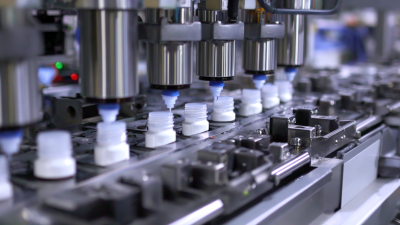
Choosing the right Stoppering Machine is a practical decision, not simply a comparison of catalogue prices. The equipment must match the vial format, stopper design, production speed, and cleanroom conditions. A small mismatch can cause tilted stoppers, damaged vial necks, or repeated line stoppages. Small details matter.
During equipment evaluations, operators should watch the full process, from stopper feeding to final inspection. Does the machine handle different vial heights without lengthy changeovers? Can it maintain consistent placement at the planned output rate? Are contact parts accessible for cleaning, inspection, and maintenance? These questions reveal more than a polished demonstration. A quiet machine may still create hidden waste.
Reliable selection also requires evidence. Review factory acceptance tests, documented performance data, validation support, and the supplier’s service response. Ask for references from facilities using similar containers and operating conditions. Integration with washing, filling, capping, and inspection equipment deserves equal attention. Otherwise, one efficient unit may slow the entire line.
The best choice is rarely the fastest model. It is the machine that delivers stable performance, accurate stopper placement, manageable maintenance, and clear operator controls. Sometimes, a simpler design is safer and more economical. That lesson is easy to overlook. A thoughtful assessment should include current needs, future formats, staff skills, spare parts, and realistic production targets. Even experienced teams can underestimate changeover time. The final decision should be based on measured results, not impressive promises.
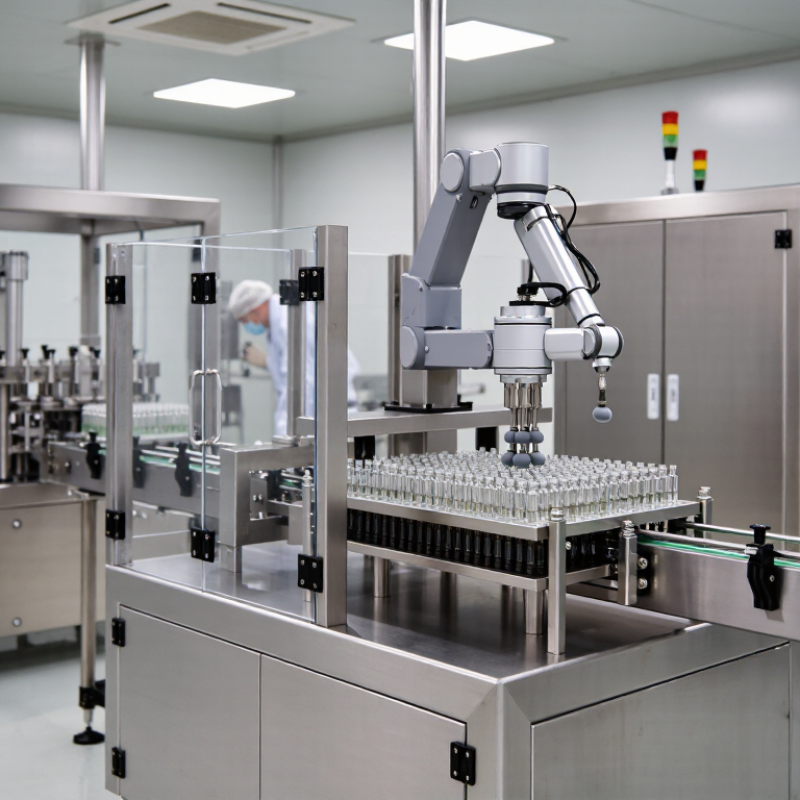
Choosing a stoppering machine starts with the container, not the machine catalogue. Vial stoppering systems place rubber closures after filling, often under controlled air or inert-gas conditions. They suit high-volume injectable production. RABS-compatible systems add separation and monitoring. Restricted-access designs are useful when contamination control is critical. Semi-automatic machines fit clinical batches and frequent format changes. Automatic rotary systems support stable, continuous output.
Applications differ sharply. Lyophilized products may need partial stoppering before freeze-drying. Liquid injectables usually require immediate, consistent closure placement. Sensitive products can demand low-particle handling and controlled stopper compression.
According to Grand View Research, the global pharmaceutical packaging market reached approximately US$128 billion in 2023. That scale increases pressure for reliable, traceable equipment. Yet, higher speed is not always better. A fast machine can create more rejects when stopper bowls, sensors, or formats are poorly matched.
Tips: Confirm vial dimensions, stopper material, batch size, and cleanroom classification first. Ask for measured container-closure performance, not only advertised speed. Review data from the PDA Technical Report 43 framework, especially container-closure integrity expectations. Check whether the machine records torque, vacuum, pressure, and reject events. Leave space for operator access. We often underestimate maintenance time. That mistake can outweigh a small purchase-price saving. Run trials using real stoppers and filled containers. A machine that performs well with empty glass may behave differently during production.
Choosing a stoppering machine starts with compatibility, not speed.
The container must tolerate handling, vibration, and compression without cracking or deforming. Glass vials offer strong barrier protection, while polymer containers may require gentler transfer and controlled force. The stopper must match the neck finish precisely. Small dimensional differences can cause tilted placement, poor sealing, or stopper displacement.
Product chemistry matters just as much. Protein solutions may adsorb onto elastomer surfaces, while organic solvents can swell certain stopper materials. Review extractables and leachables data, including results after sterilization and storage. USP <1207> recommends deterministic container-closure integrity testing, not visual inspection alone. EU GMP Annex 1 (2022) also sets Grade A limits at 3,520 particles per cubic meter for particles ≥0.5 micrometers.
This makes controlled stoppering and clean transfer essential. A faster machine is not automatically safer. I have seen specifications look perfect, yet fail after thermal cycling.
Tips:
Test the actual vial, stopper, and formulation together. Measure insertion force, stopper height, vacuum retention, and closure integrity. Challenge the process at minimum and maximum line speeds. Check stopper behavior after washing, sterilization, and storage. Do not rely only on supplier certificates; repeat critical tests in your own facility. When product viscosity changes, even slightly, the machine settings may need adjustment. One overlooked variable can become the real defect source.
Choosing a stoppering machine requires more than checking its advertised output.
Capacity must match the filling line, shift pattern, and planned product changes. A machine rated at 12,000 vials per hour may perform below that figure when operators adjust formats or remove rejected containers. The OEE Foundation often uses 85% as a world-class benchmark, but pharmaceutical lines may need a lower, more realistic target during validation. Measure sustained output, not peak speed.
Accuracy protects sterility and reduces costly intervention.
The FDA Process Validation Guidance recommends monitoring critical process parameters throughout routine production, rather than relying only on qualification results. For a stoppering machine, track stopper placement, container detection, rejection accuracy, and compressed-air pressure. A practical factory trial should record every missed stopper and false rejection across several container formats. Small errors matter. 0.5% rejection rate can waste thousands of units during long campaigns. That figure may look acceptable until material and inspection costs are calculated.
Operating speed should also support controlled handling.
EU GMP Annex 1 emphasizes contamination control and minimized manual intervention in sterile manufacturing. Faster is not always safer. High-speed motion can increase vibration, stopper bounce, or misalignment. Experienced engineers should compare three settings: normal speed, validated maximum speed, and a deliberately reduced speed. The best choice is often the setting that maintains accuracy after several hours, not the fastest setting during a short demonstration. Build room for uncertainty; early estimates are frequently too optimistic.
How to Choose the Right Stoppering Machine?
Evaluating Sterility, Automation, and Regulatory Requirements
A stoppering machine must protect sterility from vial presentation through final closure. Examine the critical zone, airflow pattern, and stopper exposure time. Grade A conditions or equivalent controlled environments may be required, depending on the process and jurisdiction. Ask how the design limits manual interventions. Every intervention creates risk. Review cleaning access, material compatibility, and container closure integrity testing. Small gaps around transfer points can become serious contamination concerns.
Automation should support control, not merely increase speed. Look for recipe management, stopper detection, reject tracking, and clear alarm history. Electronic records should protect data integrity and show who changed each parameter. Qualification usually includes installation, operational, and performance testing. Validation protocols must reflect actual vial sizes, stopper types, line speeds, and planned interventions. A machine that performs well during a demonstration may behave differently after hours of production.
Regulatory review should include applicable GMP requirements, inspection expectations, and site procedures. Request drawings, risk assessments, software documentation, calibration records, and maintenance instructions. Check whether operators can understand alarms without relying on one specialist. That dependency is often overlooked. I would also challenge optimistic output claims and test the machine under realistic conditions. No evaluation is perfect. Document the uncertainty, then control it through monitoring, training, and change management.
Selecting a stoppering machine starts with your facility, not the brochure. Define vial sizes, stopper materials, batch volumes, and target speed. A compact intermittent machine may suit small batches and limited floor space. Larger facilities may need continuous feeding, automatic stopper detection, and controlled changeovers. Speed alone can mislead. A machine rated at 300 vials per minute may perform poorly with frequent format changes.
Cleanroom integration is equally important. EU GMP Annex 1 sets a Grade A limit of 3,520 particles of at least 0.5 micrometers per cubic meter. Your equipment should support smooth cleaning, minimal ledges, and validated access points. Consider whether the machine fits inside an isolator or restricted-access barrier system. Check glove-port reach before installation. Operators notice this quickly.
Budget planning should include tooling, validation, training, maintenance, utilities, and rejected vials. Deloitte’s 2024 Smart Manufacturing and Operations Survey found that 92% of manufacturers view smart manufacturing as a major competitiveness driver within three years. That supports choosing useful data functions, such as torque trends, stopper presence checks, and downtime records. However, connected features can become expensive decoration. My first assumption would be to buy the fastest model, but that is often incomplete. A slower machine with stable feeding and easier cleaning may deliver better cost per accepted vial. Ask suppliers for trial data using your actual vials, stoppers, and production speeds. Test the awkward formats too.