How to Choose a Filling and Capping Machine in 2026?
Choosing a Filling And Capping Machine in 2026 is not simply a matter of comparing advertised speeds. The right line must handle your product, container, closure, and planned production volume with consistent results. A thick lotion behaves differently from a free-flowing drink, while a narrow bottle neck can affect cap placement. Small mismatches show up quickly: drips on the conveyor, loose closures, or frequent adjustments between batches. Those details matter.
Before requesting quotations, document container dimensions, fill range, viscosity, cap style, and target output. Also consider cleaning access, changeover time, available floor space, and operator training. These practical notes make supplier discussions more useful.
This guide explains how to compare filling and capping technologies, evaluate automation levels, and assess controls, materials, and service support. It also outlines useful questions for a factory review or equipment trial. For example, ask how the machine handles your actual containers. A published speed is only a starting point. Real output can change with product behavior, container stability, and operator workflow. Ask for clear acceptance criteria, documented test conditions, and realistic changeover expectations. No machine fits every plant perfectly. Your decision should balance output, accuracy, flexibility, maintenance, and total ownership cost, rather than chase one impressive specification. Some trade-offs remain, and that is worth admitting. With a structured comparison, buyers can narrow their options and choose equipment that suits current needs while leaving room for sensible growth.
Define Fill Volume and OIML R 87 Tolerable Negative Error Limits
Choosing a filling and capping machine starts with the declared fill volume, not the machine’s maximum speed. Set the nominal quantity in grams or millilitres, then define the acceptable variation for the actual product. For liquids, temperature and density can shift a mass-based reading; for thick products, material left on the nozzle can affect repeatability. Test with the product, container, and line settings you will use.
OIML R 87:2016 provides a useful reference for tolerable negative errors in prepackages. For a nominal quantity of 100–200 g or ml, its table sets the tolerable deficiency at 4.5%: a 150 ml pack has a T1 limit of 6.75 ml. From 200–300 g or ml, the limit is 9 units; from 300–500, it is 3%. The recommendation also requires the batch’s average quantity to meet the nominal quantity, and no package may fall below twice the tolerable deficiency. Check the applicable local rules before setting acceptance limits.
Use these figures to specify dosing accuracy, then verify performance through repeated weigh checks across a production run. Ask suppliers for test results at your target speed and with your product’s viscosity. A neat setting on the screen is not proof. Small drips happen. So do awkward container variations. One detail is easy to miss: OIML limits are not a substitute for a documented calibration plan.
Match Filling Technology to Product Viscosity, Foaming, and Dose Range
How to Choose a Filling and Capping Machine in 2026?
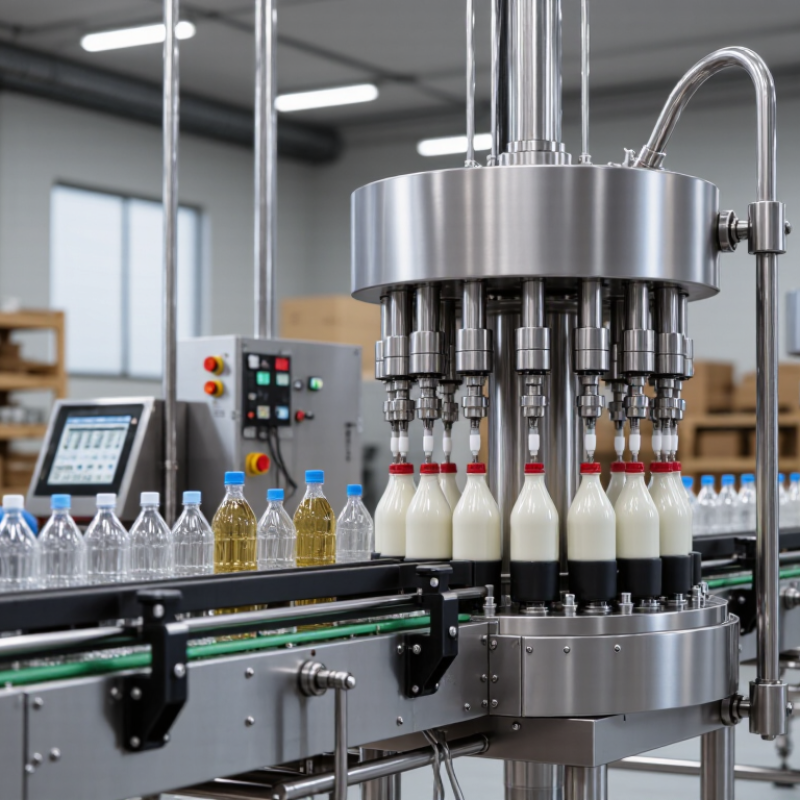
Match the filling method to the product, not just the container. Thin, free-flowing liquids often suit gravity or timed-flow systems. Thick creams and sauces usually need piston or servo-driven filling, with wider product paths to reduce pressure and inconsistent doses. For foamy liquids, a bottom-up nozzle can limit splashing and trapped bubbles. It helps. Still, viscosity changes with temperature, so test the product at realistic filling conditions.
Dose range matters as much as texture. A machine set up for large bottles may struggle to deliver small, repeatable doses. Check the required minimum and maximum fill volumes, then ask for trials at both ends. Grand View Research valued the global filling machines market at USD 8.59 billion in 2023 and forecast 4.8% annual growth from 2024 to 2030. That growth points to ongoing investment, but it does not identify the right technology for your line.
During trials, inspect the nozzle after several cycles. Does product string, drip, foam, or cling to the bottle neck? Record dose variation and changeover time, too. A polished sample run can hide problems; longer tests are more revealing. Be cautious with broad claims such as “one filler handles every liquid.” Real products are messy, and the best choice may require a compromise between speed, accuracy, and easy cleaning.
How to Choose a Filling and Capping Machine in 2026?
Match filling technology to product viscosity, foaming behavior, and dose range.
Higher scores indicate a stronger general fit, not guaranteed machine performance. These qualitative ratings reflect common operating principles; actual results depend on the product, target dose, nozzle design, line speed, and machine configuration. Validate with product trials, especially for foaming or shear-sensitive liquids.
Size Line Capacity Using Required Output, Changeover Time, and OEE
How to Choose a Filling and Capping Machine in 2026?
Size the line from saleable output, not the speed printed on a machine specification. Calculate required good containers per shift, then subtract planned cleaning, breaks, and product changeovers from available production time. For example, producing 60,000 containers in a seven-and-a-half-hour run requires 178 good containers per minute at 75% OEE. That is the operating rate, not the rated speed. Allow a practical margin for product viscosity, container handling, and downstream inspection.
OEE.com’s industry benchmark guidance describes 85% OEE as world-class, while 60% is a common general-manufacturing reference point. Treat these as benchmarks, not promises: a new filling and capping line may perform differently during ramp-up. If your measured OEE is 75%, divide the target running rate by 0.75 to estimate the required ideal rate. Track availability, performance, and quality separately. A single OEE number can hide recurring cap-feed stops or rejected fills.
Changeovers bite. Record actual minutes for each bottle, cap, and liquid combination, including adjustment and first-piece checks. A 30-minute changeover across three shifts removes 90 minutes of potential production each day. Include that lost time in the capacity model, then compare the result with a supplier’s tested rate using your own containers and product. I would still question any estimate based on a perfect shift; real operators need time to clear small faults.
Specify Cap Torque Testing with ASTM D3198 for Threaded Closures
How to Choose a Filling and Capping Machine in 2026?
A filling and capping machine should match the container, closure, and required production rate. For threaded caps, torque is a useful check on whether the capper applies closures consistently. Too little torque can leave a cap loose; too much may damage threads or make opening difficult. Small details matter.
Specify cap torque testing using ASTM D3198, a test method for measuring application and removal torque on threaded or lug-style closures. State the closure and container type, the test equipment, and when removal torque should be measured after application. Keep the sample conditioning and test procedure consistent. Otherwise, results may be hard to compare. The method provides a way to measure torque; it does not set one universal acceptance limit for every package.
Use test results to inform capper setup, then verify performance on filled production containers. Record application and removal readings, along with relevant line settings and test timing. A lab sample may behave differently from a warm container coming straight off a filling line. That can be easy to miss. Review outliers before changing settings, and confirm that the chosen torque range works for both package integrity and consumer opening. The specification should define who tests, how often, and what happens when readings fall outside the agreed range.
Verify Cleanroom Needs Against ISO 14644-1 Classes and EU GMP Annex 1 (2022)
How to Choose a Filling and Capping Machine in 2026?
Verify Cleanroom Needs Against ISO 14644-1 Classes and EU GMP Annex 1 (2022)
ISO 14644-1 classifies cleanroom air by airborne particle concentration. The result depends on particle size, sampling locations, and room condition. It does not confirm that a room is microbiologically clean. EU GMP Annex 1 uses Grades A to D and adds controls for microbial contamination and aseptic processing. These systems are related, but they are not interchangeable. A room’s label alone cannot determine the right machine.
Start with the product path. Is liquid exposed during filling? Where are caps stored and fed? Could a cap chute pass over open containers? For aseptic filling, assess how the equipment protects the critical zone and supports airflow. Check access for cleaning, disinfection, and maintenance. Review the line in operation, not only on a cleanroom drawing. A tidy layout can still hide awkward interventions. I would treat that as a warning, not a minor detail. Confirm the proposed setup through documented risk assessment and qualification with your quality team.
Tips: Ask for particle and airflow evidence under relevant operating conditions. Compare machine surfaces, seals, and changeover steps with your cleaning procedures. Check whether interventions disturb protection around exposed product. If the supplier’s answers feel vague, pause and ask for measurable acceptance criteria.