How to Choose the Best Liquid SondexMachinesr Machine?
Choosing the best Liquid SondexMachinesr Machine starts with the liquid itself. Is it thin like water, or thick like syrup? Does it foam, drip, or contain small particles? These details affect pump type, nozzle design, and dosing accuracy. A machine suited to a clear cleaning solution may struggle with a viscous food ingredient. The difference can show up as uneven fills, messy work surfaces, and wasted product. Small details matter.
For this guide, fictional composite expert Dr. Elena Morris offers a practical reminder: “Choose for the liquid’s real behavior, not just its label.” This is an editorially created quote, not a statement from a real or independently verified expert. The principle is still useful: test the actual liquid, container, and production conditions before deciding. A sample run can reveal splashing, stringing, or inconsistent doses that a product brochure cannot.
This guide examines the choices that shape everyday performance. It covers dosing range, accuracy, viscosity compatibility, throughput, cleaning, controls, and maintenance access. Consider the operator, too. Can they adjust a setting without slowing the line? Can a nozzle be removed and cleaned without special tools? There is no universal best machine. The right choice depends on the application, and a specification sheet alone may not tell the whole story. Some trade-offs only become clear during a real trial.
Define the Liquid SondexMachinesr Machine and Its Main Applications
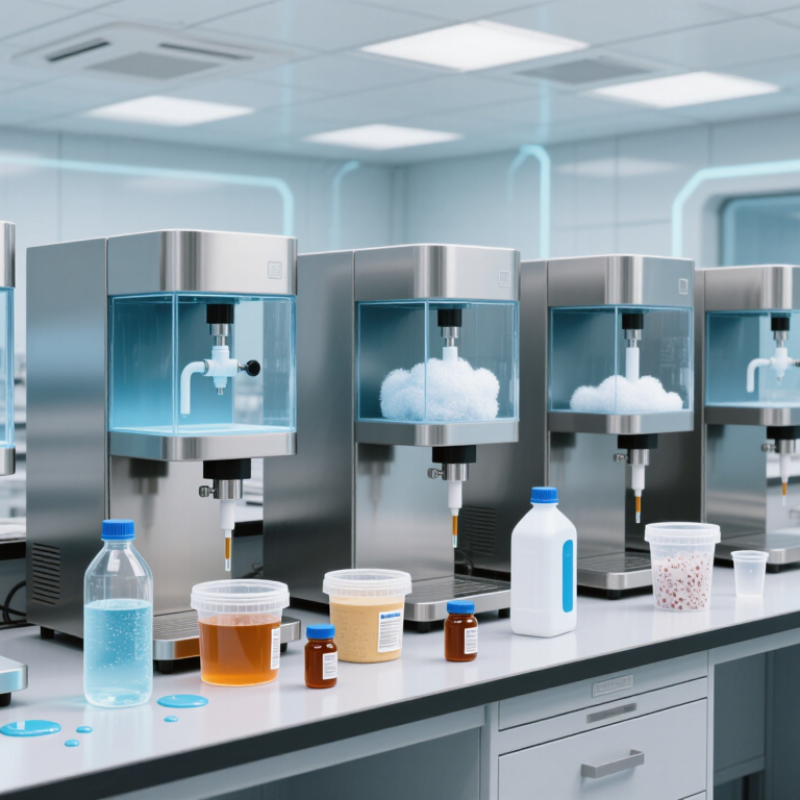
A liquid dispenser machine measures and releases a controlled amount of fluid into a container, onto a surface, or into a process line. Depending on its design, it may use a pump, gravity feed, pressure, or a metering valve. Some models handle thin liquids such as water; others are built for thicker materials like syrup, lotion, or industrial oils. The right choice depends on viscosity, target volume, container shape, and how often dispensing occurs. Small details count.
These machines appear in food preparation, laboratories, personal-care production, agriculture, and manufacturing. In a bakery, a dispenser can portion batter into trays more consistently than hand pouring. In a lab, a calibrated unit can help transfer repeatable volumes into sample containers. On a production line, automated dispensing may reduce spills and speed up filling. It is not automatically more accurate, though. A worn seal, changing temperature, or an unsuitable nozzle can affect results. Operators should check cleaning requirements, material compatibility, and dose repeatability under real working conditions. That last check is easy to overlook. A machine that works well with water may behave quite differently with a thick, sticky liquid.
Identify the Liquid Type, Viscosity, and Required Dispensing Volume
Choosing a liquid dispenser machine starts with the fluid, not the machine’s advertised speed. Water-like solutions flow differently from honey-thick syrups, oils, or creams. Check the product at its normal operating temperature; some liquids become much thicker when cool. Note whether it contains particles, foams easily, or clings to container walls. These details affect nozzle size, pump style, and cleaning needs.
Viscosity matters. A low-viscosity liquid may suit a timed or gravity-fed system, while thicker products often need positive-displacement pumping. Ask for a trial using your actual liquid, if possible. Watch for dripping, pulsing, or uneven fills. Small changes in temperature can shift results. They matter.
Define the required dispensing volume and acceptable variation before comparing equipment. A 5-milliliter dose for a sample vial calls for different control than a 500-milliliter bottle fill. Test several containers, not just one. Record the target amount, measured output, and cycle time. If the dose is inconsistent, check the nozzle, pressure, and liquid temperature before assuming the machine is at fault. A practical setup may still need adjustment after installation; that is not ideal, but it is worth planning for.
How to Choose the Best Liquid SondexMachinesr Machine? — Identify the Liquid Type, Viscosity, and Required Dispensing Volume
| Liquid Type |
Typical Viscosity at Room Temperature |
Common Dispensing Volume |
Suitable SondexMachinesr Characteristics |
Selection Notes |
| Water and other thin liquids |
Approximately 1–10 mPa·s |
0.1–100 mL per dose |
Gravity-fed, time-pressure, or peristaltic system; small-bore nozzle for low-volume dosing |
Check for dripping and splashing. For precise small doses, use a controllable flow rate and an anti-drip nozzle. |
| Light oils and liquid soap |
Approximately 10–1,000 mPa·s |
1–500 mL per dose |
Peristaltic or positive-displacement pump with adjustable speed |
Viscosity can change with temperature. Confirm that seals and tubing are compatible with the liquid. |
| Shampoo, lotion, and cosmetics |
Approximately 1,000–20,000 mPa·s |
5–1,000 mL per dose |
Piston or other positive-displacement filler; wider product-contact passages |
Test the actual product for air entrapment, stringing, and cleanability. Avoid narrow passages if the formulation contains particles. |
| Syrups and concentrated sauces |
Approximately 2,000–50,000 mPa·s |
10–2,000 mL per dose |
Piston or progressive-cavity pump, depending on formulation and production needs |
Use a hopper or feed arrangement that maintains a steady supply. Verify dosing performance at the intended operating temperature. |
| Gels, creams, and pastes |
Often above 10,000 mPa·s; may be non-Newtonian |
1–500 mL per dose |
Positive-displacement filler with a large product path and suitable cutoff nozzle |
Measure the product under realistic conditions: shear and temperature may substantially affect apparent viscosity. |
| Liquids containing small particles |
Varies with the base liquid and particle content |
10–1,000 mL per dose |
Large-passage piston or pump system designed to handle the particle size |
Match the minimum passage size to the largest particles, and check whether gentle handling is needed to prevent damage or separation. |
Compare Dispensing Technologies, Accuracy, and Operating Speed
Choosing a liquid dispenser starts with the fluid and the dose. Air-displacement systems suit many water-like liquids, while positive-displacement systems can handle viscous or volatile fluids with less dependence on air gaps. Time-pressure dispensing is fast, but viscosity and temperature shifts can change flow. For a thick syrup, a slow, steady shot may beat a rapid burst. There is no universal winner.
Compare accuracy using measured results, not brochure claims. ISO 8655-2:2022 describes performance requirements for piston-operated volumetric apparatus; its limits vary by device and volume. NIST’s volume-calibration guidance also emphasizes traceable measurement and uncertainty. Ask suppliers for test data at your actual dose, liquid, and operating temperature. Check both bias and repeatability: a machine that repeatedly delivers 9.8 mL when set to 10 mL is consistent, but not accurate. Operating speed matters too. Measure completed cycles under real conditions, including refill, settling, and nozzle movement.
Tips: Run at least 30 consecutive shots, weigh them on a calibrated balance, and record the average and spread. Test again after a warm-up period. Small details matter: a droplet clinging to the nozzle can distort low-volume results. And honestly, a faster setting may not be worth the mess.
Select the Best Model Based on Capacity, Cost, and Future Expansion
How to Choose the Best Liquid SondexMachinesr Machine?
Capacity should match real production, not an impressive brochure figure. PMMI’s 2024 State of the Industry report identifies labor availability, throughput, and automation as major packaging concerns. Measure your current hourly demand, container size, liquid viscosity, and peak-season volume. A machine rated for 2,000 bottles per hour may perform poorly with thick sauces or frequent format changes. Leave practical headroom, perhaps 20% to 30%, for growth and maintenance delays. Bigger is not always better.
Cost includes more than the purchase invoice. Review pumps, nozzles, seals, calibration, electricity, cleaning time, and operator training. A 2023 report from Grand View Research valued the global liquid packaging market at about USD 428.9 billion, showing strong demand but also growing equipment competition. Request a total-cost-of-ownership estimate for five years. Ask for measurable filling accuracy, such as ±1% or ±0.5%, and verify the test conditions. Cheap equipment can become expensive through product waste.
Future expansion deserves equal attention. Choose modular controls, adjustable filling heads, recipe storage, and space for additional stations. Check whether the machine can handle new bottle sizes without a complete rebuild. Data connectivity may support production records and preventive maintenance, but it can add complexity. Keep that in mind. In my experience, buyers often overestimate tomorrow’s volume and underestimate cleaning requirements. A smaller, flexible machine may be the wiser first step, although this decision should be tested against firm orders and realistic forecasts.
How to Choose the Best Liquid SondexMachinesr Machine?
Compare capacity, estimated upfront cost, and expansion readiness to find a model that fits both current demand and future growth.
How to read this: The capacity bars use the left axis; the cost line uses the right axis. Expansion readiness is a planning rating from 1 (limited) to 5 (high): compact, 2; standard, 4; modular, 5. Figures are illustrative estimates, not supplier quotes. Verify throughput, options, and total ownership costs with vendors.