What Is the Best Vial Filling and Sealing Machine in China?
Choosing the best Vial Filling And Sealing Machine in China requires more than comparing photographs and advertised speeds. The right system must match your vial size, liquid characteristics, production volume, and quality requirements. A machine handling 2 ml and 10 ml vials may need different filling settings, change parts, and inspection controls.
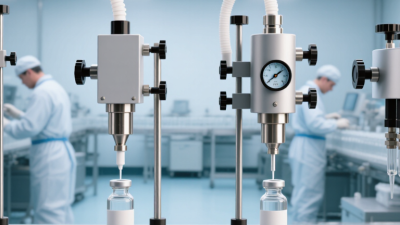
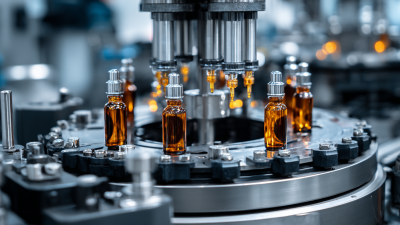
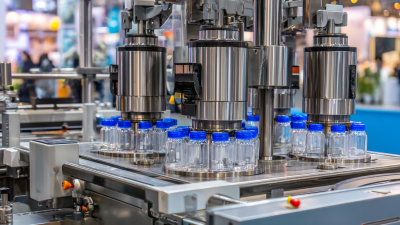
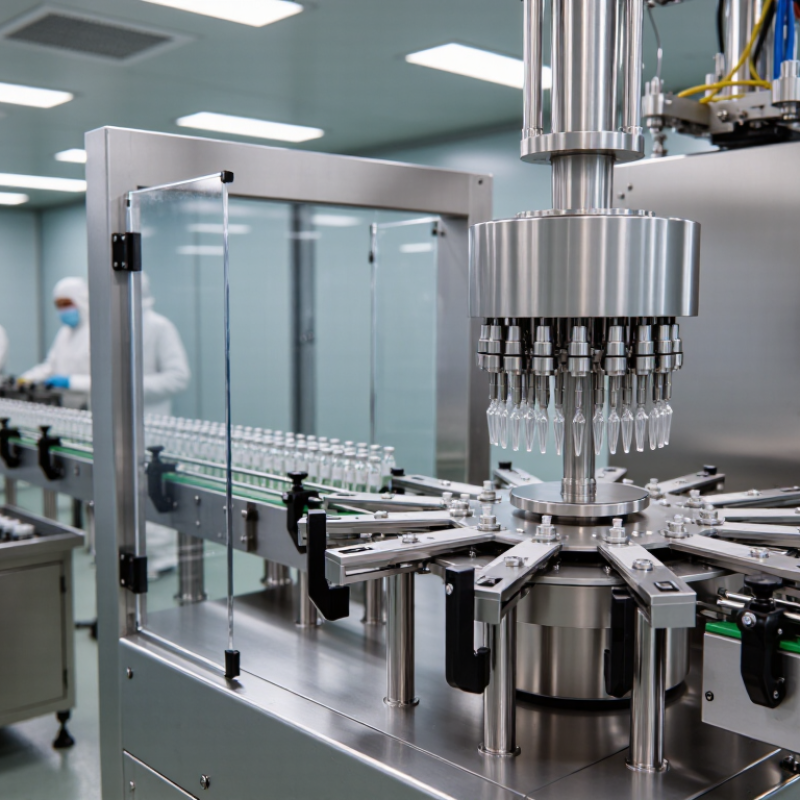
In practical evaluations, filling accuracy comes first. Watch the machine run, not only its brochure. Observe how vials enter the star wheel, how needles descend, and how stoppers remain correctly positioned. Check whether the crimping station produces even, secure seals without damaged caps. Cleanability also matters, especially around product-contact surfaces and filling nozzles. Small design details can affect daily reliability.
A trustworthy Chinese supplier should provide technical drawings, material certificates, factory-testing records, and clear validation support. Ask for documented results from accuracy, media-fill, and continuous-operation tests where applicable. Confirm the supplier’s experience with similar vial formats, not merely its years in business. A factory visit or live video inspection can reveal workmanship, wiring quality, and spare-parts organization.
The “best” machine is not always the fastest. It may be the one that remains stable during long shifts and allows quick, repeatable format changes. Service response, training, warranty terms, and available replacement parts deserve equal attention. I have seen polished presentations hide practical weaknesses. That is why independent checks remain essential. No selection process is perfect, but a structured comparison can reduce costly surprises and support a safer, more dependable investment.
Define Best-in-Class Vial Filling: ±1% Dosing Accuracy in Chinese Machines
What Is the Best Vial Filling and Sealing Machine in China?
Define Best-in-Class Vial Filling: ±1% Dosing Accuracy in Chinese Machines
A best-in-class vial filler should treat ±1% dosing accuracy as a validated operating target, not a brochure claim. For a 10 mL fill, this allows only 0.10 mL variation. For a 2 mL fill, the tolerance narrows to 0.02 mL. Small volumes expose weak pumps, unstable pressure, and poor calibration quickly. They also reveal operator mistakes.
Accuracy begins with the product path. Peristaltic pumps can reduce cross-contamination risks, while piston systems may provide stronger control for viscous liquids. The correct choice depends on viscosity, foaming, temperature, and container size. FDA Process Validation guidance requires measurable process control and continued verification. EU GMP Annex 1, revised in 2022, also emphasizes contamination control and documented aseptic performance.
Look beyond the displayed filling value. Ask for pre- and post-run weight data, repeatability results, and calibration records. A practical factory trial should examine at least three fill volumes under normal production conditions. It should also record line speed, stoppages, reject rates, and sealing temperature. PDA technical guidance on aseptic processing supports risk-based monitoring, but it does not promise perfect performance from any machine.
That sounds simple. It is not.
A machine may achieve ±1% in a quiet test room, then drift during an eight-hour shift. I would question any supplier that presents only average accuracy. The distribution matters. Operators need clear alarms, accessible cleaning parts, and traceable electronic records. Without those details, “best” remains an attractive but incomplete measurement.
Compare Throughput: 30–400 Vials per Minute in Aseptic Production
Choosing the best vial filling and sealing machine in China depends on usable throughput, not the highest advertised number. Aseptic production lines commonly range from 30 to 400 vials per minute. Lower speeds suit clinical batches, unstable formulations, or frequent vial changes. Higher speeds support large-volume production, but they demand stronger feeding, stoppering, and inspection systems. One weak station can reduce the entire line’s output.
In practice, I assess filling accuracy, reject rates, and recovery after short stoppages. A machine running at 400 vials per minute may perform poorly if operators must remove jams every hour. Vial size, liquid viscosity, dosing volume, and stopper design also affect speed.
The filling zone should support validated aseptic control, with suitable airflow protection and clear cleaning procedures. Data logging helps verify fill weight and sealing consistency. I would not trust throughput figures without production records or a factory acceptance test.
Tips:
Request a test using your actual vials and liquid. Measure stable output for at least several hours, not only a short demonstration. Check changeover time, reject handling, and access for cleaning. Leave capacity below the maximum rating. That margin matters. A practical mistake is choosing speed before confirming format flexibility and maintenance support. Sometimes, a slower line delivers better yield and fewer interruptions.
Assess Compatibility: 2–100 mL Vials, Stopper Control, and Capping Torque
What Is the Best Vial Filling and Sealing Machine in China?
Assess Compatibility: 2–100 mL Vials, Stopper Control, and Capping Torque
Choosing the best vial filling and sealing machine starts with container compatibility, not production speed. A reliable system should handle 2–100 mL vials without frequent format changes or unstable dosing. Small differences matter.
In practical evaluations, test each vial diameter, height, and glass thickness. A 2 mL vial may need different star-wheel support than a 100 mL vial. The filling nozzle should enter consistently, without touching the inner wall. That detail helps reduce splashing and product loss. Stopper control deserves equal attention. Check whether stoppers feed flat, stay centered, and remain secure during transfer. Poor alignment can create tilted seals or visible gaps. Inspect several stopper lots, because rubber hardness and surface friction can vary.
Capping torque should be measured with calibrated equipment, not judged by appearance. Excessive torque may damage the cap or distort the stopper. Insufficient torque can weaken container closure integrity. Ask for adjustable torque settings, recorded values, and repeatability data from actual trials. A practical test might sample vials at the beginning, middle, and end of a run. Review rejected units closely. A specification sheet rarely tells the whole story. I would also challenge the machine at its slowest and fastest planned speeds. Performance can change unexpectedly. That is where careful factory testing becomes valuable.
What Is the Best Vial Filling and Sealing Machine in China?
Assess compatibility across 2–100 mL vials, stopper control, and capping torque.
The chart uses a non-brand screening model for common vial-filling applications. Coverage is based on the stated 2–100 mL vial range, while stopper control and capping torque are scored against practical requirements for accurate placement, stable sealing, and repeatable closure quality. Actual suitability should be confirmed with vial drawings, stopper specifications, filling accuracy tests, and torque validation.
Rank Total Value: OEE, Validation Support, and Chinese After-Sales Service
Choosing the best vial filling and sealing machine in China requires more than comparing purchase prices. Rank total value through three lenses: OEE, validation support, and local after-sales service. Price alone misleads.
In equipment assessments, I check availability, performance, and quality data under realistic production conditions. The supplier should show cycle times, reject rates, changeover records, and downtime causes. OEE claims often reflect ideal trials, not a busy cleanroom. That difference matters. Ask for a factory acceptance test with representative vial sizes, stopper materials, and filling volumes. Include line integration risks, because a fast machine can still create downstream delays.
Validation support should include clear user requirement specifications, functional descriptions, risk assessments, calibration records, and IQ/OQ documentation. Traceable test results reduce approval delays. Strong suppliers also explain software access levels, audit trails, and change-control procedures. Documentation quality is easy to underestimate. It becomes painful during review.
Chinese after-sales service can determine real operating value. Look for trained technicians near the installation site, bilingual remote support, stocked spare parts, and defined response times. A service agreement should cover preventive maintenance and operator training. Ask how failures are escalated after midnight. This question is practical. My own evaluation would not treat a polished demo as proof. I would score service transparency, evidence quality, and actual support records, while leaving room to revise the ranking after sustained production data.
What Is the Best Vial Filling and Sealing Machine in China? - Rank Total Value: OEE, Validation Support, and Chinese After-Sales Service
The ranking below compares representative machine configurations commonly available from Chinese pharmaceutical-equipment suppliers. Figures are practical benchmark ranges rather than company-specific claims and should be confirmed during URS, FAT, SAT, and qualification.
| Rank |
Machine Configuration |
Typical Output
(vials/min) |
Expected OEE
(steady production) |
Filling Accuracy
(typical) |
Format Changeover
(typical) |
Validation Support
(0–10) |
China After-Sales Service
(0–10) |
Indicative Total Value
(0–100) |
Best Use Case |
| 1 |
Integrated high-speed aseptic filling, stoppering, and capping line |
120–300 |
75–85% |
±1.0–2.0% |
45–90 min |
9.0 |
8.5 |
89 |
Commercial sterile injectables requiring high throughput, electronic batch records, and strong qualification documentation. |
| 2 |
Servo-controlled intermittent-motion aseptic vial filler with RABS |
60–160 |
72–82% |
±1.0–2.0% |
30–60 min |
8.5 |
8.8 |
87 |
Small and medium sterile-product facilities seeking a balance between automation, flexibility, and capital cost. |
| 3 |
Modular aseptic vial filler with isolator-ready enclosure |
40–120 |
68–78% |
±1.5–2.5% |
30–75 min |
8.0 |
8.2 |
82 |
Clinical batches, contract manufacturing, multiple vial formats, and facilities that expect future capacity expansion. |
| 4 |
Compact linear vial filling and stoppering machine |
20–80 |
62–74% |
±2.0–3.0% |
20–45 min |
7.2 |
8.5 |
78 |
Pilot production, low-volume sterile products, laboratories, and projects with limited cleanroom space. |
| 5 |
Semi-automatic vial filling and capping workstation |
5–30 |
45–65% |
±2.0–5.0% |
10–30 min |
6.0 |
8.0 |
68 |
Early-stage development, small batches, research use, and applications where low purchase cost is more important than labor efficiency. |
Scoring basis: Total Value is an indicative weighted score: OEE and operational stability 35%, validation and documentation support 25%, Chinese after-sales capability 20%, filling performance and flexibility 10%, and lifecycle cost 10%. OEE depends on product viscosity, vial size, cleaning frequency, operator skill, environmental controls, and line integration.
Validation checkpoints: Request URS traceability, design qualification support, IQ/OQ protocols, material certificates, calibration records, software and alarm documentation, cleaning validation assistance, aseptic-process risk assessment, FAT/SAT procedures, and a documented spare-parts and response-time plan.